Algeria
 Egypt
 Libya
 Sudan
 Tunisia
 Benin
 Burkina Faso
 Cabo Verde
 Côte d'Ivoire
 Ghana
 Guinea
 Guinea-Bissau
 Liberia
 Mali
 Mauritania
 Niger
 Nigeria
 Senegal
 Sierra Leone
 The Gambia
 Togo
 Cameroon
 Central African Republic
 Chad
 DR Congo
 Equatorial Guinea
 Gabon
 Republic of the Congo
 São Tomé and Príncipe
 Burundi
 Comoros
 Djibouti
 Eritrea
 Ethiopia
 Kenya
 Madagascar
 Malawi
 Mauritius
 Mozambique
 Rwanda
 Seychelles
 Somalia
 South Sudan
 Tanzania
 Uganda
 Angola
 Botswana
 Eswatini
 Lesotho
 Namibia
 South Africa
 Zambia
 Zimbabwe
In Dakar, the 2025 Africa Cup of Nations final still has no definitive legal outcome. The Court of Arbitration for Sport (CAS) is hearing Senegal’s appeal this Thursday, 8 October 2026, but supporters will not learn the verdict at the end of the hearing.
The dispute goes beyond the honours of two leading national teams. It raises a delicate question for African football: how far can a governing body go in overturning a result achieved on the pitch in the name of a competition’s regulations?
A hard-fought final, then a CAF review
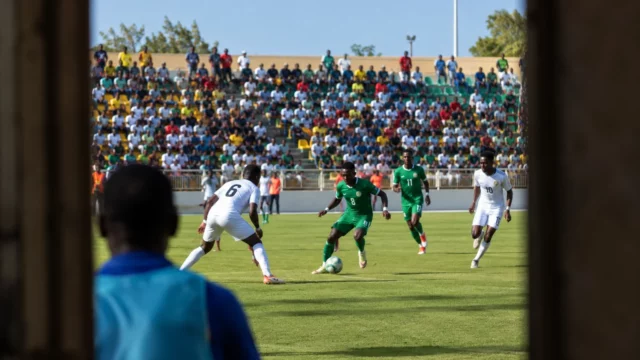
The final was played on 18 January 2026 in Rabat between Senegal and hosts Morocco. After a draw at the end of regular time, Pape Gueye scored in extra time. Senegal won 1-0, claiming what appeared to be its second continental title. The Confederation of African Football (CAF) had itself announced the triumph.
The match had, however, descended into controversy late on. After Morocco were awarded a penalty, Senegal coach Pape Thiaw asked his players to leave the pitch temporarily. Play resumed and the final went on to its conclusion. Morocco missed the penalty, then Senegal scored in extra time.
The Royal Moroccan Football Federation challenged the handling of the incident. On 17 March, the CAF Appeal Board overturned an earlier disciplinary decision and declared Senegal to have forfeited the match, recording a 3-0 win for Morocco. It relied on Articles 82 and 84 of the Africa Cup of Nations regulations, which concern, among other things, leaving the pitch without the referee’s permission and the consequences of an infringement. The official CAF decision confirms the administrative forfeit, but the dispute is not over.
What CAS must examine
The Senegalese Football Federation (FSF) filed an appeal with CAS on 25 March. It is seeking to have the CAF decision overturned and Senegal recognised as the Africa Cup of Nations winner. The proceedings pit the FSF against CAF and the Moroccan federation.
CAS, an independent arbitral tribunal based in Lausanne, settles sports disputes when the parties recognise its jurisdiction. Its role is not to replay the match or judge tactical decisions. It must examine the legal arguments, the applicable regulations and the way CAF handled Morocco’s appeal.
The central question concerns the interpretation of the competition rules. CAF considers that Senegal’s team leaving the pitch, even temporarily, is enough to constitute a forfeit. The FSF disputes this interpretation and points out that play resumed, the referee brought the match to its conclusion and the on-field result was achieved after extra time. The CAS statement makes clear that the appeal seeks to overturn the 17 March decision.
The arbitration panel has three members: Frenchman Gérald Simon, who chairs it, Italy’s Luigi Fumagalli and Germany’s Ulrich Haas. The hearing is being held behind closed doors in Lausanne. According to information published by Senegalese media outlet Seneweb, proceedings are being conducted in French and are expected to continue into the afternoon.
No verdict on Thursday
CAS has said that no decision will be issued on the day of the hearing. The arbitrators will deliberate after hearing the parties. At this stage, the tribunal has not announced a date for its verdict. It would therefore be premature to present the hearing as the moment when a new champion will be crowned.
For now, two realities coexist. On the pitch, Senegal won 1-0. In CAF’s records, the appeal decision awards Morocco a 3-0 victory. CAS must now determine whether that decision is legally sound. Its ruling could uphold the administrative outcome or restore the result of the final, but its conclusion cannot be anticipated.
The uncertainty affects those involved in different ways. For the federations, the stakes concern the title, sporting recognition and the application of the regulations. For the players and coaching staff, the proceedings prolong an episode already marked by intense tension. For Senegalese and Moroccan supporters, they fuel a debate in which the match result and the disciplinary sanction remain closely intertwined.
A test of confidence in African football
The decision will be closely watched across the region. CAF organises continental competitions and sets their rules, so its ability to apply them consistently is directly at stake. If CAS upholds its decision, CAF will be able to defend its interpretation of the regulations. If it is overturned, the governing body will have to answer questions raised by its handling of the appeal and the reversal of the result after the final.
The case also concerns the credibility of appeal mechanisms in African sport. A disciplinary rule must be able to punish an interruption caused by a team. But the process must also explain how that sanction relates to the resumption of play and the match being brought to its conclusion. It is this relationship, as much as the score, that federations and supporters will be watching.
The next step is therefore judicial, not sporting: CAS arbitrators must examine the case before issuing their decision. For now, no date for a verdict has been announced. The trophy remains at the heart of the dispute, and the 8 October hearing is not its conclusion.