Egypt
 Libya
 Morocco
 Sudan
 Tunisia
 Benin
 Burkina Faso
 Cabo Verde
 Côte d'Ivoire
 Ghana
 Guinea
 Guinea-Bissau
 Liberia
 Mali
 Mauritania
 Niger
 Nigeria
 Senegal
 Sierra Leone
 The Gambia
 Togo
 Cameroon
 Central African Republic
 Chad
 DR Congo
 Equatorial Guinea
 Gabon
 Republic of the Congo
 São Tomé and Príncipe
 Burundi
 Comoros
 Djibouti
 Eritrea
 Ethiopia
 Kenya
 Madagascar
 Malawi
 Mauritius
 Mozambique
 Rwanda
 Seychelles
 Somalia
 South Sudan
 Tanzania
 Uganda
 Angola
 Botswana
 Eswatini
 Lesotho
 Namibia
 South Africa
 Zambia
 Zimbabwe
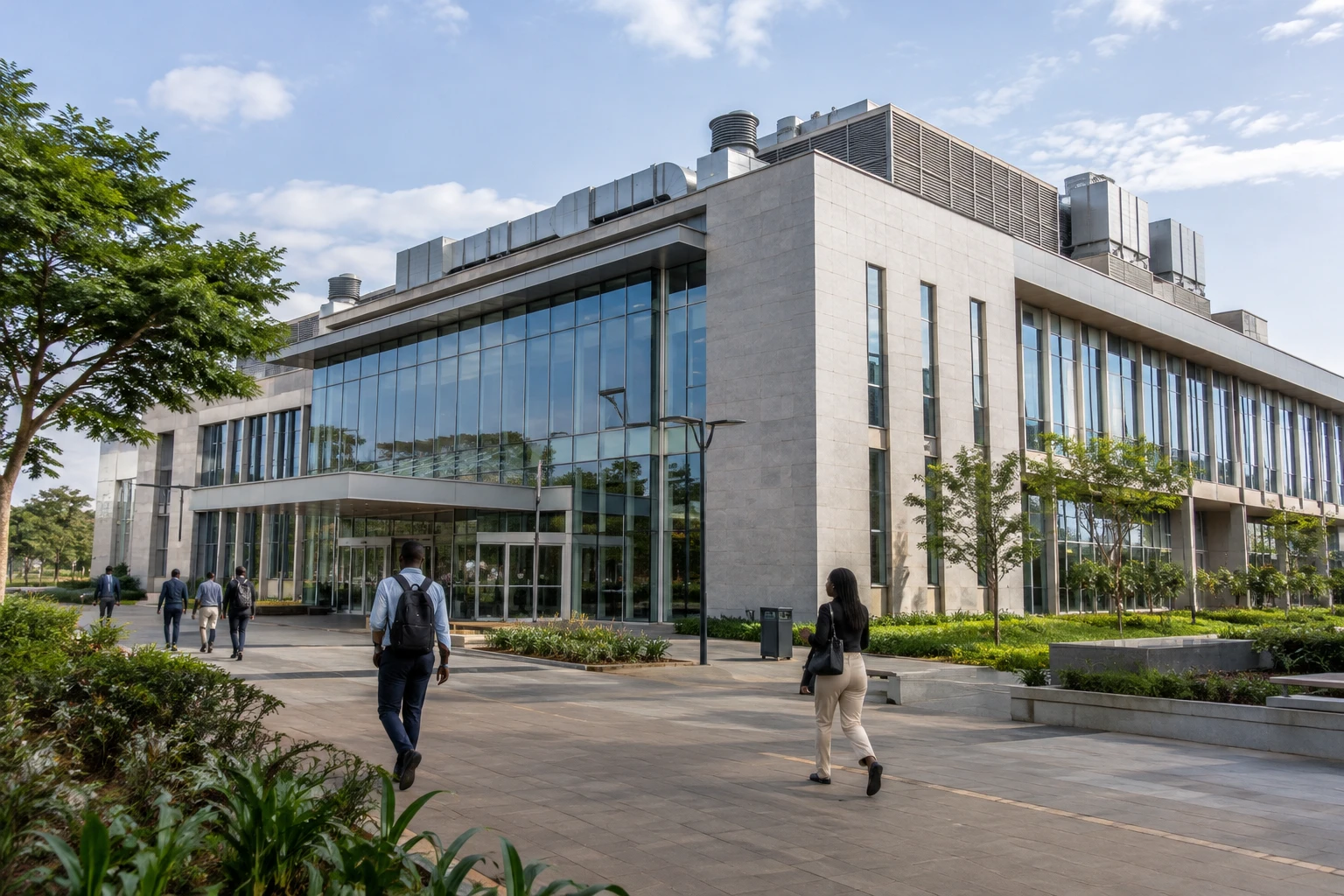
For artificial intelligence, computing power is becoming a strategic resource. Yet the continent that is home to 18% of the world’s population has just 0.6% of global data centre capacity, according to the World Bank’s latest economic report on sub-Saharan Africa. This disparity raises a practical question: how can tools tailored to African economies be developed without relying entirely on infrastructure located elsewhere?
A race that starts with the basics
In its report Building AI Readiness, published on 6 October 2026, the World Bank says access to artificial intelligence depends on more than software. Reliable electricity, a good-quality connection, skills, accessible data and computing capacity are also needed. Without these foundations, the promises of greater productivity risk remaining concentrated in a handful of companies and major cities.
The report focuses on sub-Saharan Africa. It estimates that only about 5% of African data centres are suited to AI needs. The continent also produces only a small share of the data used to train models. These findings highlight both material and digital dependence: African companies can use AI services, but still have few resources to host, train or adapt them locally.
The situation varies significantly from country to country. In Kenya, Nigeria and South Africa, a substantial share of AI-related investment and research is already concentrated in technology hubs. Elsewhere, the cost of electricity, limited market size and lack of infrastructure make it harder to develop large computing centres.
The World Bank does not present building large models as the only way forward. It also recommends adapting affordable tools to specific needs, such as agriculture, healthcare, public services and education. This approach could create opportunities for local companies, provided the tools work in the relevant languages and contexts.
Different paths north of the Sahara
The report does not cover North Africa, which the World Bank groups in a different region. Morocco, Egypt and Algeria are nevertheless also seeking to strengthen their capabilities. Their announcements do not mean that the infrastructure is already operational. Rather, they set out national strategies with different ambitions and timelines.
In Morocco, the “Morocco AI 2030” roadmap sets targets for training, employment and added value. The kingdom aims, in particular, to train or certify 200,000 people and create 50,000 direct and indirect jobs by 2030. The Jazari institute network is expected to contribute to research, training and project development. Progress towards these goals remains to be assessed as they are implemented.
The Nexus AI Factory project near Casablanca illustrates Morocco’s ambitions in computing. An initial announcement cited capacity of up to 500 megawatts and a starting investment of $1.2bn. However, the stages presented by the Moroccan authorities in April 2026 are more gradual: they first envisage 16 megawatts in Nouaceur, followed by announced cumulative capacity of 36 megawatts by the end of 2027. The gap between the long-term target and the initial phases is a reminder that announced capacity is not the same as capacity already installed.
In Egypt, the national AI strategy for 2025-2030 aims to develop skills and economic applications. Cairo is targeting, among other things, 30,000 AI specialists and a greater contribution from information and communications technology to the economy. The challenge will be to turn training targets into jobs and solutions accessible to government bodies and businesses alike.
In Algeria, the government reviewed the draft national AI strategy on 25 May 2026. According to the authorities, the framework is built around data, digital infrastructure and skills. The strategy still needs to be translated into implementation plans. This step matters: without defined funding, identified leads and public deadlines, a policy direction does not guarantee that projects will be delivered.
Computing power, but on what terms?
Data centres can host digital services and provide the computing power needed to train or use AI models. But their usefulness depends on very practical factors. An unreliable electricity supply pushes up costs and may require backup solutions. Fibre networks, data protection rules and customers able to pay for services are also needed.
These constraints affect different players in different ways. Large companies and government bodies may be the first to access costly computing services. Smaller organisations, start-ups and users outside capital cities risk benefiting later, particularly if prices remain high or connectivity is inadequate. Locating data centres in a country does not, by itself, guarantee more equitable access.
Investment decisions will also affect electricity grids and the resources needed to cool equipment. Local benefits will depend, among other things, on the jobs created, skills transferred and share of value retained in the country. Announced commitments will need to be distinguished from capacity actually brought into service.
Building regional co-operation
The World Bank advocates pooling investment at regional level. Several countries can share infrastructure, skills or services rather than each financing an expensive centre. But such co-operation requires agreements on data, pricing, security and the allocation of responsibilities.
For sub-Saharan African countries, regional markets and co-operation institutions can help achieve sufficient scale. North of the Sahara, Moroccan, Egyptian and Algerian initiatives are rooted in different national contexts; closer co-operation between them cannot be taken for granted. At continental level, the question is less about replicating the same infrastructure everywhere than about linking existing capabilities and supporting applications designed locally.
Progress will therefore be measured in budgets, timelines and verifiable results. Data centre announcements attract attention, but their impact will depend on available electricity, the cost of services and access for local players. In AI, sovereignty is not just about owning servers: it is also measured by the ability to produce data, skills and solutions that benefit people.