
 Algeria
 Egypt
 Libya
 Morocco
 Sudan
 Tunisia
 Benin
 Burkina Faso
 Cabo Verde
 Ghana
 Guinea
 Guinea-Bissau
 Liberia
 Mali
 Mauritania
 Niger
 Nigeria
 Senegal
 Sierra Leone
 The Gambia
 Togo
 Cameroon
 Central African Republic
 Chad
 DR Congo
 Equatorial Guinea
 Gabon
 Republic of the Congo
 São Tomé and Príncipe
 Burundi
 Comoros
 Djibouti
 Eritrea
 Ethiopia
 Kenya
 Madagascar
 Malawi
 Mauritius
 Mozambique
 Rwanda
 Seychelles
 Somalia
 South Sudan
 Tanzania
 Uganda
 Angola
 Botswana
 Eswatini
 Lesotho
 Namibia
 South Africa
 Zambia
 Zimbabwe
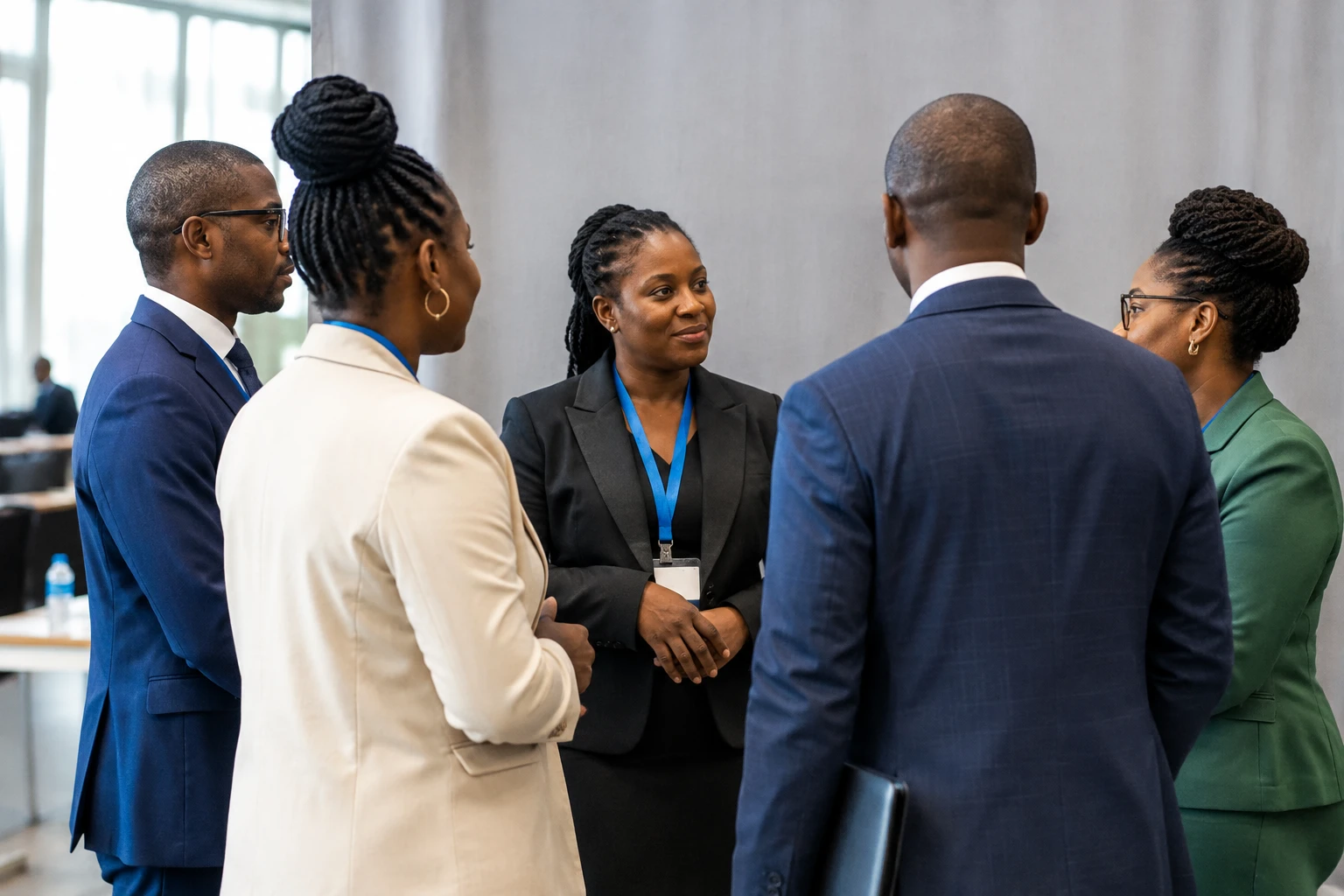
For a small business, access to credit can determine whether it hires someone, buys new equipment or is able to keep going through a difficult period. In Côte d’Ivoire, these local economic decisions are also linked to broader issues: youth employment, women’s role in economic activity and the resilience of communities.
This link between finance and stability was discussed by public, private and regional stakeholders in Abidjan from 28 September to 3 October 2026. The forum on investment for peace and economic resilience was part of a regional week on women, youth, peace and security in West Africa and the Sahel.
A regional gathering focused on employment and peace
Organised by the United Nations Office for West Africa and the Sahel (UNOWAS) and UN Women, with the Ivorian government and technical support from the African Development Bank (AfDB), the week brought together about 150 participants. Representatives of states, ECOWAS, the African Union, financial institutions, civil society, and women’s and youth networks were present, according to UNOWAS. The Ivorian Senate also confirmed the opening of proceedings in Abidjan on 28 September.
The meeting concluded on 3 October with the adoption of the Abidjan Call and Commitments. These place employment and the economic empowerment of women and young people at the heart of peacebuilding. ECOWAS, the West African regional organisation, and the African Union were represented in the discussions, meaning the issues extend beyond Côte d’Ivoire’s borders.
The regional context gives weight to this discussion. UNOWAS cites an AfDB estimate that West Africa’s economic growth will reach 4.6% in 2026, while the annual development financing gap remains between $90bn and $100bn. These figures describe the challenge of mobilising resources; by themselves, they do not say who benefits or whether financing reaches local businesses.
The place of SMEs in the debate
NSIA Banque Côte d’Ivoire’s participation in the forum and the contribution by Carine Domoraud, identified as the bank’s head of SMEs, are reported in information provided about the event. She is said to have taken part in a panel on investment in peace and economic resilience, representing Léonce Yacé, chief executive of NSIA Holding Financière. Public accounts consulted confirm that the forum took place, but do not independently detail her contribution or the quotation attributed to her.
In her contribution, according to the information provided, Domoraud argued for the role of small and medium-sized enterprises in creating jobs and developing local areas. She cited several forms of support: financing, guarantees, partnerships and financial education. A credit guarantee reduces part of the risk borne by the lender; it does not, however, replace an assessment of the project or the company’s ability to repay.
The point highlights a practical difficulty: a business’s needs are not limited to securing a loan. A newly established business may lack collateral or a financial track record. A business based outside major centres may also face different obstacles from a company already integrated into banking networks. For women entrepreneurs and young people, access to information and business networks can matter as much as the availability of a financial product.
In Côte d’Ivoire, support for SMEs is already among the government’s priorities. The government has said that more than 56,000 businesses have received support since 2017, including nearly 13,000 in 2024. This official record refers to a programme combining technical support, co-ordination and credit guarantees. It gives an indication of the work undertaken, but cannot, by itself, assess the survival of supported businesses, the quality of jobs created or the geographical distribution of results.
From announced financing to measurable effects
For banks, guarantee schemes and partnerships can make it easier to finance projects considered too risky or insufficiently documented. For SMEs, the challenge is to secure terms that are compatible with their revenues and business cycles. Formal businesses able to provide accounts and collateral do not always start with the same advantages as small informal businesses, which are nonetheless essential to local economies.
The forum also linked economic empowerment to conflict prevention and social cohesion. This does not mean that a loan is enough to prevent conflict. Rather, it invites scrutiny of how employment, income and access to opportunities can strengthen communities’ ability to withstand shocks. The regional conclusions call in particular for easier access to credit, financial services and investment for women and young people.
To measure the real impact of the commitments, it will be necessary to track how they translate into accessible products, guarantees actually used and financing granted to businesses led by women and young people. Transparency on eligibility criteria, costs and results will be just as important. In Abidjan, the discussions set a direction; the announcements do not yet amount to an impact assessment.
Côte d’Ivoire is central to these discussions, but it is not the only country concerned. The commitments adopted in Abidjan also address the states and institutions of West Africa and the Sahel. The next step will be to see how governments, banks and regional organisations turn this shared priority into concrete opportunities for businesses and communities.



