Algeria
 Egypt
 Libya
 Morocco
 Sudan
 Tunisia
 Benin
 Burkina Faso
 Cabo Verde
 Côte d'Ivoire
 Ghana
 Guinea
 Guinea-Bissau
 Mali
 Mauritania
 Niger
 Nigeria
 Senegal
 Sierra Leone
 The Gambia
 Togo
 Cameroon
 Central African Republic
 Chad
 DR Congo
 Equatorial Guinea
 Gabon
 Republic of the Congo
 São Tomé and Príncipe
 Burundi
 Comoros
 Djibouti
 Eritrea
 Ethiopia
 Kenya
 Madagascar
 Malawi
 Mauritius
 Mozambique
 Rwanda
 Seychelles
 Somalia
 South Sudan
 Tanzania
 Uganda
 Angola
 Botswana
 Eswatini
 Lesotho
 Namibia
 South Africa
 Zambia
 Zimbabwe

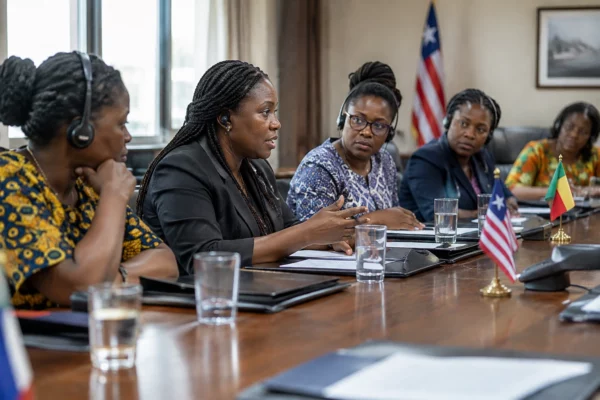
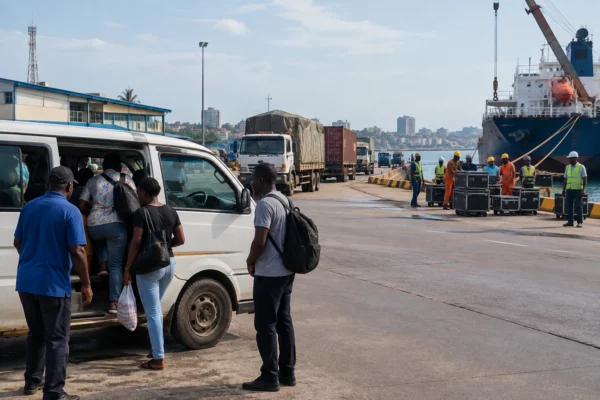
An oil discovery off Liberia would not, by itself, guarantee that jobs and contracts benefit Liberians. A significant share of the value is also generated onshore: in ports, transport, supply and technical services supporting offshore drilling.
Buchanan at the heart of the proposed plan
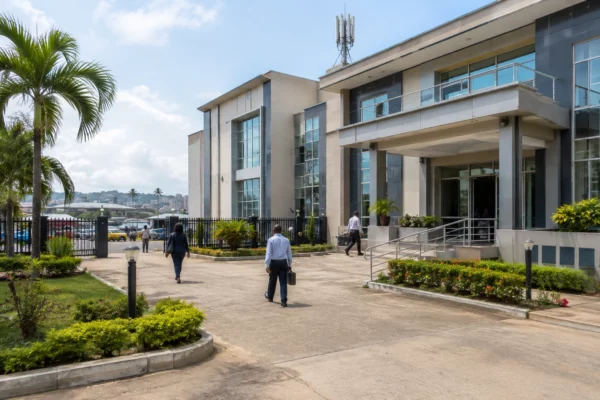
On 5 October 2026, the National Oil Company of Liberia (NOCAL), the state-owned oil company, announced a joint development agreement with Lagos Deep Offshore Logistics Base (LADOL), a Nigerian group specialising in logistics infrastructure and services. The agreement was signed in London and concerns a proposed base in Buchanan, in Grand Bassa County, south-east of Monrovia. The announcement was reported by Liberia Public Radio and by The New Republic Liberia, republished by AllAfrica.
An offshore logistics base, sometimes called a “shorebase”, is an onshore facility that organises operations at sea. It can provide equipment storage, vessel supplies, transport and certain technical services. The Buchanan project is not yet a facility under construction, however: the agreement first opens a study and preparation phase.
According to information provided by NOCAL and reported by Liberian media, LADOL is to fund and carry out the feasibility study, then coordinate the engineering work. The study is expected to be launched within about 45 days and should last six months. It is to examine maritime access, utilities, land characteristics and commercial viability, among other factors. The final terms for construction and operation remain to be negotiated.
NOCAL says it has set aside two plots near the port of Buchanan, with a combined area of about 83.6 hectares. The company presents the site as a way to bring closer to the country the services required for future oil operations. The project’s feasibility, final financing, permits and operating agreements nevertheless remain steps to be completed.
Exploration resumes, but production is not guaranteed
The project comes as Liberia seeks to revive exploration in its offshore basin after a long period of limited activity. In September 2025, TotalEnergies signed production-sharing contracts for four blocks, LB-6, LB-11, LB-17 and LB-29. These blocks cover about 12,700 square kilometres. The Liberia Petroleum Regulatory Authority, the national regulator, and the company confirmed the signing. A production-sharing contract sets out, among other things, the rules for dividing proceeds between the state and the operator if hydrocarbons are discovered and produced.
This step does not mean that a commercially viable deposit has been identified. Exploration must still improve understanding of the subsoil and, depending on the results, could lead to drilling. In February 2026, the regulator said TotalEnergies’ proposed programme included offshore geochemical studies, 3D seismic surveys and detailed mapping of the seabed. These are assessment stages, not proof of commercially recoverable reserves.
The distinction matters for public finances as well as for community expectations. Until a commercially viable discovery is established, oil revenues remain hypothetical. Investment decisions, studies and service contracts can, however, already determine who gains experience and who captures the first spending.
Local-content pledge put to the test
NOCAL says Liberia has previously had to rely on logistics bases in Côte d’Ivoire, Ghana and Senegal during offshore operations. A facility in Buchanan could reduce that dependence and create opportunities for Liberian businesses, technicians and port workers. But locating a base in the country does not, on its own, guarantee that skilled jobs and contracts will go to national businesses.
The legal framework provides for local participation. The LPRA defines local content as the value of goods, services and personnel supplied in the country, and local participation as the involvement of businesses owned by Liberians. The challenge will be to turn these principles into verifiable targets: training, small businesses’ access to contracts, publication of contracts and monitoring of benefits in Buchanan and Grand Bassa County.
The benefits and constraints would not be distributed evenly. Service companies and skilled workers could gain access to new activity. People living near the port could be affected by land use, available jobs and the impact of construction on their environment. Fishers and other coastal stakeholders could also be affected by increased maritime traffic. The announced study will need to specify land, technical and environmental requirements before any final decision.
A West African industrial capacity challenge
The partnership links a Liberian state-owned company with a Nigerian operator in a region where offshore oil activity already draws on infrastructure and expertise spread across several countries. Liberia’s stated aim is to retain more spending and know-how on its territory. For LADOL, the project would represent an additional presence in West African energy services. The agreement does not, however, prejudge either the facility’s profitability or a final decision to build it.
The next concrete milestone will be the completion of the feasibility study, followed by negotiations on final agreements. Liberians will then be able to judge the project by its specific commitments: who funds, owns and operates the base, what rules govern access to contracts, and how social and environmental impacts will be assessed. At a still uncertain exploration stage, the state’s ability to make these steps transparent will matter as much as the existence of infrastructure to the promise of national benefits.