Algeria
 Egypt
 Libya
 Morocco
 Sudan
 Tunisia
 Benin
 Burkina Faso
 Cabo Verde
 Côte d'Ivoire
 Guinea
 Guinea-Bissau
 Liberia
 Mali
 Mauritania
 Niger
 Nigeria
 Senegal
 Sierra Leone
 The Gambia
 Togo
 Cameroon
 Central African Republic
 Chad
 DR Congo
 Equatorial Guinea
 Gabon
 Republic of the Congo
 São Tomé and Príncipe
 Burundi
 Comoros
 Djibouti
 Eritrea
 Ethiopia
 Kenya
 Madagascar
 Malawi
 Mauritius
 Mozambique
 Rwanda
 Seychelles
 Somalia
 South Sudan
 Tanzania
 Uganda
 Angola
 Botswana
 Eswatini
 Lesotho
 Namibia
 South Africa
 Zambia
 Zimbabwe
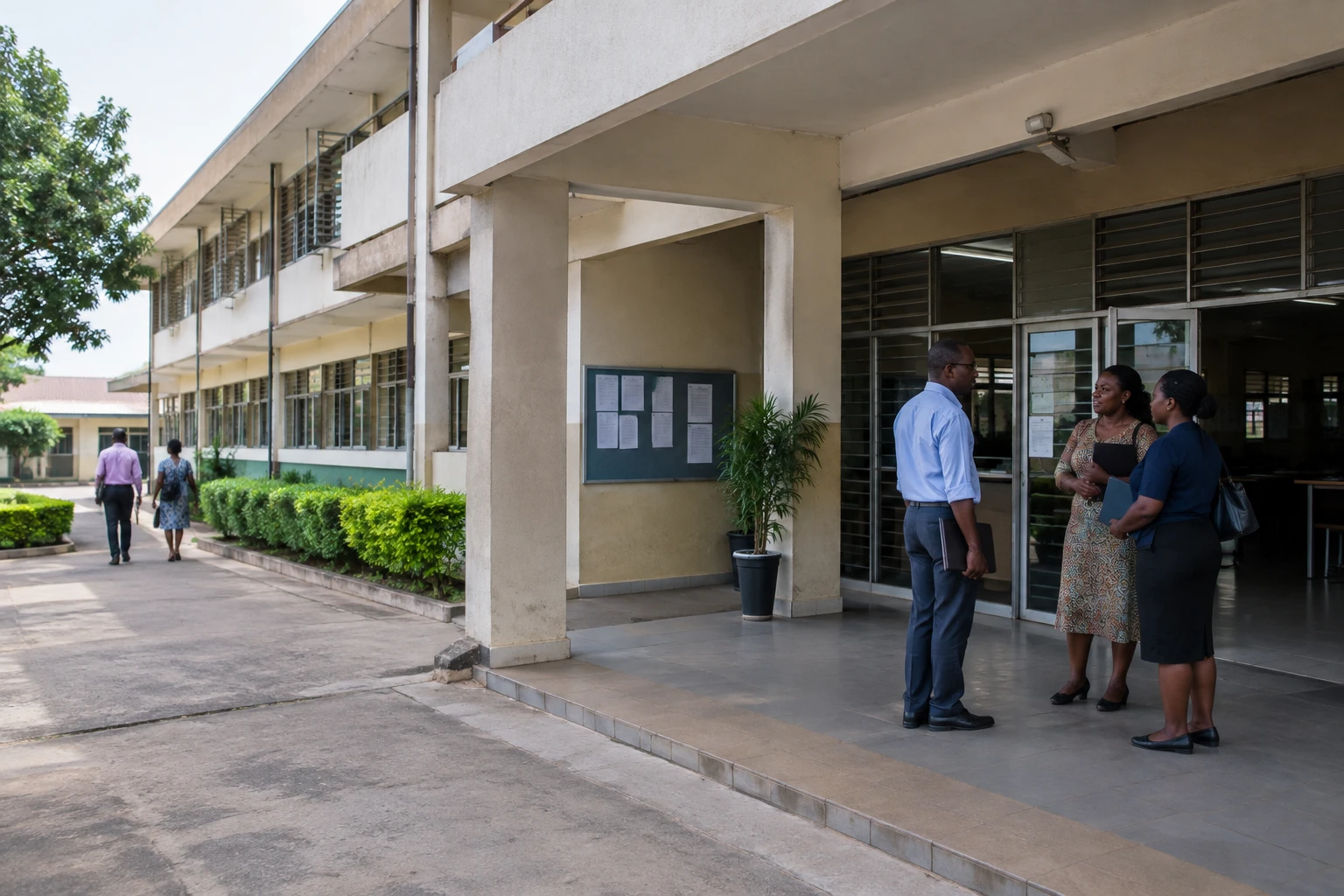
When classrooms empty, pupils are the first to lose time. In Ghana, the pre-tertiary teachers’ strike is now bringing two urgent issues into focus: settling disputed pay and preventing missed lessons from undermining the school year.
A dispute that goes beyond salary arrears
The national strike began on 25 September 2026. It involves several teachers’ organisations, including the Ghana National Association of Teachers (GNAT), the National Association of Graduate Teachers (NAGRAT) and the Pre-Tertiary Education Teachers Association of Ghana (PRETAG). The unions are protesting payment delays, as well as the lack of a new collective agreement and the non-payment of an allowance for some teachers.
The collective agreement sets out key elements of working conditions. The unions say the previous agreement has expired and negotiations to renew it have not been successful. In the Volta Region, their representatives said the new text should have been concluded in June 2026. They are now demanding that it be finalised and implemented.
The dispute is part of an already lengthy social dialogue between the professional organisations, the government and the Fair Wages and Salaries Commission, the Ghanaian body responsible, among other things, for public-sector pay negotiations. Previous meetings resulted in proposals, but failed to persuade the unions to resume lessons.
Promotions, allowance and government commitments
The most immediate issue concerns promotions. Teachers who have attained a higher grade have reportedly not yet been placed on the corresponding pay scale or received all the arrears due to them. The government cites difficulties in processing and verifying the cases. A ministry statement refers to around 80,000 cases reviewed, but that figure does not mean every case has already been approved or is ready for payment.
Education Minister Haruna Iddrisu has promised that promotion arrears will be paid by 30 October 2026 at the latest. This is a deadline announced by the government, not proof that payments have been made. The unions, for their part, are maintaining the strike until they secure an agreement they consider satisfactory.
Another demand is a 20% allowance for teachers assigned to disadvantaged or hard-to-reach areas. The government says it wants to establish precisely which schools and localities qualify for the allowance. A commission involving, among others, the unions and the Ghana Statistical Service is to help verify the criteria and beneficiaries. This process could reduce disputes over eligibility, but it does not yet answer the question of when the allowance will be paid.
On 6 October, a meeting between the Salaries Commission and the unions ended without an agreement. The parties planned to resume discussions on Wednesday 7 October. The government says it wants to reach a solution; union representatives say the strike will continue pending a concrete outcome. These details were reported by the public agency Ghana News Agency and corroborated by Ghanaian media outlet MyJoyOnline.
The educational cost of a prolonged stand-off
For pupils, the length of the stoppage matters as much as its outcome. Lessons disrupted reduce the time available to cover the curriculum and prepare for final examinations. Pupils who can rely on private tuition or digital resources do not all have the same opportunities as those who depend entirely on public schools.
The impact also varies between areas. A prolonged disruption may affect rural communities and remote schools differently, where alternative options are sometimes less accessible. Families then have to choose between waiting for teachers to return, seeking alternative support or reorganising their days. The strike therefore touches both on staff’s right to press their demands and on the continuity of education.
The debate also concerns the state’s budgetary room for manoeuvre and educational priorities. But the available information is not sufficient to establish that funding for a particular programme is the direct cause of the pay delays. Political analysis must be distinguished from confirmed facts: at this stage, the government mainly cites problems processing cases and the need to verify the allowance’s beneficiaries.
A test for Ghanaian social dialogue
Ghana, whose capital is Accra, relies on national negotiating institutions and established unions. How this dispute is resolved will matter to other groups of public-sector workers: it will show whether announced commitments can be followed by verifiable deadlines and monitored implementation.
Across West Africa, the dispute concerns an issue shared by ECOWAS countries: balancing staff pay, budgetary capacity and the continuity of public services. This is not to suggest that the region’s education systems, each with its own rules, are the same, but to highlight that school disruptions and pay negotiations often reach beyond a single institution.
The next concrete milestones are therefore the resumption of discussions planned for 7 October, followed by the 30 October deadline announced for promotion arrears. In the meantime, renewal of the collective agreement and the criteria for the allowance remain unresolved. For teachers and families alike, the difference will be measured less by promises than by confirmed payments and the effective return of lessons.