Egypt
 Libya
 Morocco
 Sudan
 Tunisia
 Benin
 Burkina Faso
 Cabo Verde
 Côte d'Ivoire
 Ghana
 Guinea
 Guinea-Bissau
 Liberia
 Mali
 Mauritania
 Niger
 Nigeria
 Senegal
 Sierra Leone
 The Gambia
 Togo
 Cameroon
 Central African Republic
 Chad
 DR Congo
 Equatorial Guinea
 Gabon
 Republic of the Congo
 São Tomé and Príncipe
 Burundi
 Comoros
 Djibouti
 Eritrea
 Ethiopia
 Kenya
 Madagascar
 Malawi
 Mauritius
 Mozambique
 Rwanda
 Seychelles
 Somalia
 South Sudan
 Tanzania
 Uganda
 Angola
 Botswana
 Eswatini
 Lesotho
 Namibia
 South Africa
 Zambia
 Zimbabwe
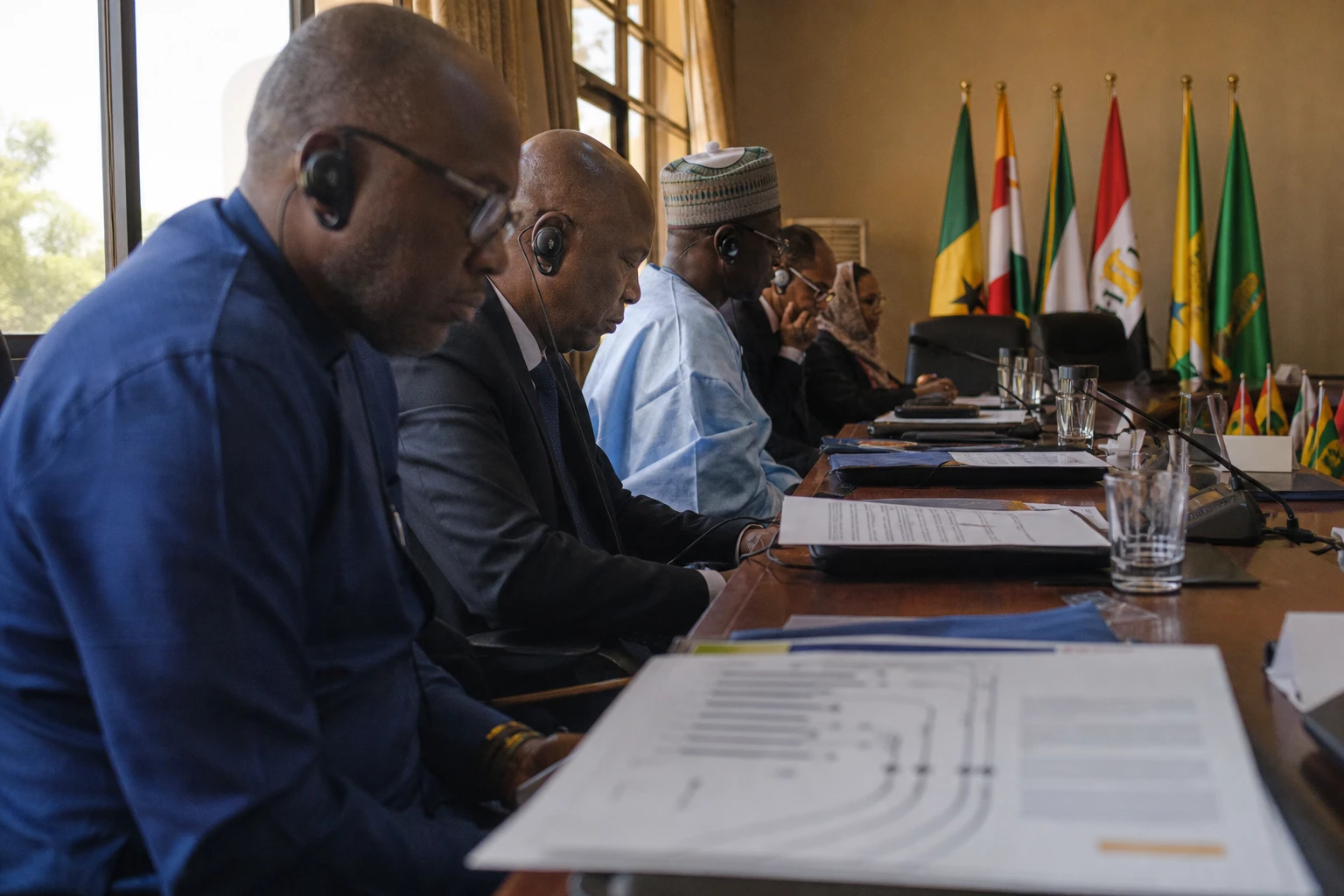
At Assamaka, in the far north of Niger, a border long seen as a geographical limit is becoming an access point to regional digital networks. The launch of the fibre-optic link with Algeria is set to give the country a new route to the internet, as Niamey seeks to reduce its dependence on a few external corridors.
A new gateway to international networks
Niger’s Minister of Communication and New Information Technologies, Hamani Kargné, travelled to Agadez on Monday 5 October 2026. He is due to chair the official launch ceremony for the fibre-optic link between Niger and Algeria, at Assamaka, near the Algerian border. The news was announced by the Nigerien News Agency.
For Niger, a landlocked country with no direct access to submarine cables, this connection represents more than a technical project. It is intended to diversify the routes used by national data. It could also reduce the impact of an outage on a single regional link.
The link is part of the Trans-Saharan Fibre-Optic Backbone, a regional project designed to connect several countries in the Sahel and North Africa through high-speed terrestrial infrastructure. Its ambition therefore extends beyond the relationship between Niamey and Algiers. It aims to create a network capable of supporting digital exchanges between countries whose connectivity routes remain unevenly developed.
A national network organised around five corridors
The Nigerien component of the project comprises 1,031 kilometres of fibre-optic cable spread across five routes. The first connects Arlit, Assamaka and the Algerian border over 220 kilometres. The other corridors serve the Chadian border, the Nigerian border, Benin and Burkina Faso.
The route includes 186 kilometres between Diffa, N’Guigmi and the Chadian border. It also includes 117 kilometres between Zinder, Magaria and the Nigerian border. The Niamey-Dosso-Gaya-Benin border route covers 300 kilometres. Finally, 118 kilometres are due to connect Niamey, Makalondi and the Burkinabe border.
These figures were confirmed during the provisional handover of the sections, held in Niamey on 14 November 2025. In its report, the Nigerien News Agency said that all five routes had been completed and were ready for handover.
The system also includes an 88-kilometre local loop intended to connect several administrative sites to the future national data centre. The centre is expected to enable more data to be stored in Niger and support the digitisation of public services.
In February 2025, the ministry responsible for digital affairs had already announced the construction of the data centre and the imminent completion of the national network. This shows that the interconnection with Algeria is not a standalone project. It is part of a broader strategy combining a national backbone, data storage and cross-border connections.
The challenge goes beyond laying fibre
An international link does not automatically improve the user experience. Equipment still needs to be activated, operators’ access arranged and regular maintenance ensured. Service quality will also depend on investment in local networks, particularly in secondary cities and rural areas.
The project could nevertheless strengthen several sectors. Mobile financial services will be able to rely on more stable data exchanges. Government departments will be able to expand online services. Businesses, educational institutions and healthcare facilities will have infrastructure better suited to digital use.
The expected impact will not be the same everywhere. Niamey is home to a large share of government departments, operators and formal businesses. In Agadez, Arlit, Diffa and Zinder, the challenge is also to bring digital services closer to local populations and economic activity. An international fibre connection will not be enough if local connections remain costly or incomplete.
Maintenance is another sensitive issue. Terrestrial cables often run alongside roads and major transport routes. They can be damaged by construction work, accidents, machinery or vandalism. In areas exposed to insecurity, protecting installations adds an operational constraint.
Niger will also remain dependent on its neighbours for some of its international connections. An outage in Benin, Nigeria, Burkina Faso or Algeria could disrupt traffic, even if infrastructure within Niger is operating normally. Diversification therefore reduces the risk, but does not eliminate it.
A project accompanying regional realignment
The timing of this interconnection comes during a period of realignment in regional relations. Niger, Burkina Faso and Mali have left the Economic Community of West African States (ECOWAS) and are seeking to strengthen their own frameworks for cooperation. In this context, digital infrastructure is becoming a tool for economic continuity and technical sovereignty.
The Trans-Saharan Backbone involves several countries beyond West Africa alone. It links Sahelian and Maghreb regions that must contend with long distances, fragmented markets and high deployment costs. The connection with Algeria could thus give Niger an additional route to the continent’s major international networks in the north.
Funding and support for the project involve, among others, the Nigerien authorities and the African Development Bank. The African Development Bank documents describe the Trans-Saharan Backbone as a multinational infrastructure project designed to improve interconnection and access to broadband.
The next step will therefore be crucial: turning completed infrastructure into a service that is genuinely available. The commercial launch of the link, operators’ access conditions, prices and maintenance capacity along the corridors will all need to be monitored. For Nigerien users, the project’s success will be measured less by the number of kilometres laid than by the stability, cost and practical usefulness of the connection.