Algeria
 Egypt
 Libya
 Morocco
 Sudan
 Tunisia
 Benin
 Burkina Faso
 Cabo Verde
 Côte d'Ivoire
 Ghana
 Guinea
 Guinea-Bissau
 Liberia
 Mali
 Mauritania
 Niger
 Nigeria
 Senegal
 Sierra Leone
 The Gambia
 Togo
 Central African Republic
 Chad
 DR Congo
 Equatorial Guinea
 Gabon
 Republic of the Congo
 São Tomé and Príncipe
 Burundi
 Comoros
 Djibouti
 Eritrea
 Ethiopia
 Kenya
 Madagascar
 Malawi
 Mauritius
 Mozambique
 Rwanda
 Seychelles
 Somalia
 South Sudan
 Tanzania
 Uganda
 Angola
 Botswana
 Eswatini
 Lesotho
 Namibia
 South Africa
 Zambia
 Zimbabwe
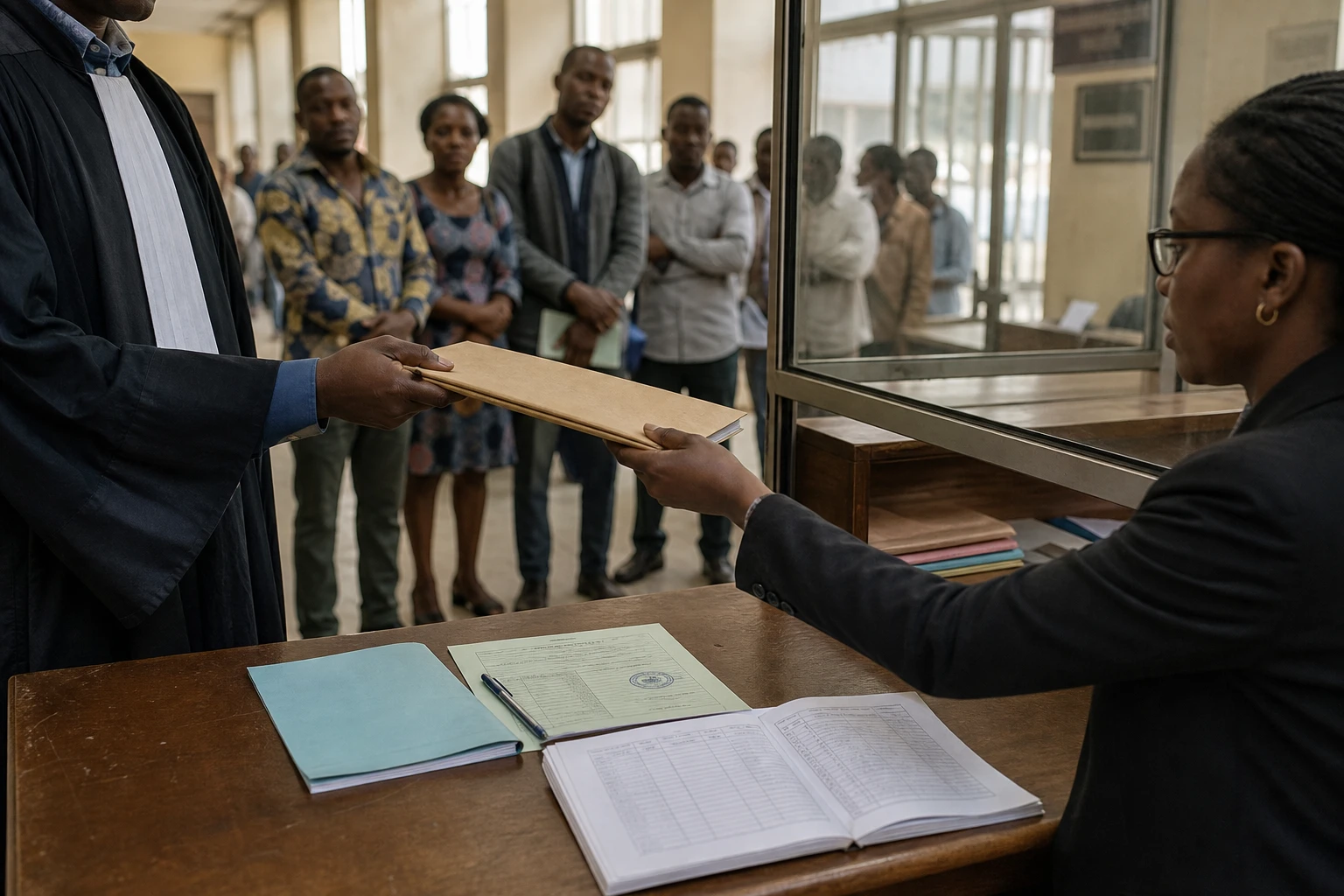
In Yaoundé, the trial over the murder of Martinez Zogo ran into a scheduling issue on Monday 5 October 2026 that directly affects the credibility of the proceedings: the key witness expected by the defence did not appear after all. Lieutenant-Colonel Dieudonné Bialo is due to continue his testimony at a later hearing, while his absence has reignited tensions between the prosecution and the defendants’ lawyers.
A key witness absent at a decisive moment
Dieudonné Bialo heads the Central Judicial Investigations Service of the Cameroonian gendarmerie. He is the 35th witness called by the prosecution in the case. His testimony began on 15 September 2026 and focused in particular on technical operations carried out during the investigation: analysis of surveillance footage, tracing telephone communications and identifying devices.
The cross-examination was intended to allow defence lawyers to revisit the methods used by investigators and the strength of the evidence gathered. This phase is essential in criminal proceedings. It gives the opposing party the opportunity to test a witness’s statements, identify contradictions and question the precise scope of their conclusions.
But on 5 October, Lieutenant-Colonel Bialo did not appear before the Yaoundé Military Tribunal. The government commissioner then produced a mission order covering the period from 2 to 8 October. The document states that the officer is in Algeria on an official mission.
According to the information discussed at the hearing, the mission order was reportedly issued on 11 May 2026. The prosecution nevertheless says it was only informed of the witness’s unavailability on the morning of the hearing. This timeline prompted objections from several defence lawyers.
Defence says postponement was poorly planned
The lawyers for Justin Danwe and Jean-Pierre Amougou Belinga asked for an explanation for the absence of a witness who had already been summoned and had already testified. Their concern is less about the existence of an administrative mission than about how it was coordinated with the court’s schedule.
Me Bougny, counsel for Justin Danwe, raised the possibility of a “strategic withdrawal” that could delay proceedings. He nevertheless said the defence had taken note that the postponement had been requested by the prosecution.
Me Tchoungang, Jean-Pierre Amougou Belinga’s lawyer, sought to understand why the Ministry of Defence had assigned an officer to a mission when his presence was known to be necessary for the trial. The question points to a broader issue: in a case involving intelligence officials and members of the security forces, coordination between the judicial system and the administrative hierarchy is under particular scrutiny.
The civil parties took a different view. Me Kemoe urged the parties not to “try to exaggerate” the incident. In this lawyer’s view, the postponement remains compatible with the normal course of proceedings. The presiding judge ultimately ruled that the cross-examination would resume at a later date, which was described at the hearing as being set for the following week.
Cameroonian media have also reported that Bialo’s testimony brought a phone attributed to Jean-Pierre Amougou Belinga back to the centre of the debate. Investigators have not found the device. The head of the judicial service reportedly explained that it had stopped transmitting on networks, both through the number linked to its SIM card and through its IMEI, a code unique to each phone. The technical evidence examined during his testimony could therefore remain central to the defence’s questions at upcoming hearings.
A trial progressing in successive stages
The Martinez Zogo case has been closely followed in Cameroon since January 2023. The radio host, known for his programme “Embouteillages”, was abducted in Yaoundé on 17 January. His body was found five days later on the outskirts of the capital, bearing signs of violence.
The case soon implicated people from different spheres: intelligence officials, military personnel, businesspeople and local officials. Former Director-General of the General Directorate of External Research Léopold Maxime Eko Eko, Lieutenant-Colonel Justin Danwe and businessman Jean-Pierre Amougou Belinga are among those facing trial.
The trial opened on 25 March 2024 before the Yaoundé Military Tribunal. Hearings on the merits began on 1 September 2025, after a lengthy period dominated by procedural questions. Since then, proceedings have advanced through testimony, expert evidence and disputes over the case file.
In July and August 2026, hearings focused in particular on telephone analyses and the statements of Colonel Jean-Pierre Otoulou, described as an important investigator in the case. They also featured discussions about the possible existence of a second commando unit and the weight of the evidence gathered against some defendants. Previous testimony concerning the evidence in the investigation shows that the chain of command remains central to the proceedings.
Beyond the postponement, a question of judicial trust
For the detained defendants and their families, every adjournment prolongs an already lengthy process. For Martinez Zogo’s beneficiaries, by contrast, each testimony is an anticipated step towards establishing responsibility. The difference in perception is clear: a postponement may be an ordinary measure for the court, but it can also be experienced as another obstacle by parties who have been waiting for answers for nearly four years.
The debate is also institutional. The absent witness belongs to a gendarmerie unit responsible for judicial investigations. His mission depends on an administrative authority, while his testimony falls under the jurisdiction of a military court. The case thus highlights the need for close coordination between security services, the prosecution and the court.
This requirement is all the more pressing because technical evidence is playing an increasingly prominent role in the trial. Telephone data, surveillance footage and digital traces can help establish movements or contacts. However, they are not in themselves sufficient to determine a person’s criminal responsibility. Their collection, preservation and interpretation must be open to adversarial scrutiny.
A case followed beyond Cameroon
The trial now extends beyond the national context. It concerns the protection of journalists, the accountability of security services and the ability of a military court to hear a case involving powerful figures. These questions resonate in several Central African countries, where investigative journalists often work in close proximity to political, business and security networks.
The next stage of the proceedings will depend first on Lieutenant-Colonel Bialo’s actual appearance and the length of his cross-examination. The parties are then expected to continue debating the weight of the expert evidence, the traceability of the phone devices and possible links between the various protagonists. Above all, the next hearing will show whether this postponement remains a simple scheduling incident or fuels lasting concerns about the pace and transparency of the trial.