Algeria
 Egypt
 Libya
 Morocco
 Sudan
 Tunisia
 Benin
 Burkina Faso
 Cabo Verde
 Côte d'Ivoire
 Ghana
 Guinea
 Guinea-Bissau
 Liberia
 Mali
 Mauritania
 Niger
 Nigeria
 Senegal
 Sierra Leone
 The Gambia
 Togo
 Cameroon
 Central African Republic
 Chad
 DR Congo
 Equatorial Guinea
 Gabon
 Republic of the Congo
 São Tomé and Príncipe
 Burundi
 Comoros
 Djibouti
 Eritrea
 Ethiopia
 Madagascar
 Malawi
 Mauritius
 Mozambique
 Rwanda
 Seychelles
 Somalia
 South Sudan
 Tanzania
 Uganda
 Angola
 Botswana
 Eswatini
 Lesotho
 Namibia
 South Africa
 Zambia
 Zimbabwe
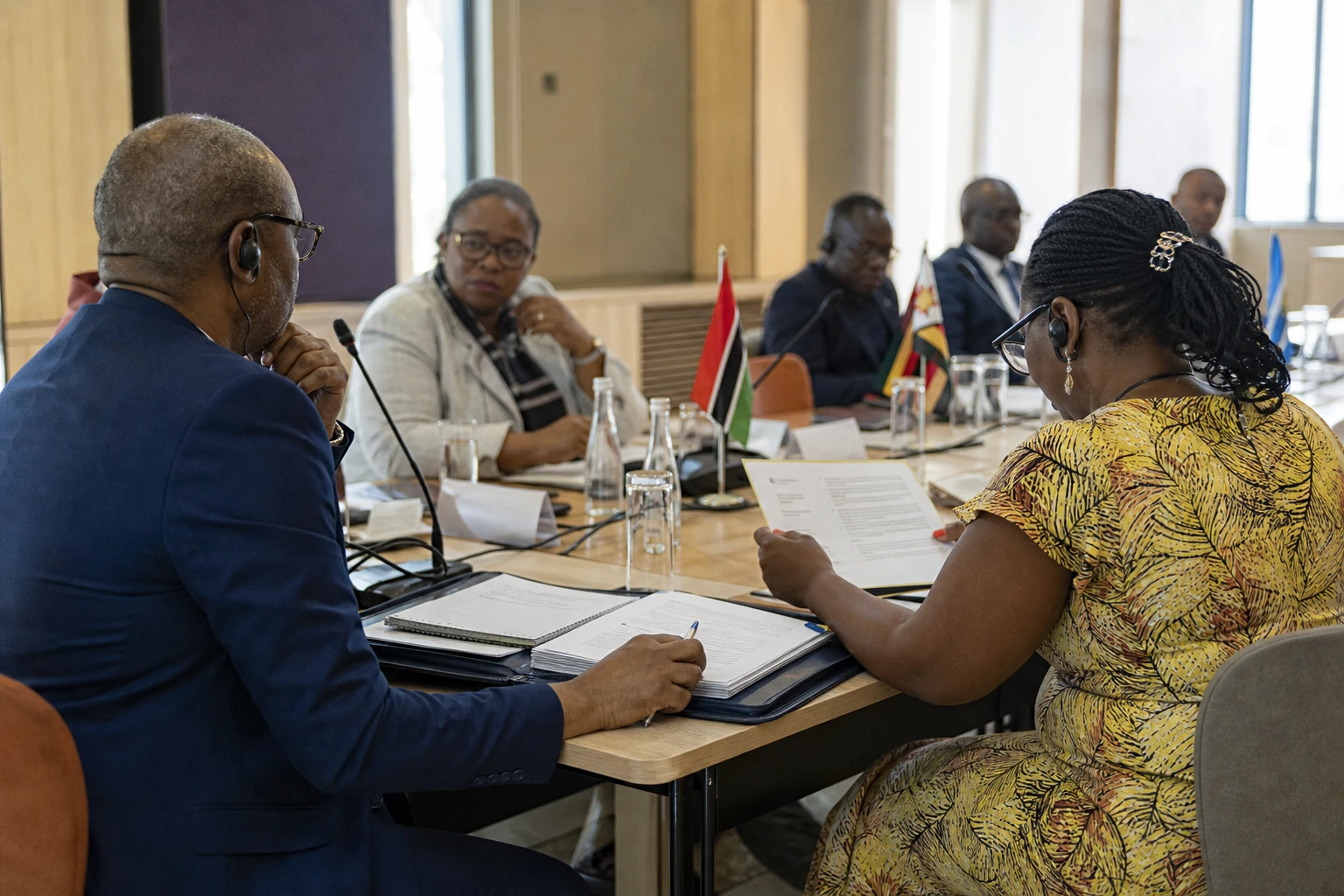
Across sub-Saharan Africa, progress towards equality between women and men is moving at very different speeds. Namibia is establishing itself among the world’s top performers, while Kenya, Ghana and Angola have made spectacular gains. But the gap remains wide in several countries, particularly in political representation.
A region making progress despite stark disparities
The Global Gender Gap Report 2026, published on 16 September 2026 by the World Economic Forum, measures conditions in 145 economies. Its index examines four areas: economic participation, education, health and political representation.
According to this 20th edition, sub-Saharan Africa has closed 68.8% of its gender gap. The region remains sixth among the eight groupings studied. However, its score has risen by 1.6 points in a year. At the rate observed since the index was launched in 2006, full parity could be reached in 102 years.
This projection puts sub-Saharan Africa ahead of the global average. Worldwide, 69.2% of the gap is considered closed, but the estimated time to reach parity is 120 years. The World Economic Forum warns, however, that progress is becoming more fragile, especially in positions of political power.
The comparison should nevertheless be treated with caution. Ethiopia, Guinea, Sudan and Uganda are not included in the 2026 edition because of insufficient data. Several of these countries ranked poorly in the previous edition, so their absence may mechanically improve the regional average. Malawi, by contrast, has returned to the ranking, in 99th place.
Namibia confirms its continental lead
Namibia is Africa’s standout performer. The southern African country ranks fourth globally, having closed 84.5% of the gender gap. It is ahead of the United Kingdom and Germany. Only three Nordic countries rank higher.
This is the highest ranking Namibia has achieved since the index was created. Its score has risen by 3.4 points in a year. The report notes, in particular, an increase in women’s representation in leadership roles, parliament and government.
The inauguration of Netumbo Nandi-Ndaitwah on 21 March 2025 also raised the profile of this political shift. She became Namibia’s first woman president. The country has also achieved parity in the composition of its ministerial team, according to the indicators used in the report.
Several other African countries stand out behind Namibia. Burundi ranks 26th globally, with a score of 77.1%. It is just ahead of Rwanda, in 28th place, South Africa, in 30th, and Liberia, in 43rd. These results show that progress is not confined to the continent’s wealthiest economies.
Kenya, Ghana and Angola make major gains
Kenya has made the biggest improvement in the 2026 edition. It has climbed 33 places to 65th globally. Its score has risen from 68.9% to 72.1%. The improvement is driven mainly by education, where the indicator has increased markedly.
Ghana has climbed 32 places to 56th, with a score of 73.2%. Angola is up 30 places to 87th, with 70.5%. These rapid shifts should nevertheless be understood as changes in the index. They do not mean that all women benefit equally from the same advances in cities, rural areas or the informal economy.
Niger has improved its score by 4.2 points. Nigeria is up 2.7 points, reaching 67.6%. In these two West African countries, national results mask significant differences in access to education, participation in the labour market and representation in institutions.
Education advances but remains the region’s weak point
Education recorded the biggest increase in sub-Saharan Africa this year. The regional score has risen by 5.8 points to 89.5%. Despite this progress, sub-Saharan Africa remains last of the eight regions studied on this measure.
The long-term trend is more encouraging. Since 2006, women’s access to higher education has increased by 28.1 points. This has expanded the pool of graduates able to take up skilled jobs, work in public administration and scientific professions, and move into leadership roles.
But education alone is not enough. Gaps can re-emerge in the transition to employment, entrepreneurship or public responsibility. Obstacles also include the availability of services, mobility, access to finance and the division of domestic work.
Political power remains the main obstacle
Politics remains the area furthest from parity. In sub-Saharan Africa, only 18.1% of the gap has been closed in this dimension. Parity among heads of state stands at just 5.1%. Women’s representation in parliament has increased since 2006, but remains insufficient to bring about lasting changes in power relations.
The finding reflects the global trend. According to the report, women’s representation in political leadership roles has been declining since reaching a peak in 2022. Women are therefore making progress in education and in some economic positions, without gaining equivalent influence in the institutions that decide budgets, laws and public priorities.
The picture varies considerably from country to country. Chad is at the bottom of the global ranking, in 145th place, with 57.8%. The Democratic Republic of the Congo ranks 142nd, with 59.5%. Mali is 140th, with 61.9%. Senegal and Côte d’Ivoire are also below the regional average, with scores of 67% and 66% respectively.
A signal for African public policy
The report therefore presents a mixed picture. Some countries are making rapid progress through schooling, quotas, political representation or women’s access to positions of responsibility. Others remain held back by regional inequalities, low incomes, institutional conflicts or insufficient data.
For the African Union and regional economic communities, the challenge will be to turn statistical progress into lasting change. This means sustaining education policies, improving access to finance and social protection, recognising informal work and genuinely opening political parties to women candidates.
The next step will be to see whether the gains recorded by Kenya, Ghana and Angola are sustained over time. It will also be important to monitor whether Namibia maintains its global position and whether the lowest-ranked countries obtain more complete data. Behind every regional score are very different national trajectories.