Algeria
 Egypt
 Libya
 Morocco
 Sudan
 Tunisia
 Benin
 Burkina Faso
 Cabo Verde
 Côte d'Ivoire
 Ghana
 Guinea
 Guinea-Bissau
 Liberia
 Mali
 Mauritania
 Niger
 Nigeria
 Senegal
 Sierra Leone
 The Gambia
 Togo
 Cameroon
 Central African Republic
 Chad
 DR Congo
 Equatorial Guinea
 Gabon
 Republic of the Congo
 São Tomé and Príncipe
 Burundi
 Comoros
 Djibouti
 Eritrea
 Ethiopia
 Kenya
 Madagascar
 Malawi
 Mauritius
 Mozambique
 Rwanda
 Seychelles
 Somalia
 South Sudan
 Tanzania
 Uganda
 Angola
 Botswana
 Eswatini
 Lesotho
 Namibia
 Zambia
 Zimbabwe
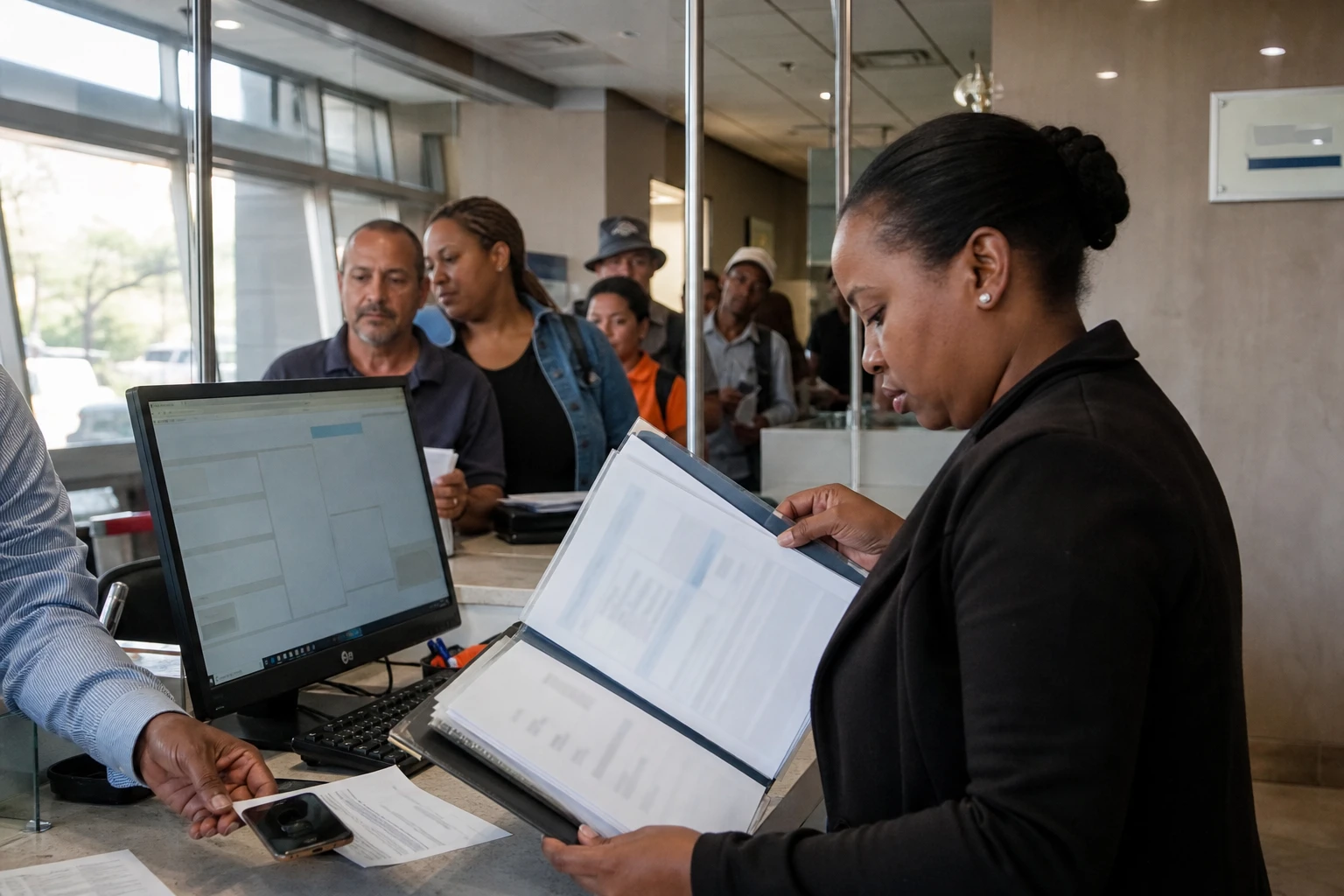
In South Africa, electricity is no longer traded solely between Eskom and its customers. Businesses are now looking for their own suppliers, while independent generators are using the existing grid to reach new buyers. It is in this changing market that Azura Power has just taken a position.
First South African foothold through trading
The pan-African group Azura Power has acquired a majority stake in Enpower Trading, a South African electricity trading company. The deal, announced by Azura on 30 September 2026 and reported on 2 October, marks the group’s first presence in South Africa.
The value of the transaction and the exact percentage of the company sold have not been disclosed. Enpower’s founders and executives remain involved in the business. This continuity is intended to preserve local expertise while providing the company with additional financial resources.
Azura intends to use Enpower as its trading platform in the country. The group believes this activity can support the sector’s gradual opening to private generators and meet the needs of large commercial and industrial consumers.
Azura Power already operates more than 750 MW of electricity capacity in Nigeria, Senegal and Mozambique. Its entry into South Africa therefore does not involve the immediate construction of a new power plant. Instead, it is taking place through a link that has become strategic: the intermediary between generators and consumers.
Enpower holds a private trading licence issued by South Africa’s energy regulator, the National Energy Regulator of South Africa, or NERSA. It also has import and export permits, as well as conditional participant status in the Southern African Power Pool, the regional electricity market of southern Africa.
Wheeling uses existing networks
The model is based primarily on “wheeling”. The term refers to the delivery of electricity generated by a private operator to a customer elsewhere, using Eskom’s or a municipality’s networks. The generator therefore does not build a dedicated line for each buyer.
Under this arrangement, the trader buys electricity from independent generators and then sells it to businesses. The parties generally sign a bilateral power purchase agreement, known as a PPA. The network operator, in turn, charges for the use of its infrastructure.
The arrangement does not mean that electrons produced at a solar or wind power plant physically follow a dedicated route to the customer’s business. The grid operates as shared infrastructure. The volumes fed in and consumed are reconciled using metering data and market settlement rules.
Enpower says it began wheeling operations in the municipality of George in 2022. The company has also been active in Cape Town since 2024. The municipality of George had already presented its pilot as a way to connect one generator with several buyers, while retaining the revenue associated with use of its network.
In Cape Town, the municipality permits retail wheeling through a licensed third-party supplier. Since 1 March 2025, its bilateral scheme has covered medium- and high-voltage connections, from 11 kV to 132 kV. Customers must, among other things, have a tariff based on periods of consumption.
A market decentralising around Eskom
This shift is part of the broader reform of South Africa’s electricity sector. Eskom remains the central player in generation, transmission and distribution. However, the growing number of independent generators is creating new sales channels, particularly for solar and wind power.
Wheeling broadens the market for private power plants. A project can sell its electricity to a business without relying solely on a public contract or a direct agreement with Eskom. This can improve revenue visibility and make it easier to finance new capacity.
For businesses, there are two advantages. They can diversify their supply and reduce their exposure to strains on the electricity system. They can also increase the share of renewable electricity in their consumption, an important issue for exporters facing the environmental requirements of their customers and markets.
The benefits are not automatic, however. The model depends on the networks’ ability to accommodate new projects, the quality of metering and the stability of tariff rules. In practice, it also remains limited to consumers large enough to meet the contractual and technical requirements of the scheme.
Small businesses and households are therefore not yet benefiting from this opening to the same extent. Large industrial sites, shopping centres and groups with several locations are the first able to negotiate directly with generators or traders.
The next test: aggregating multiple generators and customers
Eskom is preparing a development of the model known as “virtual wheeling”. This approach allows an intermediary to bring together several generators and several customers, including when the latter are connected to different municipal networks. The mechanism is based on financial credits calculated from the volumes generated and consumed.
The scheme is intended to facilitate access to renewable electricity without requiring a direct physical connection between each power plant and each business. Eskom also plans reimbursement or compensation mechanisms, while customers will continue to pay their network bills to Eskom or their municipality.
The City of Cape Town is already testing more complex arrangements. After an initial phase focused on exchanges between one generator and one buyer, it has begun a second stage to examine “one-to-many”, “many-to-one” and “many-to-many” models. The stated aim is to assess their potential to open up the market to a wider range of participants.
Against this backdrop, Azura’s investment strengthens Enpower’s capabilities as market rules become more technical. The capital provided is intended to support the conclusion of new contracts, increase available financial guarantees and strengthen relationships with both generators and buyers.
A deal with implications beyond South Africa
The transaction is also of interest to southern Africa. Enpower’s participation in the Southern African Power Pool offers a regional prospect, although effective access to cross-border trading depends on licences, interconnection capacity and each country’s rules.
For Azura, South Africa could thus become a base for expansion in a regional market where electricity needs are growing and resources are unevenly distributed. Solar, wind, hydropower and thermal capacity can be traded between countries when networks and commercial mechanisms allow.
The deal will now need to be tracked on three fronts: Enpower’s growth, changes to wheeling rules and Eskom’s rollout of virtual wheeling. These developments will show whether private trading remains a specialised segment or becomes one of the pillars of South Africa’s future electricity market.
Azura Power’s announcement of its entry into South Africa, Cape Town’s wheeling rules and Eskom’s virtual wheeling scheme help gauge the scale of this transformation.