Algeria
 Egypt
 Libya
 Morocco
 Sudan
 Tunisia
 Benin
 Burkina Faso
 Cabo Verde
 Côte d'Ivoire
 Ghana
 Guinea
 Guinea-Bissau
 Liberia
 Mali
 Mauritania
 Nigeria
 Senegal
 Sierra Leone
 The Gambia
 Togo
 Cameroon
 Central African Republic
 Chad
 DR Congo
 Equatorial Guinea
 Gabon
 Republic of the Congo
 São Tomé and Príncipe
 Burundi
 Comoros
 Djibouti
 Eritrea
 Ethiopia
 Kenya
 Madagascar
 Malawi
 Mauritius
 Mozambique
 Rwanda
 Seychelles
 Somalia
 South Sudan
 Tanzania
 Uganda
 Angola
 Botswana
 Eswatini
 Lesotho
 Namibia
 South Africa
 Zambia
 Zimbabwe
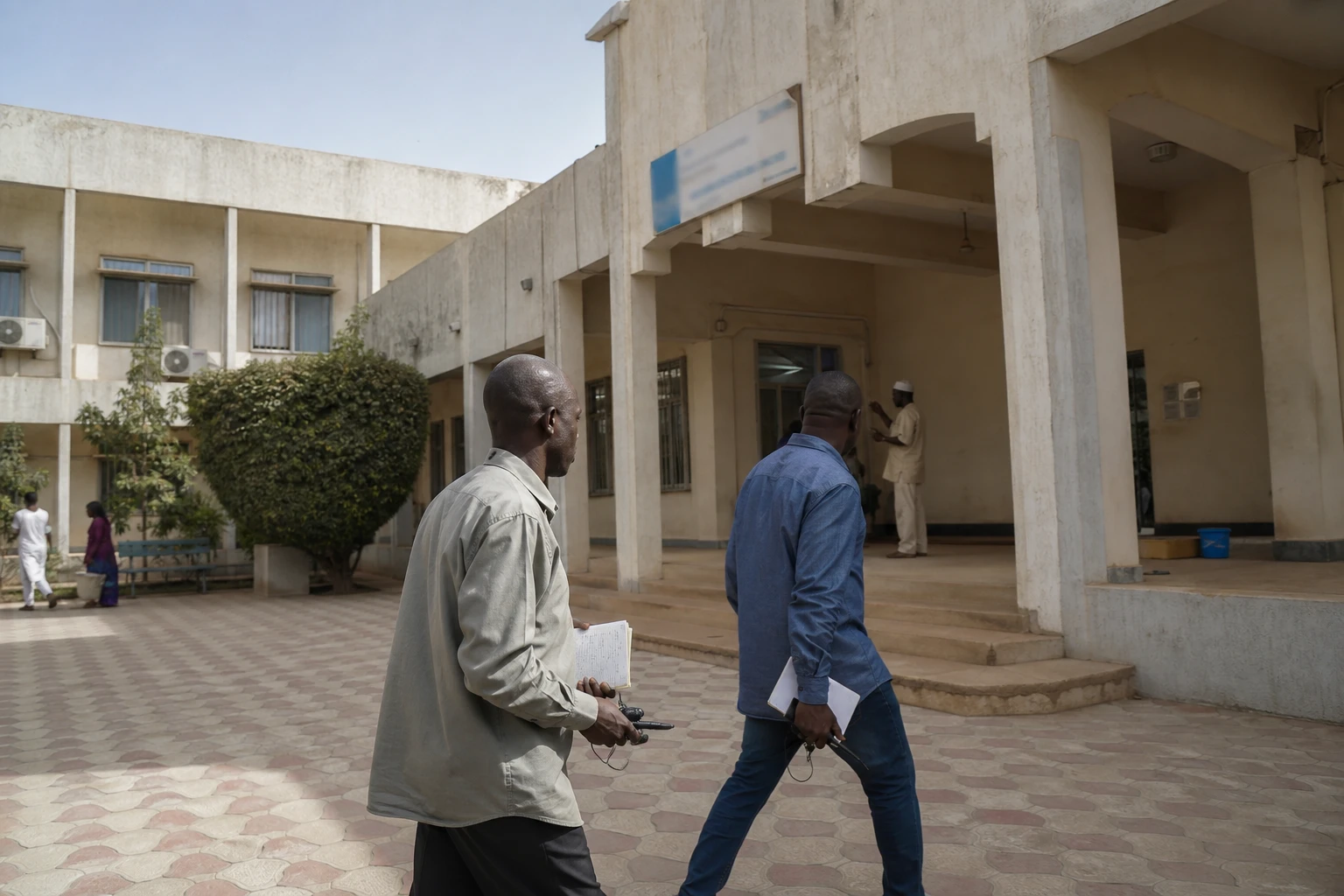
In Niamey, Moussa Kaka’s disappearance has left a newsroom without its director and a family without answers. The Nigerien journalist has been missing since 31 August 2026, after leaving the premises of Radio Télévision Saraounia, which he ran. As of 5 October 2026, there had been no public information about his fate for 35 days.
A disappearance amid intense pressure
Moussa Kaka is believed to have left his office at around 7pm to go home in the Lossogoungou district. He never arrived. His vehicle has not been found, according to information provided by Reporters Without Borders (RSF). The following day, his relatives searched for him in hospitals and police stations in Niamey, with no known result.
Since then, the journalist’s family, lawyer and colleagues have had no contact with him. The Nigerien authorities have not publicly announced the opening of an investigation or provided an explanation for his disappearance. This silence is fuelling concern, but in itself does not establish who is responsible.
The disappearance came a few days after a mutiny was reported at several military installations in Niamey on 29 August. No link between the events has been established. It is, however, important context in a country where the military authorities have tightened their control over public space since the July 2023 coup.
Niger is led by General Abdourahamane Tiani, who came to power after the overthrow of President Mohamed Bazoum. Since this institutional rupture, relations with the Economic Community of West African States (ECOWAS), the regional organisation tasked, among other things, with defending cooperation and constitutional order, have deteriorated sharply.
Established facts and allegations to be verified
On 28 September, RSF petitioned the United Nations Working Group on Enforced or Involuntary Disappearances. The move aims to obtain information about Moussa Kaka’s fate and press the Nigerien authorities to open an investigation. The organisation had already approached the African Commission on Human and Peoples’ Rights’ Special Rapporteur on Freedom of Expression.
The G25-Niger group of civil society and media organisations says, in a statement reported by RSF, that the journalist was allegedly followed by agents described as members of the secret services. The group also refers to his vehicle being stopped near the Gadafawa roundabout in Niamey before his presumed abduction. RSF says it has been unable to verify these details.
This caution is essential. At this stage, no Nigerien judicial authority has confirmed an arrest. Nor is there any public document that formally attributes the disappearance to a security service. Allegations against the authorities must therefore remain presented as allegations, not as definitively established facts.
Amnesty International nevertheless believes that several indications warrant an independent investigation. The organisation recalls that Moussa Kaka was already detained in October 2025 with five other journalists. They were prosecuted under Niger’s cybercrime legislation after announcing a press conference about a solidarity fund intended to support the security forces’ operations.
The charges were brought for “complicity in disseminating a document likely to disturb public order”, according to the information available. Their existence does not prove a link with the current disappearance. It does, however, show that the journalist had already faced judicial and administrative pressure.
An experienced journalist at the heart of Niger’s media landscape
Moussa Kaka has worked in the press for nearly 40 years. He began at the national radio station before founding Radio Saraounia in 1999, followed by the Saraounia television channel in 2011. The group employs around 70 people and has correspondents in several regions, including Tahoua, Maradi and Madaoua.
This presence gives the case significance beyond the journalist’s personal story. A disappearance within a media group based in the capital and operating in several regions can disrupt the flow of local information. It can also intensify journalists’ self-censorship, particularly when newsrooms are already working in an environment marked by restrictions and legal uncertainty.
Moussa Kaka was also a correspondent for Radio France Internationale until 2023. That year, the Nigerien military authorities suspended the radio station’s operations in Niger. He has also worked with RSF and documented violations of press freedom in his country.
His career has already involved a lengthy legal ordeal. Between September 2007 and October 2008, he spent 384 days in detention after being accused of an act deemed harmful to national defence. Then, as now, his supporters contested the charges against him.
The regional precedent of disappearances and secret detention
The case arises in a Sahel where journalists, human rights defenders and civil society figures regularly face arrests that are difficult to document. In a report published in April 2025, Amnesty International described cases of enforced disappearance or unlawful detention in Mali, Burkina Faso, Guinea and Niger.
In Niger, the organisation cites the detention of journalist and blogger Samira Sabou, whose relatives had no news of her for a week after her arrest in September 2023. It also mentions the case of Moussa Tchangari, head of the Alternatives Espaces Citoyens organisation, whose lawyers were not immediately told where he was being held.
These precedents do not allow us to conclude that Moussa Kaka is a victim of enforced disappearance. They explain why human rights organisations are calling for a swift, precise and verifiable response. Under international law, an enforced disappearance involves the deprivation of liberty followed by a refusal to acknowledge the detention or disclose the person’s whereabouts.
Niger ratified the International Convention for the Protection of All Persons from Enforced Disappearance in 2015. By doing so, the state undertook to prevent this kind of practice and investigate when a person stops communicating in worrying circumstances.
What the case reveals and what to watch
For Moussa Kaka’s family, the priority remains to establish where he may be detained and what his state of health is. For the profession, the issue is whether journalists can work without fearing that an investigation, arrest or disappearance will go unexplained. For the authorities, opening a transparent investigation would address concerns without prejudging its findings.
The case is also being watched beyond Niger. In a region where military regimes assert greater sovereignty in the face of external pressure, the protection of journalists remains a practical test of the rule of law. Niamey’s response will be scrutinised by African human rights organisations, United Nations mechanisms and regional partners.
The next step is therefore clear: establish the facts, find Moussa Kaka and determine the circumstances of his disappearance through an independent process. Until these details are known, allegations must remain attributed. But after more than a month, the official silence remains a major issue for press freedom in Niger.