
 Algeria
 Egypt
 Libya
 Morocco
 Sudan
 Tunisia
 Benin
 Burkina Faso
 Cabo Verde
 Côte d'Ivoire
 Ghana
 Guinea
 Guinea-Bissau
 Liberia
 Mali
 Mauritania
 Niger
 Nigeria
 Senegal
 Sierra Leone
 The Gambia
 Togo
 Cameroon
 Central African Republic
 Chad
 DR Congo
 Equatorial Guinea
 Gabon
 Republic of the Congo
 São Tomé and Príncipe
 Burundi
 Comoros
 Djibouti
 Eritrea
 Ethiopia
 Kenya
 Madagascar
 Malawi
 Mauritius
 Mozambique
 Rwanda
 Seychelles
 Somalia
 South Sudan
 Tanzania
 Uganda
 Angola
 Botswana
 Eswatini
 Lesotho
 Namibia
 Zambia
 Zimbabwe
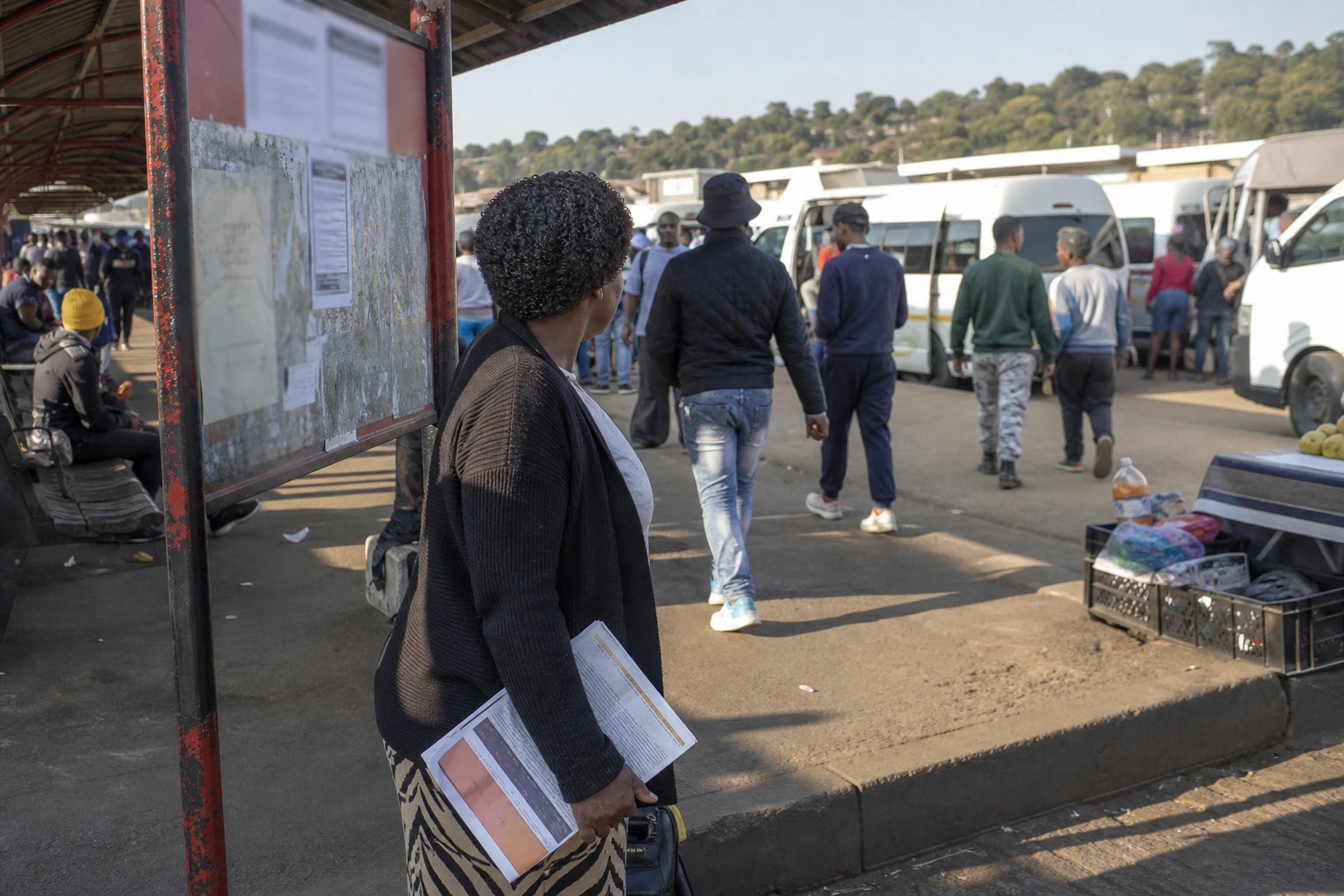
Five weeks before South Africa’s municipal elections, the contest is already being waged under the threat of guns. In several areas, particularly KwaZulu-Natal, local officials are not just defending a platform: they are also exposing themselves to networks seeking to control public contracts, transport, informal markets or access to municipal resources.
Violence levels exceed recent precedents
The municipal elections are set for 4 November 2026. They will renew the councils of metropolitan, local and district municipalities across South Africa’s nine provinces. The Electoral Commission has certified 136,790 candidacies, a figure that reflects the scale of the contest ahead, but also the number of people potentially exposed in neighbourhoods and municipalities.
In a report on political violence, the Global Initiative Against Transnational Organized Crime (GI-TOC), a research organisation focused on criminal networks, records 45 suspected political attacks and at least 43 deaths between January and September 2026. The toll remains attributed to the organisation because not all cases have been legally established as politically linked killings.
A second South African source reports at least 42 deaths over the same period. This difference of one death illustrates the limits of a count compiled while investigations are ongoing. It does not, however, change the overall picture: violence levels are already higher than those seen in several previous election years.
The GI-TOC says 13 victims belonged to the African National Congress, the ANC, and eight were linked to the uMkhonto weSizwe party, known as MK and founded by former president Jacob Zuma. The other victims are said to have come from rival parties, civic organisations, local structures or traditional leadership. These affiliations should be treated with caution until investigations have established the motive and those behind each case.
South African authorities have already stepped up investigations in KwaZulu-Natal. In July, provincial police announced the arrest of a suspect in an attempted murder case targeting a local MK official and her husband. This case does not automatically link all the other files to the same criminal organisation. It does, however, show that targeted violence continues to require the attention of a specialist unit.
Why KwaZulu-Natal is a focus of tensions
KwaZulu-Natal has been the main hotspot for recorded political killings for several years. The province combines fierce party rivalry, intense competition for control of municipalities and the presence of criminal networks active in public contracts, transport and some local businesses.
The political landscape has changed since the national and provincial elections of May 2024. In the province, historically favourable to the ANC, MK has become a major force. The Inkatha Freedom Party, the IFP, also retains significant influence. The ANC, for its part, is seeking to win back voters disappointed by poor public services, corruption allegations and internal conflicts.
This competition is not confined to large rallies. It plays out in wards, the municipal constituencies that elect ward councillors. These elected representatives deal with very practical decisions: awarding contracts, access to water, waste management, roads, housing and the provision of certain services. For criminal groups, influencing a municipal council can therefore offer a direct economic advantage.
The risk does not affect national leaders alone. Ward candidates, local activists, municipal employees and community organisation officials may be the most vulnerable. They know the decision-making channels, economic players and land disputes. They are also more accessible than protected political figures.
For several years, police have also identified a possible link between political violence, local corruption and organised crime. This does not mean that every political murder is commissioned by a criminal network. Rather, it is a reminder that motives can overlap: party rivalry, control of a contract, a settling of scores or the elimination of a witness.
A test for the ANC and local coalitions
The 4 November vote will be the first major municipal contest since the ANC lost its parliamentary majority in 2024. The party now governs the country in a national coalition with several other parties. At local level, this new era could lead to more deals between parties and make results harder to interpret.
In major cities, coalitions can limit the dominance of a single party. They can also create new areas of tension when executive positions, municipal committees or contracts become bargaining chips. Smaller parties could then wield more influence than their electoral share would suggest, particularly in councils without a clear majority.
For residents, the stakes go beyond rivalry between political organisations. A campaign marked by threats can reduce turnout, particularly in neighbourhoods where voters know the victims personally. It can also prompt independent candidates, women and young activists to withdraw. Violence therefore does not just compromise the security of the election: it can change the diversity of those represented in local institutions.
The situation also varies across territories. In urban centres, tensions may involve contracts, transport and municipal services. In rural areas, they may centre on land, infrastructure, traditional leadership and access to public budgets. More remote municipalities often have fewer resources to protect candidates and monitor investigations.
A warning for southern Africa
South Africa holds a central place in the Southern African Development Community, SADC, which brings together 16 countries for economic and political co-operation. A lasting deterioration in electoral security in the country would therefore have regional implications, particularly for trade, cross-border movement and confidence in democratic processes.
The South African precedent is also a reminder that local elections can become a meeting point between organised crime and political competition. This issue affects other countries in the region, even where the forms of violence differ. Control of public contracts, transport and local resources remains a sensitive issue everywhere.
In the short term, three indicators will be decisive: the trend in attacks during the campaign, the police’s ability to establish motives and those behind them, and the protection afforded to candidates in high-risk areas. The credibility of the election will depend as much on how voting takes place as on whether residents and candidates can take part without intimidation.



