Algeria
 Egypt
 Libya
 Morocco
 Sudan
 Tunisia
 Benin
 Burkina Faso
 Cabo Verde
 Ghana
 Guinea
 Guinea-Bissau
 Liberia
 Mali
 Mauritania
 Niger
 Nigeria
 Senegal
 Sierra Leone
 The Gambia
 Togo
 Cameroon
 Central African Republic
 Chad
 DR Congo
 Equatorial Guinea
 Gabon
 Republic of the Congo
 São Tomé and Príncipe
 Burundi
 Comoros
 Djibouti
 Eritrea
 Ethiopia
 Kenya
 Madagascar
 Malawi
 Mauritius
 Mozambique
 Rwanda
 Seychelles
 Somalia
 South Sudan
 Tanzania
 Uganda
 Angola
 Botswana
 Eswatini
 Lesotho
 Namibia
 South Africa
 Zambia
 Zimbabwe

In Abidjan, diversity is about more than image. It directly affects how companies recruit, train their teams and allocate responsibilities. In a growing West African economy, the issue is becoming as strategic as cost control or access to finance.
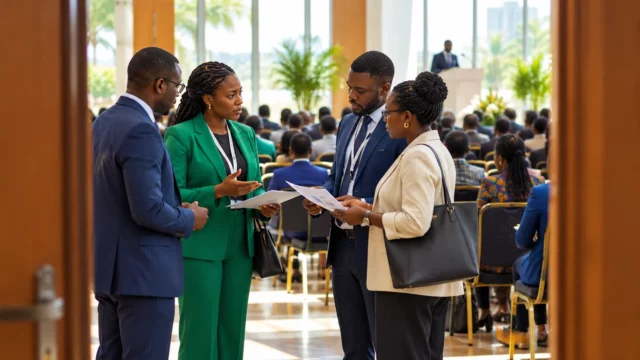
This reality was at the heart of a meeting organised by Club Kesho on diversity as a lever for performance and the transformation of African organisations. The debate brought together executives, entrepreneurs and managers from several countries. Above all, it raised a practical question: how can varied backgrounds be turned into more effective decisions without creating new forms of exclusion?
Abidjan, a West African professional hub
Côte d’Ivoire occupies a particular place in this debate. For several decades, the country has attracted workers, entrepreneurs and managers from other member states of the Economic Community of West African States (ECOWAS), the organisation that coordinates regional integration in West Africa.
Data from the 2021 General Population and Housing Census confirm the scale of migration. Côte d’Ivoire’s resident population then stood at 29.4 million. Foreign nationals made up a significant part of that population, with a particularly strong presence in major urban centres and economic zones.
Abidjan accounts for a large share of these flows. According to the National Institute of Statistics, the economic capital alone is home to 18.9% of foreign nationals living in Côte d’Ivoire. The city is therefore a professional laboratory where different nationalities, languages, business practices and social backgrounds meet.
The political capital, Yamoussoukro, is home to national institutions. Abidjan, however, remains the country’s main economic centre. It is home to company headquarters, financial services, consulting firms, port activities and a large share of skilled jobs.
Diversity as a tool for performance
For Khally Makaya, a member of Club Kesho and an executive at PwC, diversity must be considered beyond appearances. In Côte d’Ivoire, it is reflected less in skin colour than in nationalities, cultures, experience and professional networks.
This approach reflects the reality of many African workplaces. A single team may bring together Ivorians, Burkinabè, Senegalese, Congolese, Cameroonians or Malians. Each brings different perspectives on customer relations, hierarchy, negotiation or time management.
These differences can improve understanding of markets. They can also help companies serve clients from several countries more effectively. But they do not automatically produce results. A company must organise integration, clarify rules and prevent discrimination if diversity is to become genuinely productive.
Khally Makaya sums up this progression in two stages: immersion, followed by integration. A manager arriving in Côte d’Ivoire must be able to understand local professional norms. They must also be able to retain a place for their own background. This two-way adjustment encourages commitment and reduces early departures.
Under this model, the company does not simply expect employees to adapt. It must also create the conditions for them to thrive. That means accessible management, clear assessment criteria and internal mobility based on skills.
Broader access, but still unequal
In several sectors, Côte d’Ivoire offers an open professional environment for African managers. Nationals of neighbouring countries can take on important roles in banking, telecommunications, industry, services and regional organisations.
This openness sometimes sets the Ivorian market apart from other environments where leadership roles remain more closely tied to nationality. It does not mean that career paths are always fair. Networks, qualifications, familiarity with social norms and access to information continue to weigh heavily in promotion decisions.
Nationality is only one dimension of diversity. Gender remains a major barrier. Women have gained ground on boards and in management roles, but remain less likely to lead large organisations.
Public figures illustrate this incomplete progress. In companies in the Ivorian state portfolio, women accounted for about 31% of managers in 2024. This marks a shift, but does not in itself indicate the proportion of women in chief executive roles or on executive committees.
The same pattern is evident in public life. In 2024, women held 34 of the 254 seats in Côte d’Ivoire’s National Assembly, or 13.38%. These figures show that better representation among employees does not yet guarantee an equitable share of decision-making power.
Transparency to ease tensions
Diversity can also cause tensions when it is seen as competition between groups. A promotion given to a foreign candidate may be challenged by local employees. Conversely, a national recruitment may be interpreted by managers from other countries as a sign of exclusion.
The answer is not to deny these tensions. Rather, it lies in clear procedures. Companies must explain their recruitment, pay and promotion criteria. They must also make assessments comparable across teams.
This transparency protects employees and executives alike. It limits suspicions of favouritism and requires organisations to link decisions to specific skills. It can also help retain African talent weighing a return to the continent against a career in Europe.
Talent is no longer moving in only one direction. Africans educated or settled in Europe are returning to start businesses, join regional groups or take on responsibilities in their countries of origin. At the same time, African diasporas are strengthening their presence in major European companies.
An issue beyond Côte d’Ivoire
The debate in Abidjan concerns all African companies seeking to expand across multiple markets. The African Continental Free Trade Area (AfCFTA), an integration project designed to increase trade between African countries, is likely to boost the movement of skills and capital.
This shift will require groups to manage more mobile and diverse teams. It will also raise questions about the recognition of qualifications, the transferability of experience and women’s access to leadership roles.
For Côte d’Ivoire, the challenge will be to preserve its appeal while widening access to opportunities beyond Abidjan. The benefits of diversity remain concentrated in the economic capital and in formal sectors. Workers in the regions, small businesses and the informal economy must also be able to benefit from the movement of skills.
The next step will therefore be about more than celebrating diversity. Its effects on careers, pay, promotions and governance will need to be measured. Only then can Côte d’Ivoire’s cultural openness become a lasting policy for performance and inclusion.