Algeria
 Egypt
 Libya
 Morocco
 Sudan
 Tunisia
 Benin
 Burkina Faso
 Cabo Verde
 Côte d'Ivoire
 Ghana
 Guinea
 Guinea-Bissau
 Liberia
 Mali
 Mauritania
 Niger
 Nigeria
 Sierra Leone
 The Gambia
 Togo
 Cameroon
 Central African Republic
 Chad
 DR Congo
 Equatorial Guinea
 Gabon
 Republic of the Congo
 São Tomé and Príncipe
 Burundi
 Comoros
 Djibouti
 Eritrea
 Ethiopia
 Kenya
 Madagascar
 Malawi
 Mauritius
 Mozambique
 Rwanda
 Seychelles
 Somalia
 South Sudan
 Tanzania
 Uganda
 Angola
 Botswana
 Eswatini
 Lesotho
 Namibia
 South Africa
 Zambia
 Zimbabwe
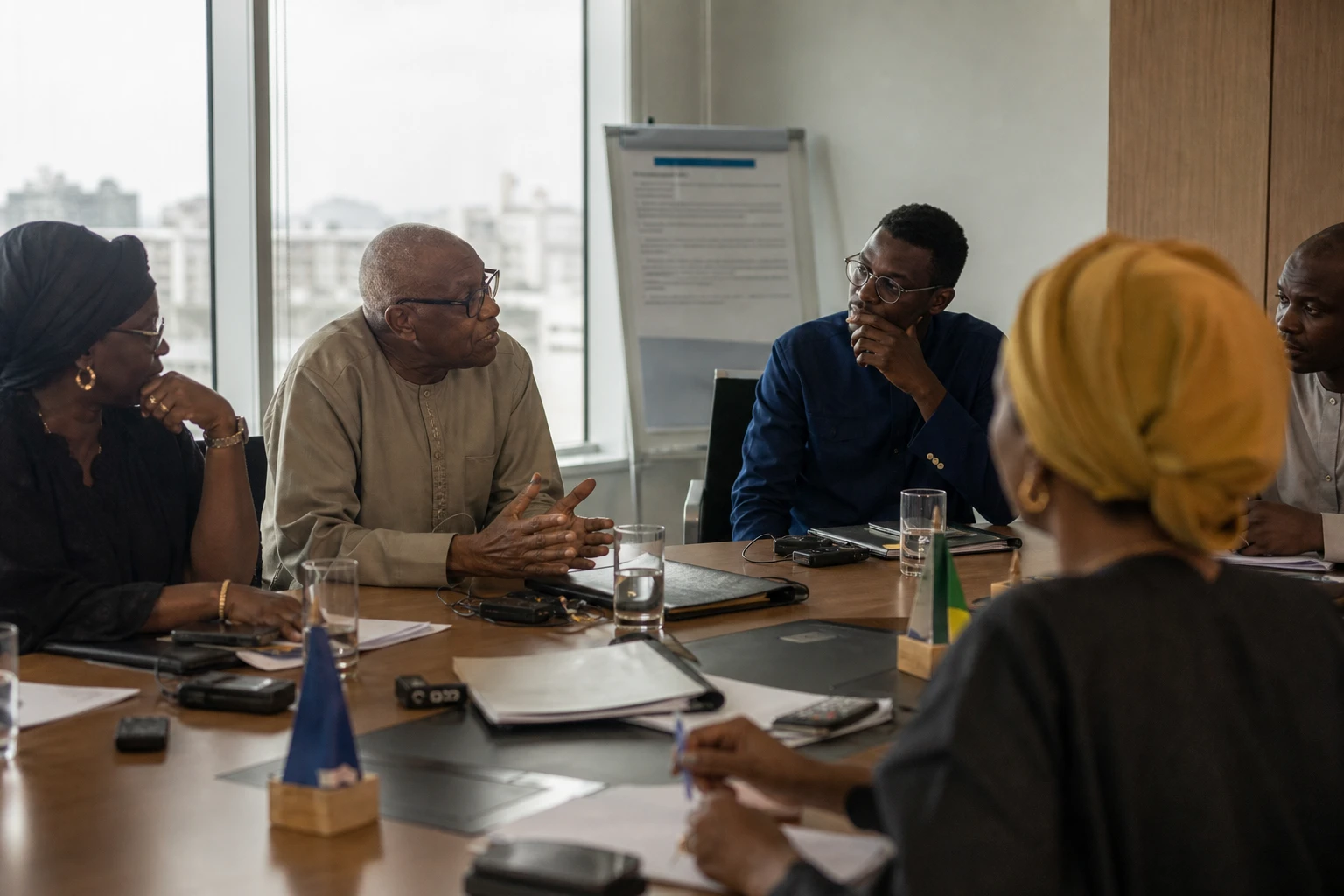
In Dakar, the memory of the Senegalese Tirailleurs is moving beyond display cases and official ceremonies. It is returning through the voices of those who lived this history, in the languages that still carry it within families.
Launched on 1 October 2026, the audio project “Memories of the Tirailleurs” brings together testimonies from former soldiers and their relatives. The series aims to pass on a history often reduced to battlefields, even though it also touches villages, families and current generations.
A memory told from Senegal
The project was conceived by the KËR LEYTI House of Oral Tradition and Heritage, under the direction of Senegalese writer and researcher Massamba Guèye. It is supported by the French Embassy in Senegal.
Recordings were made in several regions of the country, from Podor to Casamance, taking in the centre and south-east. The team travelled more than 3,700 kilometres to gather accounts close to the places where former soldiers and their descendants live.
The format comprises around 20 audio productions. Some are available in Wolof and others in French. Testimonies in Mandinka were also collected during the fieldwork. This linguistic diversity keeps the accounts connected to their social environment.
The podcast therefore presents more than military history. It explores the men’s lives before enlistment, their experience of serving in the French uniform and their return home. It also gives space to families, who have often preserved fragmentary memories, photographs, letters or stories passed down orally.
African soldiers at the heart of several wars
The term “Senegalese Tirailleurs” referred to African units recruited by the French colonial army. Despite their name, these soldiers did not come only from Senegal. Many originated in other territories of French-ruled West Africa.
They took part in several conflicts from the late 19th century until African independence. They played a significant role in the First World War, the Second World War and the colonial wars subsequently waged by France.
Their history is marked by a major contradiction. These men fought in France’s name, sometimes far from their villages, within a colonial system that did not grant them the same rights as European soldiers. Their commitment therefore cannot be told solely through the lens of sacrifice or heroism.
Recruitment, hierarchical relations, promises of pay and recognition, and discrimination must also be discussed. Returning home did not always bring the respect they had expected. In many families, the memory of these former soldiers was shaped by silence or passed on privately.
Countering omissions and distorted accounts
For Massamba Guèye, one of the aims is to counter falsehoods circulating about the Tirailleurs. First-hand testimonies are intended to bring public history closer to the accounts of those directly concerned.
This approach does not replace the work of historians and archives. It complements it. A testimony does not always provide a complete chronology. It does, however, convey an experience, an emotion and a way of understanding events that administrative documents cannot fully capture.
This approach is particularly significant in Senegal, where discussions of the colonial period remain connected to contemporary issues. They concern the place of national languages, the teaching of history, recognition for former soldiers and relations with France.
The Thiaroye massacre, which took place near Dakar on 1st December 1944, remains one of the most sensitive episodes in this history. Tirailleurs who had returned from captivity after the Second World War were demanding, among other things, payment of their wages and allowances. Historians continue to debate the exact number of victims, but the event holds a central place in Senegalese memory.
In this context, giving former soldiers and their descendants a voice also shifts the centre of the story. History is no longer told solely from the perspective of military headquarters, European capitals or military archives. It returns to the villages and families that have borne its consequences.
A resource for schools and future generations
The project is aimed at a broad audience. Young people are a particular focus, but its ambitions extend beyond the classroom. Schools, daara — Quranic schools —, women’s associations and cultural organisations can also make use of the material.
Audio offers a practical advantage in this respect. It allows people to listen to a voice without relying on a long written text. It can also circulate in places where access to history books remains limited. Listening posts are planned in some villages connected to the history of the Tirailleurs, as well as at memorial sites and cultural centres.
Transmission does not take place only between school and pupil. It also concerns grandchildren, local associations and Senegalese diaspora communities. In these accounts, audiences can find names, places and experiences already present in their family histories.
The choice of Wolof strengthens this dimension. It helps preserve people’s words in a language used daily by a large part of Senegal’s population. French remains useful for reaching institutions, researchers and diaspora listeners. The two languages can thus engage with each other without placing one above the other.
Relevance beyond Senegal’s borders
The history of the Tirailleurs concerns several West African countries. Recruitment affected territories that today correspond to Senegal, Mali, Guinea, Côte d’Ivoire, Burkina Faso, Niger, Benin and Mauritania. The memory of these soldiers cannot therefore be confined to a single national narrative.
It also points to a regional history of mobility, colonial armies and movement between Africa and Europe. Within ECOWAS, the Economic Community of West African States, today’s borders do not always reflect the journeys of former soldiers and their families.
The podcast thus raises a broader question: how do African societies want to tell the story of military service that was imposed, negotiated or chosen during the colonial period? The answer will come through archives, but also through languages, family accounts, museums and cultural works.
Above all, the initiative in Dakar is a reminder that memory is not fixed. It is built in the present, with the voices still available and those of descendants. The next step will be to bring these accounts into schools, cultural venues and public debate, in Senegal and in other countries connected to this history.