Algeria
 Libya
 Morocco
 Sudan
 Tunisia
 Benin
 Burkina Faso
 Cabo Verde
 Côte d'Ivoire
 Ghana
 Guinea
 Guinea-Bissau
 Liberia
 Mali
 Mauritania
 Niger
 Nigeria
 Senegal
 Sierra Leone
 The Gambia
 Togo
 Cameroon
 Central African Republic
 Chad
 DR Congo
 Equatorial Guinea
 Gabon
 Republic of the Congo
 São Tomé and Príncipe
 Burundi
 Comoros
 Djibouti
 Eritrea
 Ethiopia
 Kenya
 Madagascar
 Malawi
 Mauritius
 Mozambique
 Rwanda
 Seychelles
 Somalia
 South Sudan
 Tanzania
 Uganda
 Angola
 Botswana
 Eswatini
 Lesotho
 Namibia
 South Africa
 Zambia
 Zimbabwe
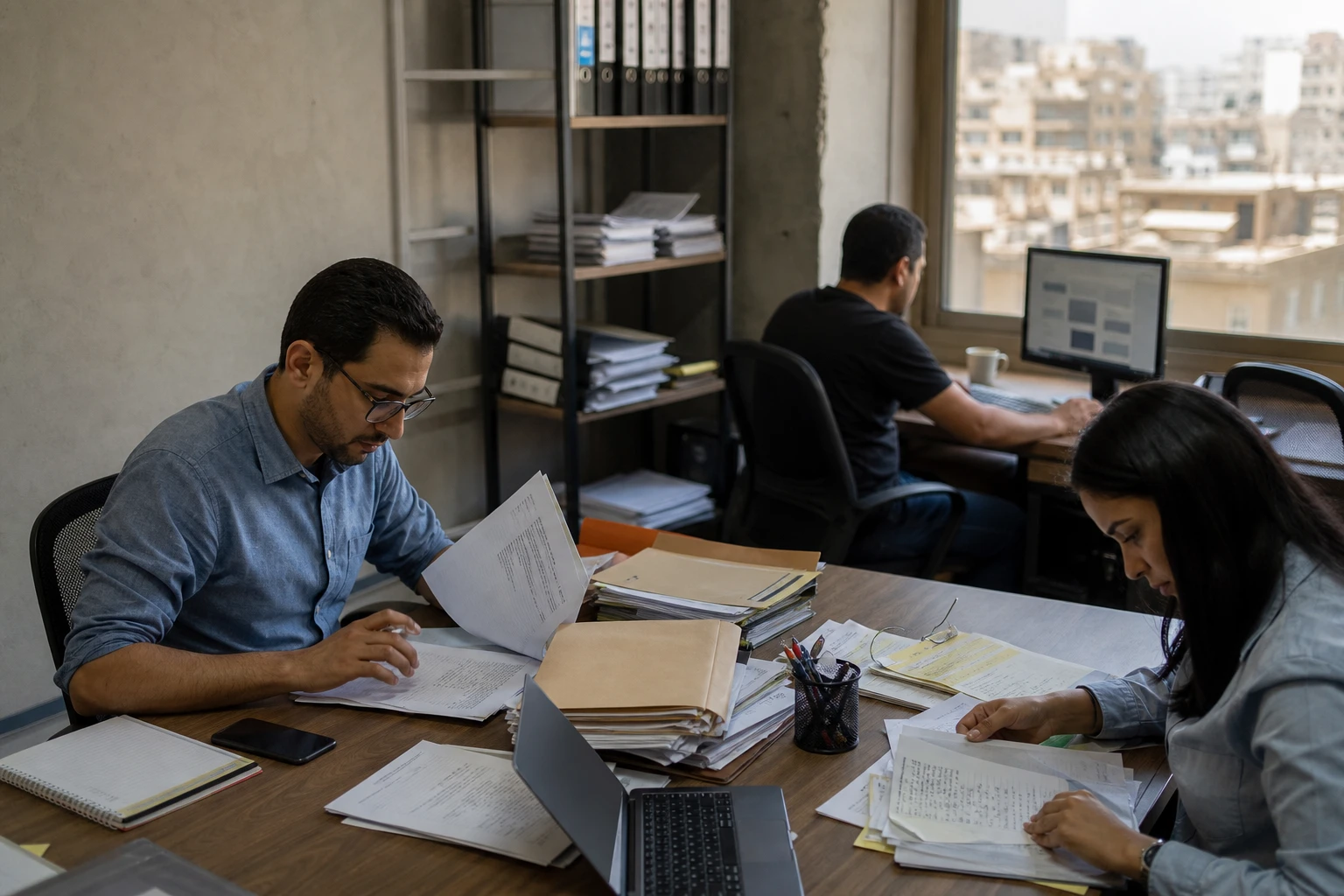
In Egypt, an entire newsroom disappeared from view in less than 48 hours. The case of Matsada2sh, a platform known for its investigations and fact-checking, raises an immediate question: how far can an independent media outlet operate when its journalists are arrested one after another?
Operations across several governorates
The arrests began on the evening of Monday 28 September 2026. They continued until Wednesday 30 September. In total, six Matsada2sh journalists were detained. They made up the entire editorial team still active in Egypt.
The first operation targeted Mohamed Ashraf Abu Emeira, described as the platform’s editor-in-chief, followed by Abdallah Qadry. Their homes were searched. Islam Barakat was then arrested in Gharbiya governorate, in the north of the country. Omar Helal was detained in Port Said. Mohamed Mahmoud and Mohamed Adel were finally arrested in Cairo, according to Reporters Without Borders and the independent Egyptian media outlet Al Manassa.
Several journalists’ phones and computers were seized. As of 1 October, however, neither their families nor their lawyers had any precise public information about where they were being held. The Egyptian Initiative for Personal Rights, which is providing their legal representation, says the six journalists have been unable to contact their relatives or defence team.
The Egyptian organisation is calling on the prosecutor-general to open an urgent investigation. It is also demanding that the journalists’ place of detention be disclosed and that they be given effective access to lawyers. At this stage, the precise legal grounds for the arrests and any charges brought have not been made public.
Official accusations, disputed responses
Egypt’s Interior Ministry confirmed the arrests on Thursday 1 October. It accused Matsada2sh of being an unauthorised platform run from abroad and of spreading false information. It also claimed that the six journalists were linked to “media committees” of the Muslim Brotherhood, an organisation banned by the Egyptian authorities.
In its statement, the ministry described Abdel Rahman Mansour, the platform’s co-founder, as a fugitive member of the Muslim Brotherhood. It said the journalists had produced fabricated content in exchange for foreign funding. The authorities have not, however, made public any documents supporting these accusations in the information available.
Abdelrahman Mansour, speaking from abroad, rejects these claims. He says the accusations are false. Matsada2sh has also disputed several points in the ministry’s statement. The disagreement concerns, in particular, the nature of the platform and the links attributed to it.
Founded in 2018, Matsada2sh initially focused on fact-checking public statements and content circulating online. It later developed investigations into issues of public interest in Egypt and other Arab countries. The platform says it applies its verification methods regardless of the political origins of the information under review.
A worrying precedent for the Egyptian press
The simultaneous arrest of an entire editorial team is exceptional in Egypt’s media landscape. Press freedom organisations see it as a warning to independent journalists, as well as to researchers and fact-checkers.
“Arresting an entire team is unprecedented and sends a worrying signal,” said Lobna Darwish, advocacy officer at the Egyptian Initiative for Personal Rights, as quoted by Le Monde. The organisation says the case goes beyond the fate of the six journalists. It comes amid an environment in which independent media operate under intense pressure and several news websites remain blocked.
Available figures vary depending on the criteria used. Reporters Without Borders says 24 journalists are detained in Egypt. The Egyptian Initiative for Personal Rights counts 26 detained in connection with their professional activity. This difference may be explained by distinct counting methods, particularly when determining whether someone is detained for their journalistic work or for a different stated reason.
Reporters Without Borders’ 2026 World Press Freedom Index ranks Egypt 169th out of 180 countries. The ranking alone does not sum up the reality of the sector. It does, however, reflect an environment characterised by restrictions, digital blocks and the detention of information professionals.
A case that reaches beyond Egypt’s borders
The response has not come only from international organisations. Egyptian associations, independent media outlets and regional groups have also called for the six journalists to be released. The Committee to Protect Journalists and several human rights organisations have joined the appeal.
According to the Committee to Protect Journalists, the arrests involved Mohamed Ashraf Abu Emeira, Abdallah Qadry, Islam Barakat, Omar Helal, Mohamed Mahmoud and Mohamed Adel. The platform was one of the few Egyptian outlets devoted to fact-checking and investigative journalism.
For Egypt, the stakes are also institutional. The country remains a major North African player and a member of the Common Market for Eastern and Southern Africa, COMESA, an organisation seeking to strengthen economic exchanges among its member states. Debates about freedom of information therefore resonate beyond the national context, particularly as digital content circulates between African and Arab societies.
The next step will be judicial. The journalists’ families and advocates are awaiting official confirmation of where they are being held, access to lawyers and notification of any charges. Until this information is made public, the Matsada2sh case remains shrouded in opacity. Above all, it tests the ability of Egyptian institutions to guarantee the rights of the defence in a case directly concerning the work of the press.