Algeria
 Egypt
 Libya
 Morocco
 Tunisia
 Benin
 Burkina Faso
 Cabo Verde
 Côte d'Ivoire
 Ghana
 Guinea
 Guinea-Bissau
 Liberia
 Mali
 Mauritania
 Niger
 Nigeria
 Senegal
 Sierra Leone
 The Gambia
 Togo
 Cameroon
 Central African Republic
 Chad
 DR Congo
 Equatorial Guinea
 Gabon
 Republic of the Congo
 São Tomé and Príncipe
 Burundi
 Comoros
 Djibouti
 Eritrea
 Ethiopia
 Kenya
 Madagascar
 Malawi
 Mauritius
 Mozambique
 Rwanda
 Seychelles
 Somalia
 South Sudan
 Tanzania
 Uganda
 Angola
 Botswana
 Eswatini
 Lesotho
 Namibia
 South Africa
 Zambia
 Zimbabwe
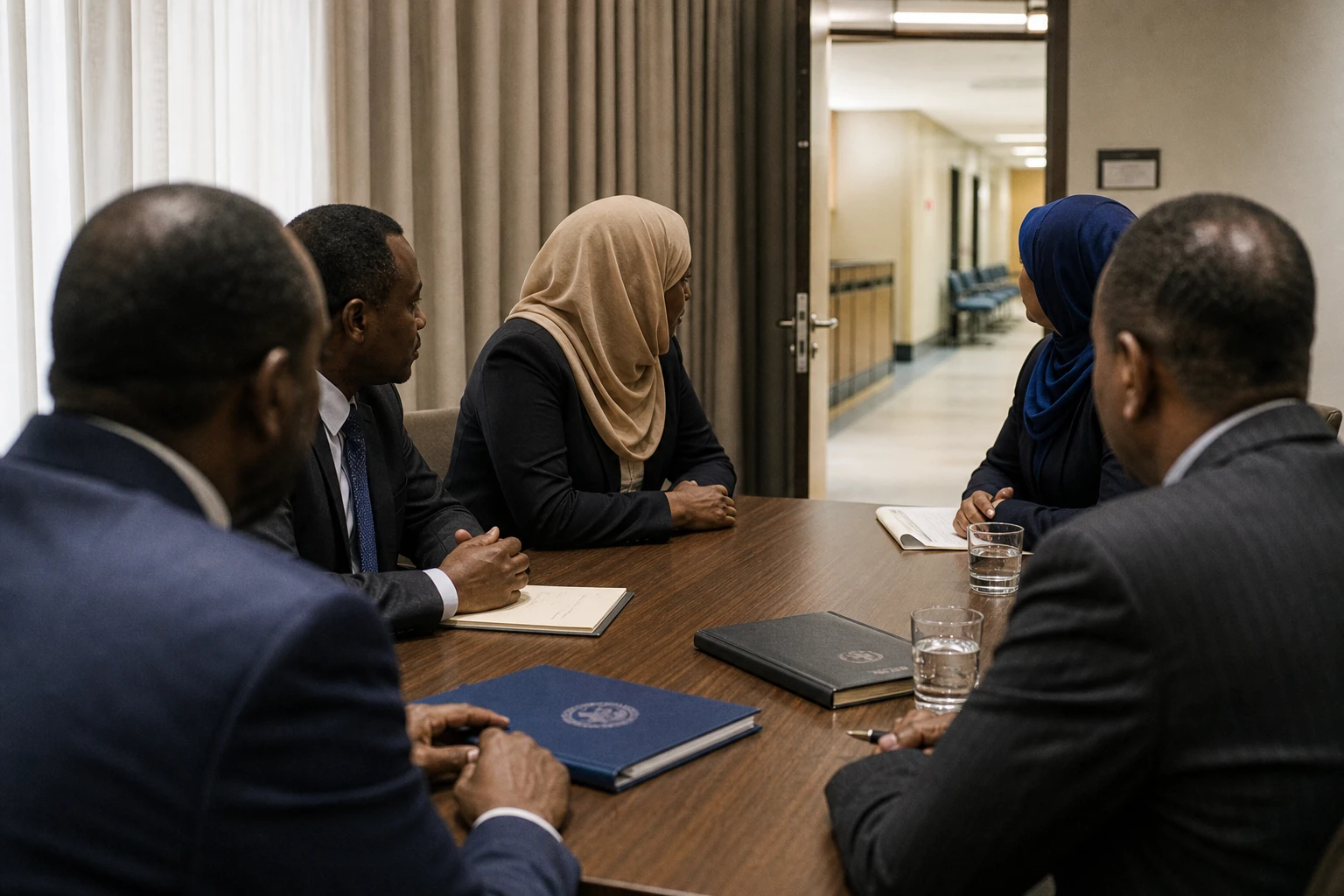
Omar al-Bashir’s return to a medical facility in Khartoum is not merely a health emergency. In a Sudan at war, every move by the former president remains tied to a broader question: who is protecting him, who can decide his judicial future, and how far can the authorities go without provoking a new political crisis?
A medical transfer to a capital still marked by war
Omar al-Bashir was transferred from Merowe, in northern Sudan, to a military hospital in Khartoum. His lawyer, Mohamed Al-Hassan Al-Amin, said on Thursday 1 October 2026 that his client was to undergo tests and receive treatment there.
The 82-year-old former head of state is reportedly experiencing symptoms whose cause has not yet been established. His lawyer cited episodes of low blood pressure and recurring infections in particular. He did not give a precise diagnosis.
Omar al-Bashir’s family, for its part, says that medical care outside Sudan has become “critical and urgent”. So far, however, no official authorisation to leave the country has accompanied the request.
Sudanese officials have reportedly said they would not necessarily oppose treatment abroad. But no public decision has been announced. A transfer to another country therefore remains a possibility raised by the defence and the family, not an established fact.
A judicial trajectory that extends beyond Sudan’s borders
The former president’s medical situation is inseparable from his judicial status. Omar al-Bashir is subject to an arrest warrant issued by the International Criminal Court, the court responsible for trying the most serious crimes when they are not effectively prosecuted at national level.
The Court accuses him of genocide, crimes against humanity and war crimes committed in Darfur. This region in western Sudan was the scene of a major military campaign and violence against civilians in the early 2000s.
The ICC warrant does not mean that Omar al-Bashir will automatically be arrested in every country. It does, however, entail significant legal risks for any state that hosts him, particularly if it is a party to the Rome Statute, the Court’s founding treaty.
In Sudan, the former president is also the subject of several legal proceedings. He was convicted of corruption and possessing foreign currency. Other cases concern the 1989 coup that brought him to power and responsibility for his regime.
From Merowe to Khartoum, detention displaced by conflict
Omar al-Bashir led Sudan from 1989 to 2019. He was overthrown after several months of popular mobilisation. The army and the Rapid Support Forces, then allies, took part in the transition that followed his fall.
The alliance later collapsed. Since April 2023, the Sudanese army and the Rapid Support Forces have been fighting a war that has destroyed much of the country’s infrastructure and displaced millions of people.
Before the conflict broke out, Omar al-Bashir was held at Kober prison in Khartoum. The fighting and attacks on several prison sites then upended the detention arrangements. The former president and several officials from his regime were placed under military surveillance, then transferred to facilities in the north of the country.
In September 2024, his defence had already announced his transfer to Merowe for treatment. Sudanese sources had then reported blood pressure problems and the need for regular monitoring. Agence France-Presse also reported that the former president was to receive care at a better-equipped facility than those available near Khartoum.
The latest move therefore comes amid a longstanding medical situation. It also reflects the limitations of Sudan’s health system, severely disrupted by the war, shortages of medicines and the deterioration of hospital infrastructure.
A possible departure from the country amid high tensions
Treatment abroad would raise an immediate question: what judicial safeguards would accompany the journey? For the Sudanese authorities, authorising the departure of a former president wanted by the ICC could be seen as undermining national and international proceedings.
The defence could argue that Omar al-Bashir’s health warrants a medical evacuation. Victims of Darfur and their representatives could, by contrast, call for the operation not to be used to circumvent justice.
The issue concerns more than the former leader. It also affects current officials, who must manage the war, political networks inherited from the former regime and the conflicting expectations of their allies. The military authorities are seeking to preserve their control of the country while avoiding the risk of a longstanding legal case turning into a diplomatic crisis.
According to reports not officially confirmed, Islamist officials are said to have explored options for a transfer out of Sudan. Eritrea has been cited as a possible destination, but no formal offer or agreement to leave has been publicly established.
The Bashir case in the regional equation
Sudan is part of the Horn of Africa, where the Intergovernmental Authority on Development, or IGAD, is seeking to co-ordinate mediation efforts. In February 2026, Sudan resumed full participation in the regional organisation. Since then, IGAD has stressed the need for a political process led by Sudanese themselves.
The Sudanese conflict also involves the African Union, the United Nations and the League of Arab States. These organisations are seeking to bring diplomatic initiatives closer together, as fighting continues and regional rivalries complicate negotiations.
In this context, a possible medical evacuation of Omar al-Bashir could become a test of co-ordination between international justice, Sudanese sovereignty and African mediation. The immediate priority, however, remains to verify his state of health and the conditions of his detention.
The next developments to watch are clear: official confirmation from the military hospital in Khartoum, a decision on any possible departure from the country, and the position of the International Criminal Court. Until these three points are established, the possibility of a departure abroad should be presented with caution.