Algeria
 Egypt
 Libya
 Morocco
 Sudan
 Tunisia
 Benin
 Burkina Faso
 Cabo Verde
 Côte d'Ivoire
 Ghana
 Guinea
 Guinea-Bissau
 Liberia
 Mali
 Mauritania
 Niger
 Nigeria
 Senegal
 Sierra Leone
 The Gambia
 Togo
 Cameroon
 Central African Republic
 Chad
 DR Congo
 Equatorial Guinea
 Gabon
 Republic of the Congo
 São Tomé and Príncipe
 Burundi
 Comoros
 Djibouti
 Eritrea
 Ethiopia
 Kenya
 Madagascar
 Malawi
 Mauritius
 Mozambique
 Rwanda
 Seychelles
 Somalia
 South Sudan
 Tanzania
 Uganda
 Botswana
 Eswatini
 Lesotho
 Namibia
 South Africa
 Zambia
 Zimbabwe
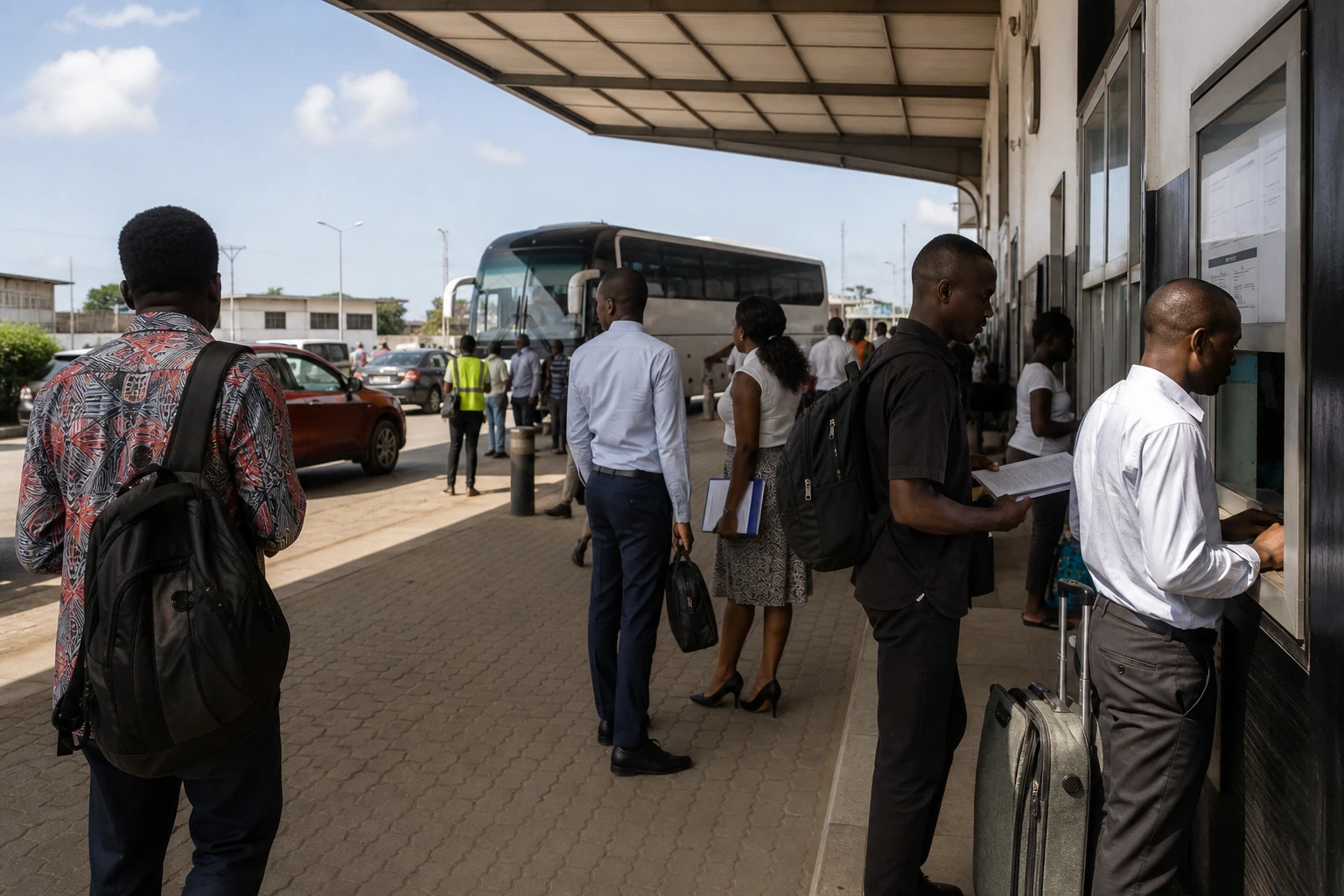
For many young Angolans, the challenge is not just finding a job abroad. It is also avoiding dubious intermediaries, securing a clear contract and leaving with rights that are genuinely guaranteed. It is with this in mind that Luanda and Lisbon want to better organise the recruitment of Angolan workers for Portugal.
An official scheme to match skills with jobs
Portugal currently has 20 000 job vacancies in the network of its Institute of Employment and Vocational Training, the IEFP. The announcement was made in Luanda by Adriano Rafael Moreira, Portugal’s deputy secretary of state for Labour, during a visit to Angola in September 2026.
The information was confirmed by the Angolan Ministry of Public Administration, Labour and Social Security, as well as by Angola’s National Radio. Both sources present these positions as a potential recruitment opportunity for qualified Angolan citizens.
Applications must be submitted through channels designated by the Angolan and Portuguese authorities. The aim is to avoid informal processes and connect candidates with identified employers. The principle put forward by the Portuguese side is simple: wherever possible, workers should leave with an employment contract already in place.
The specific sectors are yet to be detailed in line with companies’ needs. However, demand has been reported for child and elderly care, residential facilities, nurseries and heavy vehicle drivers. These shortages are due in particular to retirements and a lack of candidates with certain qualifications.
A response to pressure on employment in Angola
For Angola, this opening comes amid a labour market where young people continue to struggle to find work. According to the National Institute of Statistics, unemployment affected 21.5 % of people aged 15 or over in the second quarter of 2026.
The situation is more difficult among 15- to 24-year-olds. Their unemployment rate stood at 40.5 % over the same period. The gap between areas is also significant: the employment rate was estimated at 48.2 % in urban areas, compared with 35.6 % in rural areas.
These figures do not mean that the 20 000 Portuguese vacancies will automatically be available to Angolan jobseekers. Rather, they help explain why the government in Luanda is seeking to regulate opportunities for labour mobility. A job abroad becomes a lasting solution only if qualifications, wages, housing conditions and social protection are clearly defined.
Training will therefore be central. Some skills could be developed in Angola, before any further training in Portugal. This model can reduce costs for candidates and make it easier for them to adapt. However, it requires transparent programmes, public selection criteria and recognition of qualifications acquired in Luanda or the provinces.
Safety throughout the process at the heart of discussions
Organised recruitment should also reduce the risks associated with false job promises. In several African countries, workers seeking to go abroad can face excessive fees, incomplete contracts or changes to their jobs after arrival. The involvement of public institutions is specifically intended to limit these practices.
Portuguese authorities have stressed the need for formal procedures, contracts that comply with labour law and access to social protection. Portugal’s mission in Luanda is, in turn, to facilitate administrative procedures related to visas, without waiving the legal requirements for entry and residence.
This social dimension is part of broader cooperation between the two countries. An agreement between Angola and Portugal provides for the recognition of certain social rights for workers from both states, particularly in relation to pensions. The scheme came into force in 2024, according to the Portuguese government.
Labour mobility is also addressed by the MOVER project, which focuses on safe, legal and orderly labour migration between Portugal, Angola and Cape Verde. The project brings together the International Organization for Migration, Angolan authorities and Portuguese partners, among others. It aims to provide candidates with better information and improve coordination between the institutions responsible for employment, training and migration.
Balancing Portugal’s needs with Angola’s interests
For Lisbon, international recruitment addresses labour shortages in several activities. For Luanda, it could provide an additional route into formal employment and the acquisition of international work experience.
However, the interests are not identical. Portuguese companies are looking for skills that are available quickly. Angolan authorities, meanwhile, must ensure that departures do not lead to a lasting loss of skills in sectors that are already vulnerable, including health, social services, construction and transport.
Workers will need precise information on take-home pay, working hours, transport costs, accommodation, contract renewal terms and the possibility of returning home. These factors will weigh more heavily on candidates from provinces far from Luanda, who already face significant costs before they even leave.
The scheme’s success will therefore depend less on the number announced than on how it is implemented. It will be necessary to establish how many contracts are actually signed, in which occupations, with what qualifications and under what conditions. Regular publication of this data would help distinguish vacancies genuinely open to Angolan candidates from positions simply listed in Portugal’s network.
An initiative to be watched beyond the Portuguese-speaking world
This bilateral cooperation comes amid a regional drive by states to better organise the movement of skills. Angola belongs to the Southern African Development Community, SADC, which brings together several countries in the sub-region and works, among other things, on economic integration and mobility.
The issue also concerns the African Union. Regulated labour mobility can support skills transfers, household incomes and training pathways. When poorly regulated, however, it can increase workers’ dependence and encourage abuses.
For Angola, the next step will be to specify which institutions will be responsible for registering, selecting and monitoring candidates. For Portugal, the challenge will be to turn identified needs into accessible and verifiable contracts. Only then can the 20 000 advertised vacancies become a tool for labour mobility rather than simply a recruitment figure.