Algeria
 Egypt
 Libya
 Morocco
 Sudan
 Tunisia
 Benin
 Burkina Faso
 Cabo Verde
 Côte d'Ivoire
 Ghana
 Guinea
 Guinea-Bissau
 Liberia
 Mali
 Mauritania
 Niger
 Nigeria
 Sierra Leone
 The Gambia
 Togo
 Cameroon
 Central African Republic
 Chad
 DR Congo
 Equatorial Guinea
 Gabon
 Republic of the Congo
 São Tomé and Príncipe
 Burundi
 Comoros
 Djibouti
 Eritrea
 Ethiopia
 Kenya
 Madagascar
 Malawi
 Mauritius
 Mozambique
 Rwanda
 Seychelles
 Somalia
 South Sudan
 Tanzania
 Uganda
 Angola
 Botswana
 Eswatini
 Lesotho
 Namibia
 South Africa
 Zambia
 Zimbabwe
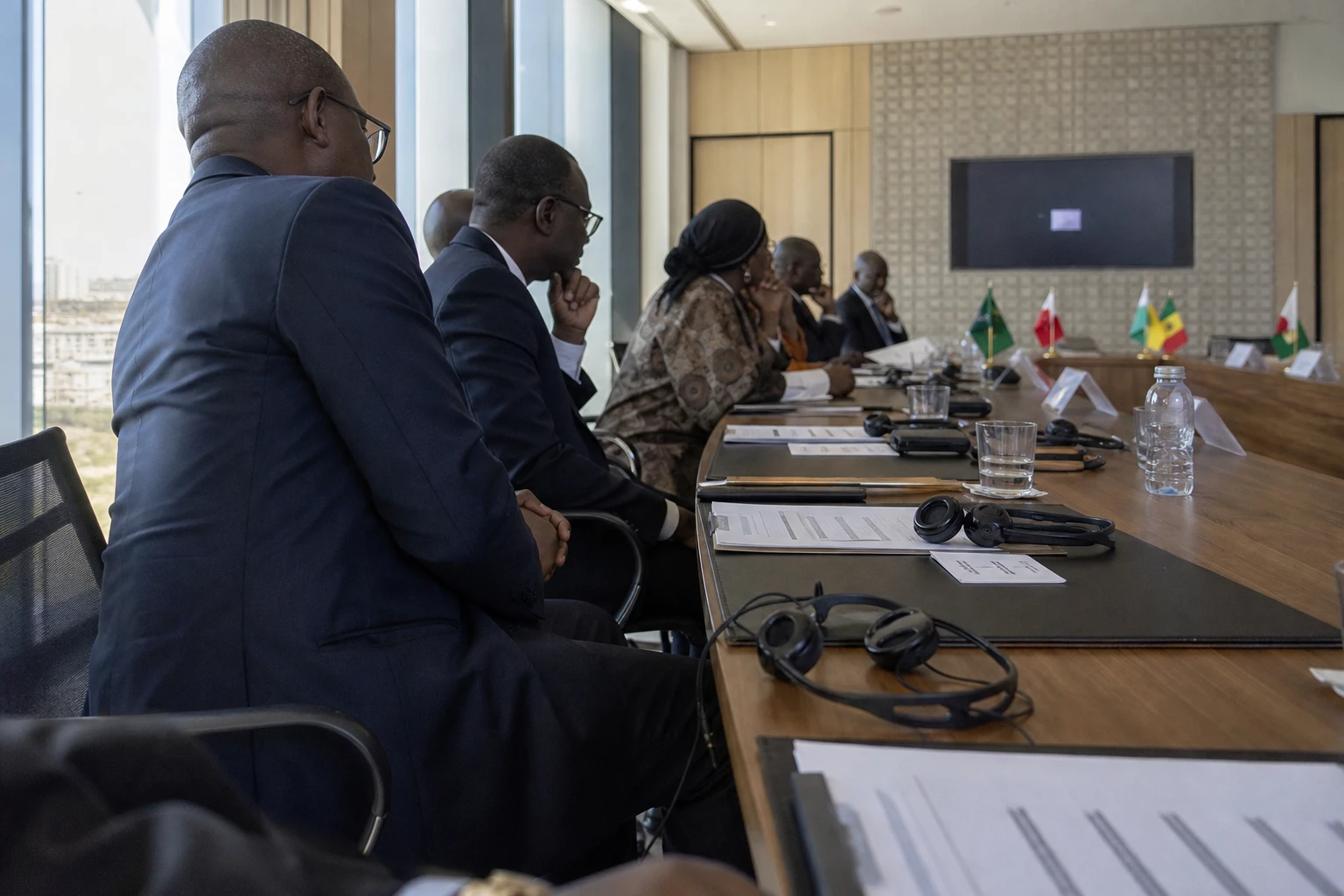
In Dakar and across the regions, digital transformation is no longer just about connection speeds. It also depends on the ability to protect networks, develop skills and retain control of strategic data. This is where Senegal wants to structure its cooperation with Nokia.
An agreement focused on digital resilience
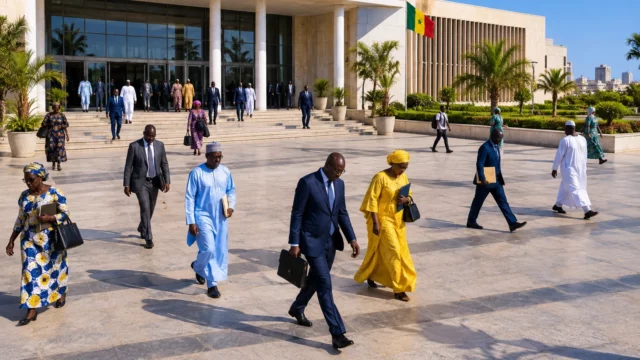
Senegal’s Ministry of Telecommunications and Digital Affairs signed a partnership agreement with Finnish equipment maker Nokia on Wednesday 30 September 2026. The ceremony took place at the Building administratif Président Mamadou Dia in Dakar.
The document establishes a framework for cooperation on several priorities: connectivity, network resilience, cybersecurity, digital public services, innovation and skills development. The Senegalese authorities and Nokia must now identify which projects to prioritise. Each initiative may then be covered by a specific agreement.
This approach does not yet amount to the announcement of a single project with a detailed timetable and an approved public budget. Rather, it creates a basis for selecting projects, specifying their funding and defining each party’s responsibilities.
Network resilience refers to a digital infrastructure’s ability to continue operating, or to recover quickly, despite a failure, cyberattack or disruption to essential equipment. In a country where public administrations, businesses, banks and health services increasingly depend on the internet, this issue extends beyond the telecommunications sector alone.
The New Deal Technologique as a national framework
The agreement forms part of the New Deal Technologique, launched on 24 February 2025 by President Bassirou Diomaye Faye. The strategy supports the Senegal 2050 National Transformation Agenda and aims to accelerate the modernisation of public administration, access to digital services and the development of the digital economy.
The programme is based on four priorities: digital sovereignty, the digitalisation of public services, growth in the digital economy and positioning Senegal as a leading African player in this field.
Its roadmap comprises 12 priority programmes and 50 projects. The government estimates their total cost at around 1,105 billion CFA francs. The areas covered range from infrastructure and universal connectivity to digital identity, cybersecurity, training, digital payments and the digitalisation of economic sectors.
Network security occupies a particular place in this framework. Senegal wants to develop public digital infrastructure capable of supporting government services while strengthening the protection of sensitive data. This ambition requires suitable equipment, but also local specialists able to monitor systems, detect incidents and respond to them.
The partnership with Nokia could therefore address a twofold need. It could provide technological expertise on networks. It could also contribute to skills transfer, provided that training and local value creation are included in measurable commitments.
Cooperation builds on established ties
Nokia is not entering the Senegalese market for the first time with this agreement. The equipment maker has already worked with Sonatel, one of the country’s leading telecommunications operators.
On 14 December 2021, Sonatel conducted a second test of 5G technology with Nokia in Saly, in the Thiès region. The trial followed an initial test carried out in Senegal in November 2020. It was used in particular to assess the technology’s performance and the compatibility of several pieces of equipment.
This experience illustrates the role of industrial partnerships in the evolution of mobile networks. It also highlights that the shift to new generations of telecommunications depends on more than technical coverage. It requires investment, available spectrum, accessible devices and sufficient demand from households and businesses.
The new agreement nevertheless broadens the scope of this relationship. It is not limited to mobile telephony or data transmission. It includes digital public services, innovation and training. The issue is therefore institutional and economic, with potential effects on public administration, technology companies and educational institutions.
Expected benefits and points to watch
For the state, more robust networks could reduce service interruptions and improve the continuity of online administrative procedures. For businesses, more reliable connectivity could facilitate digital payments, e-commerce, remote working and trade with markets in the Economic Community of West African States (ECOWAS).
However, the benefits will not be the same everywhere. Dakar and the major urban centres already have a denser digital ecosystem, with more operators, training centres and specialist companies. In rural or remote areas, the priority remains access to a regular connection at a price compatible with the incomes of households and small businesses.
The informal sector, which is widespread in Senegal’s economy, will also need to be able to use the new services. A high-performing public platform will not have the same impact if traders, craftspeople, farmers or transport operators lack a suitable phone, a reliable means of payment or access to local support.
The question of digital sovereignty also requires further clarification. Cooperation with an international technology group can accelerate access to advanced solutions. It does not, however, remove the need to strengthen Senegalese businesses, universities and research centres. The transfer of know-how, maintenance clauses, data hosting and the involvement of local players will therefore be decisive.
An issue that extends beyond Senegal’s borders
Senegal operates in a West African region where digital exchanges increasingly cross borders. Operators, banks, payment platforms and public administrations must work with networks connected across several countries. A major outage or cyberattack can therefore have consequences beyond national territory.
Cybersecurity is thus a regional issue for ECOWAS, as well as for African businesses developing services across several markets. Senegal is seeking to strengthen its position as a digital hub in West Africa. To achieve this, it will have to show that its infrastructure is reliable, that skills are available and that its rules genuinely protect users.
The next step will be to select the projects arising from the agreement. Their timetable and funding, and the role given to Senegalese businesses and skills, will help determine the agreement’s real scope. The challenge will not simply be to connect more of the country. It will be to build a digital ecosystem that is safer, more accessible and more firmly under Senegal’s control.