
 Algeria
 Egypt
 Libya
 Sudan
 Tunisia
 Benin
 Burkina Faso
 Cabo Verde
 Côte d'Ivoire
 Ghana
 Guinea
 Guinea-Bissau
 Liberia
 Mali
 Mauritania
 Niger
 Nigeria
 Senegal
 Sierra Leone
 The Gambia
 Togo
 Cameroon
 Central African Republic
 Chad
 DR Congo
 Equatorial Guinea
 Gabon
 Republic of the Congo
 São Tomé and Príncipe
 Burundi
 Comoros
 Djibouti
 Eritrea
 Ethiopia
 Kenya
 Madagascar
 Malawi
 Mauritius
 Mozambique
 Rwanda
 Seychelles
 Somalia
 South Sudan
 Tanzania
 Uganda
 Angola
 Botswana
 Eswatini
 Lesotho
 Namibia
 South Africa
 Zambia
 Zimbabwe
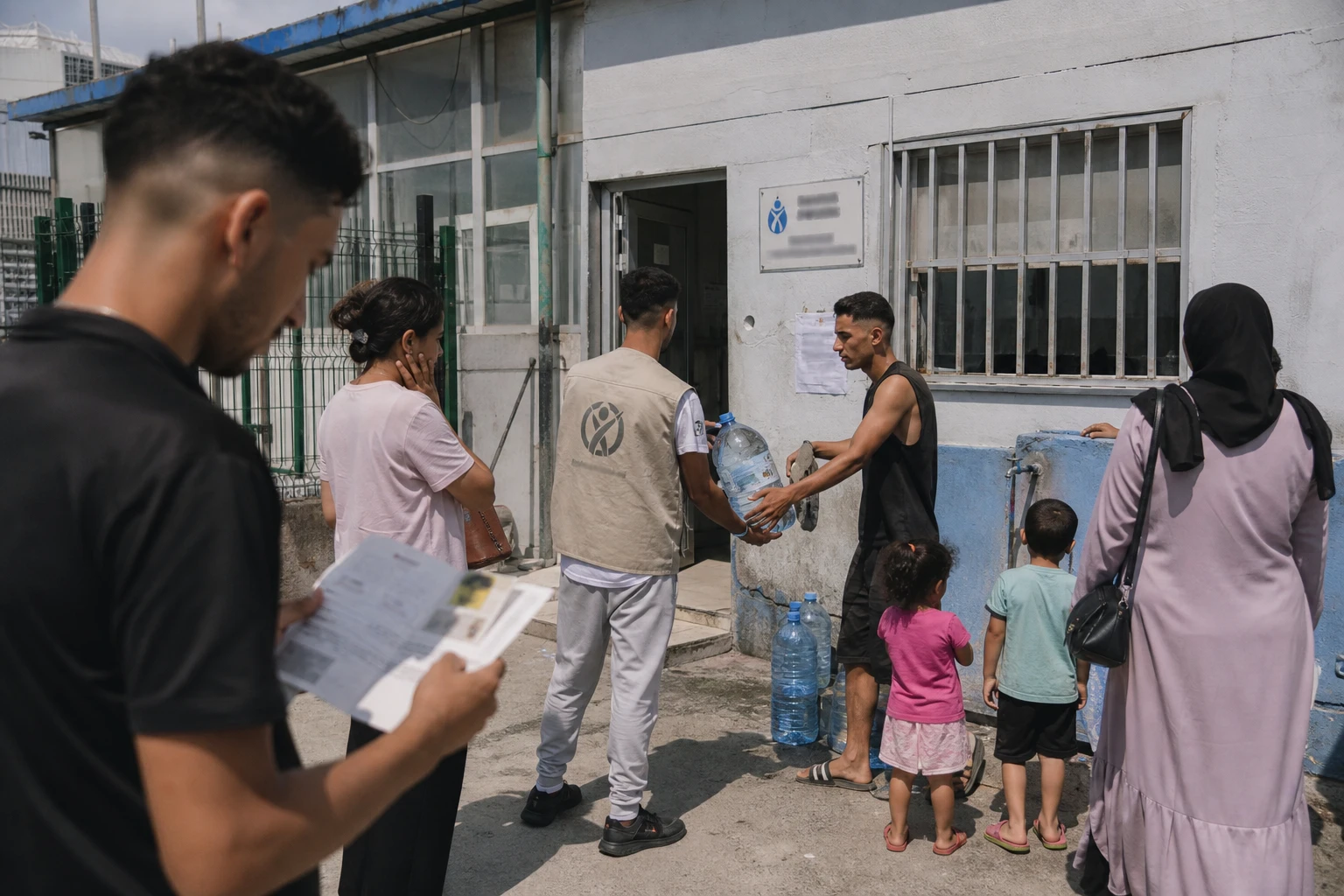
The emergency in Ceuta did not end when the border closed again. Several weeks after the mass arrival of people from Morocco, men, teenagers and families remain without stable accommodation. In makeshift camps, the issue is no longer simply crossing the border: it has become one of protection, healthcare and respect for rights.
An enclave overwhelmed by the scale of arrivals
On 30 and 31 July 2026, Ceuta saw one of the largest arrivals of migrants in its recent history. Estimates vary according to the authorities and sources consulted. Initial figures refer to tens of thousands of people entering from Morocco, with estimates ranging from around 50,000 to more than 70,000 crossings.
The majority returned to Morocco in the following days or were deported. However, several thousand people remained in the Spanish enclave. The Spanish government said several thousand people were still present in the streets, while local estimates were sometimes higher.
This discrepancy in the figures does not change what has been observed on the ground: Ceuta’s reception capacity was quickly overwhelmed. The autonomous city, on the north African coast and bordered by Morocco, has facilities designed for much smaller flows.
The facilities at Tarajal, the area around the Temporary Stay Centre for Immigrants and several outlying spaces accommodated people who had neither a bed nor regular access to water or clear administrative support. The situation particularly affected young men, unaccompanied minors and families separated during their journeys.
Very precarious living conditions in Tarajal
In the industrial zone of Tarajal, groups have set up makeshift shelters. People there live in severely overcrowded conditions, with limited access to showers, toilets and healthcare. Food distributions and the efforts of volunteers are not enough to replace sustained public support.
Accounts gathered on site describe an open-ended wait. Some migrants want to apply for international protection. Others are seeking to return to Morocco. Many do not know what procedures are available, what deadlines apply or what the consequences of leaving or refusing to register might be.
The situation is more complex still for minors. In Spain, regional authorities are responsible for protecting them when they are identified as unaccompanied minors. During crises, however, identification, referral and accommodation can be delayed. This leaves some teenagers in informal settings, exposed to violence, accidents and exploitation networks.
Volunteers and healthcare professionals have also reported foot injuries, infected wounds, trauma and problems linked to poor hygiene. These interventions temporarily make up for shortcomings in the system, but they cannot ensure continuity of care on their own.
Allegations of violence require investigation
Several people in Ceuta say they were beaten or threatened by members of the Spanish security forces. They describe baton blows, repeated checks and interventions around gathering places. Some accounts also refer to broken phones and people injured during dispersals.
These accounts must be examined on a case-by-case basis. On their own, they do not establish that there was a widespread practice. Their recurrence does, however, warrant independent checks, including analysis of images, medical certificates and witness interviews.
Amnesty International had already documented allegations of violence in Ceuta during previous crises between Morocco and Spain. The organisation then called for deportations and security force interventions to be subject to effective judicial safeguards.
Images circulated during previous episodes have also shown Spanish military personnel pushing people back towards the sea or driving them away with batons. These images do not automatically prove each new account, but they are a reminder that the Ceuta border has already been associated with several controversies over the use of force.
The presence of military personnel in the management of a migration situation adds a further complication. The army can be deployed to support civilian services, but it does not replace the judicial police, social workers or health services. Any intervention must remain within the law and be proportionate to the situation.
A crisis rooted in tensions between Rabat and Madrid
The Ceuta crisis is unfolding against a backdrop of close cooperation and recurring disagreements in relations between Morocco and Spain. Rabat and Madrid work together on border surveillance, combating people-smuggling networks and managing returns. However, questions of sovereignty, Western Sahara and movement between Morocco and the Spanish enclaves remain sensitive.
In 2021, the arrival of thousands of Moroccans in Ceuta had already triggered a major diplomatic crisis. More than 8,000 people, including many minors, reached the enclave by swimming or following the breakwaters at Benzú and Tarajal. Human Rights Watch condemned the forced expulsions and the risks faced by people sent back.
In 2026, messages circulating on social media again played a role in mobilisation. Rumours that the border was about to open are said to have encouraged people to set off hastily towards Fnideq, the Moroccan town neighbouring Ceuta. Their precise influence remains to be established, as social media amplified a movement but cannot, on its own, explain individual decisions.
An issue that extends beyond the Ceuta border
For the Spanish authorities, the priority is to restore control of the border. For people stranded in the enclave, the priority is access to safety, water, healthcare and a clear procedure. Between these two demands, responses based solely on security risk shifting the problem rather than solving it.
The situation also concerns Morocco, whose northern regions directly bear the economic and social effects of border tensions. Fnideq and neighbouring towns have long depended on trade with Ceuta. Every sudden border closure weakens small businesses, cross-border workers and informal activities.
What happens next will depend on several decisions: identifying minors, considering asylum applications, any returns to Morocco and investigations into allegations of violence. Cooperation between Rabat and Madrid will be necessary. But it can only be sustainable if the protection of people is not eclipsed by the logic of control.



