Algeria
 Egypt
 Libya
 Morocco
 Sudan
 Tunisia
 Benin
 Burkina Faso
 Cabo Verde
 Côte d'Ivoire
 Ghana
 Guinea
 Guinea-Bissau
 Liberia
 Mali
 Mauritania
 Niger
 Nigeria
 Senegal
 Sierra Leone
 The Gambia
 Togo
 Cameroon
 Central African Republic
 Chad
 DR Congo
 Equatorial Guinea
 Gabon
 Republic of the Congo
 São Tomé and Príncipe
 Burundi
 Comoros
 Djibouti
 Eritrea
 Ethiopia
 Kenya
 Madagascar
 Malawi
 Mauritius
 Mozambique
 Rwanda
 Seychelles
 Somalia
 South Sudan
 Tanzania
 Angola
 Botswana
 Eswatini
 Lesotho
 Namibia
 South Africa
 Zambia
 Zimbabwe
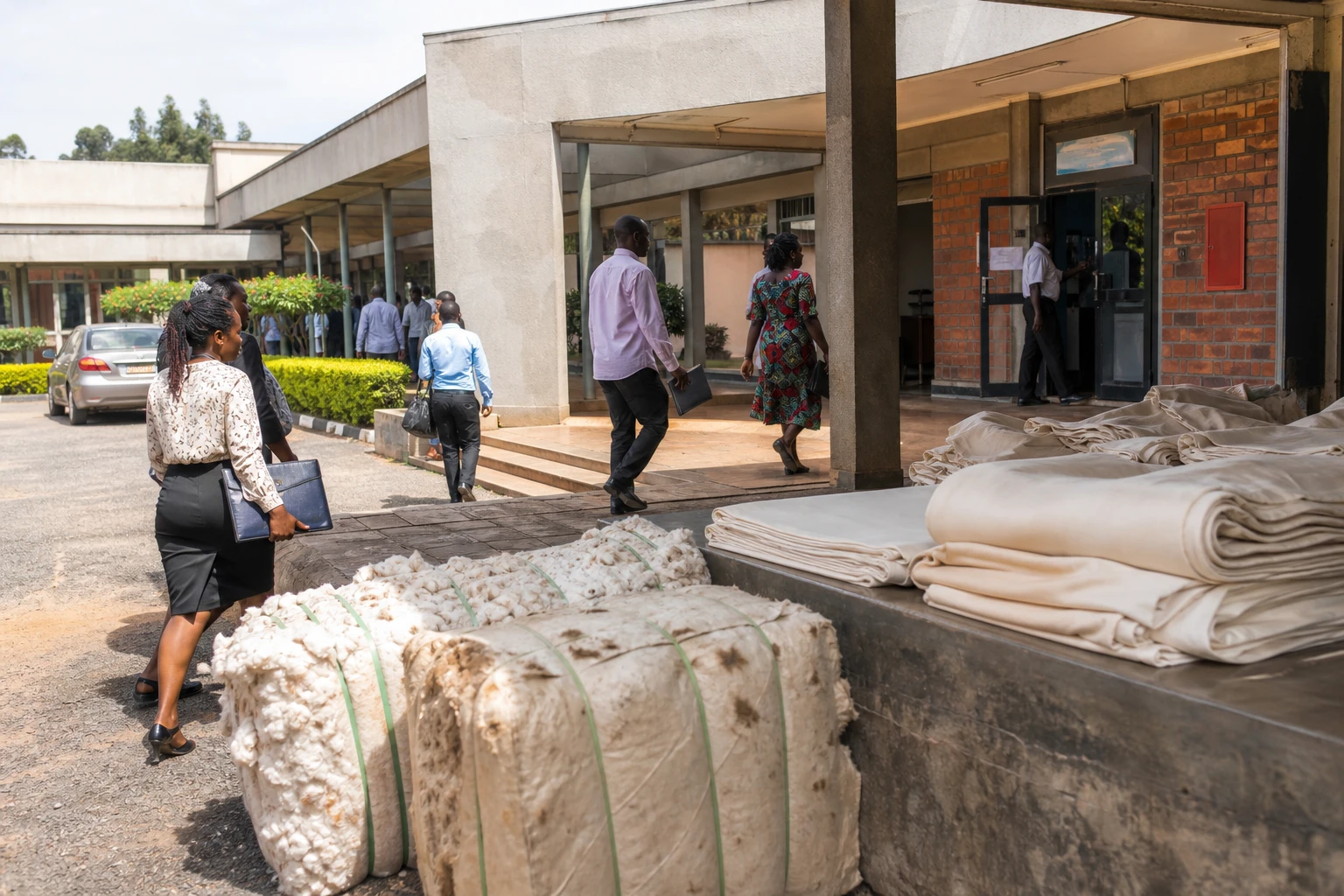
In northern Uganda, cotton processing could move up a gear. Fine Spinners Uganda has presented the authorities with a project valued at $420 million in Gulu. The announcement comes as the country still exports most of its raw fibre, then imports some of the yarn and clothing its market needs.
Gulu at the heart of an industrial strategy
The project was presented on 28 September 2026 to Ugandan Finance Minister Aminah Mukalazi by a delegation led by Fine Spinners chairman Jas Bedi. At this stage, it is a proposed investment. No public timetable for construction, commissioning or disbursement has yet been announced.
The exact nature of the future site also remains to be clarified. Available information places it in the cotton, spinning and textile sectors. It does not yet establish whether it will be an integrated complex, an industrial expansion or a facility combining production, storage and logistics.
The choice of Gulu is not insignificant. The city is the largest urban centre in northern Uganda. It is close to important farming areas and lies on routes linking the country to South Sudan. An industrial facility in the region could therefore bring factories closer to producers and open a gateway to neighbouring markets.
That prospect will nevertheless depend on the available infrastructure. Electricity, access to industrial water, roads, rail transport and smooth border crossings will directly affect the project’s competitiveness. In the textile industry, a few extra days in transit can change the final cost of a garment or a roll of fabric.
A sector still dominated by fibre exports
The Ugandan government estimates that about 90% of the cotton lint produced in the country is exported. This figure appears in the official budget framework paper for the 2025-2026 financial year. The same document states that Uganda remains a net importer of yarn and other textile products.
The imbalance is also reflected in industrial capacity. The Ministry of Finance records fewer than 30,000 spinning spindles and daily fabric production of less than 500,000 metres. A spindle is the part of a machine that turns fibres into yarn. These capacities are not yet sufficient to absorb a significant share of national production.
The consequence is straightforward. A bale of cotton can leave Uganda as fibre, be processed abroad, then return as yarn, fabric or a garment. The value added, skilled jobs and some industrial revenues are then generated outside the country.
Fine Spinners is already seeking to shorten this journey. Its Bugolobi factory in Kampala brings together several stages: spinning, knitting, weaving, dyeing, finishing and garment-making. The company says it works with around 16,000 small-scale producers and produces more than 500,000 garments, 120 tonnes of yarn and 120 tonnes of knitted fabric each month.
These figures come from the company and describe the capacity of its current site. They do not indicate the volume that could be achieved in Gulu. They nevertheless show that the group already has local industrial experience, which could facilitate a new phase of expansion.
A policy of import substitution
The project forms part of Uganda’s policy to promote value addition. The state is encouraging public bodies to buy uniforms, tents, bags and hospital linen locally. The aim is to create stable demand for manufacturers based in the country.
The second-hand clothing market also plays a central role in this debate. In April 2026, Parliament considered a proposed 30% environmental levy on imported used clothing. The measure is officially intended to limit waste and support domestic production. It could, however, make clothing more expensive for households that rely on these low-cost items.
The impact of such a policy will therefore vary between groups. Local manufacturers may benefit from a larger market. Importers and urban market traders may face higher costs. Rural households and workers in the informal economy, meanwhile, risk feeling any price rises more quickly.
Success will depend above all on the available supply. Protecting the market will not be enough if factories do not provide affordable, reliable products suited to local needs. Companies will also have to improve quality, delivery times and the range of styles to compete with imports.
Announced increase from $5 million to $35 million
Fine Spinners also announced in September 2026 an additional $5 million investment in new equipment for its Kampala factory. According to the company, this would bring its total investment in the site to about $35 million.
This operation is separate from the project announced in Gulu. It is intended to increase production capacity and expand the range of yarn, fabrics and clothing. Fine Spinners also wants to boost sales in Uganda, other African markets and export markets.
The company says it operates an integrated supply chain, from fibre to finished garment. This model reduces the number of intermediaries and can improve cotton traceability. It nevertheless requires a range of skills, costly equipment and a regular supply of raw materials.
A challenge for East Africa
The issue extends beyond Uganda’s borders. Uganda is a member of the East African Community, or EAC, a regional bloc seeking to facilitate trade between its members. Fine Spinners has called for trade barriers to be reduced to enable African textile products to move more freely.
A complex in Gulu could target the domestic market, as well as South Sudan, Kenya, Tanzania and Rwanda. This ambition will depend on rules of origin, customs duties and mutual recognition of standards among EAC countries. It will also depend on transport operators’ ability to cross borders without excessive delays.
At continental level, the case illustrates one of the aims of the African Continental Free Trade Area: to sell more processed goods in African markets. Cotton is a tangible example. The raw material is available, but the most lucrative stages of production are often spread across several countries or continents.
The next step will therefore be decisive. The authorities will have to clarify the financing, land, infrastructure and timetable for the Gulu project. Observers will also track the effects of the new tax on second-hand clothing and the actual growth in local public procurement.
For Uganda, the challenge is not simply to increase volumes. It is to retain more value in the country, create skilled jobs and link farmers in the north and west more effectively to the markets of Kampala and East Africa.