
 Algeria
 Egypt
 Libya
 Morocco
 Sudan
 Tunisia
 Benin
 Burkina Faso
 Cabo Verde
 Côte d'Ivoire
 Ghana
 Guinea
 Guinea-Bissau
 Liberia
 Mali
 Mauritania
 Niger
 Nigeria
 Senegal
 Sierra Leone
 The Gambia
 Togo
 Cameroon
 Central African Republic
 Chad
 DR Congo
 Equatorial Guinea
 Gabon
 Republic of the Congo
 São Tomé and Príncipe
 Burundi
 Comoros
 Djibouti
 Eritrea
 Ethiopia
 Kenya
 Madagascar
 Malawi
 Mauritius
 Mozambique
 Rwanda
 Seychelles
 Somalia
 South Sudan
 Tanzania
 Uganda
 Angola
 Botswana
 Eswatini
 Lesotho
 Namibia
 Zambia
 Zimbabwe
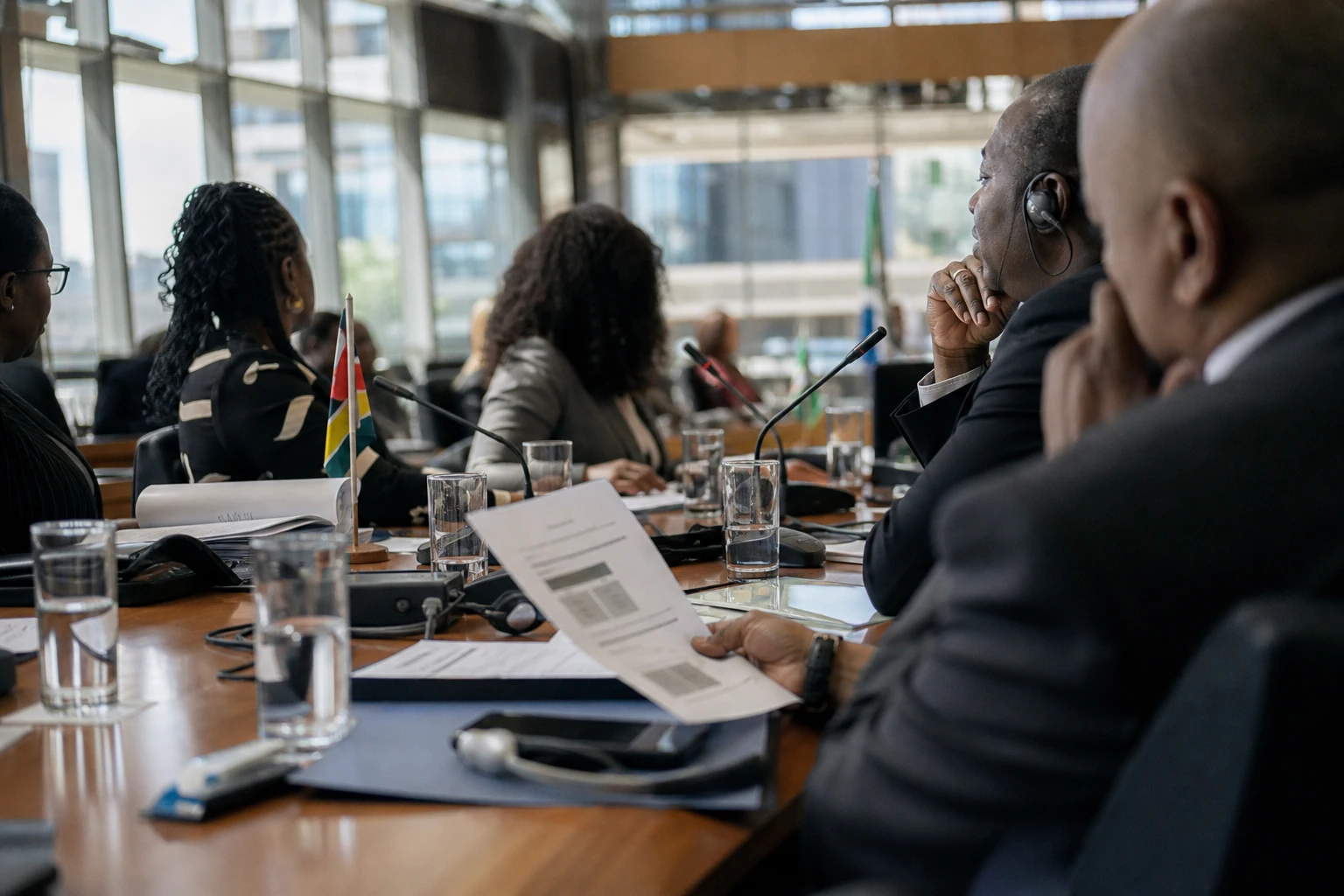
In Ekurhuleni, east of Johannesburg, the repeated discovery of women’s bodies has turned local alarm into a national crisis. South African authorities are now seeking to establish whether the cases are linked, while families are calling above all for prompt investigations and clear answers.
A spate of killings shakes Ekurhuleni
On 29 September 2026, President Cyril Ramaphosa addressed the nation from Pretoria. His statement came after several women’s bodies had been found since July in different parts of the Ekurhuleni metropolitan municipality, in Gauteng province.
The toll reported has varied depending on the stage of the investigation and the institutional sources. In his speech, the presidency confirmed that eleven bodies had been found in Ekurhuleni since July. A South African government document, however, referred to thirteen victims counted by the cabinet a few days earlier. These figures may include cases recorded on different dates or files added to the investigation.
This changing picture explains the investigators’ caution. Police are examining the circumstances of each death. They are also looking for possible links between the victims, the locations where they were found and people already arrested.
The authorities have not confirmed the existence of a serial killer. The theory is nevertheless circulating in the affected neighbourhoods, where several discoveries have fuelled a sense of insecurity. It can only be accepted once there is compelling judicial and forensic evidence.
South African police have announced arrests in several cases. The government has also said that some defendants remained in custody after appearing in court. At this stage, these arrests do not make it possible to attribute all the killings to the same group or individual.
Emergency plan focused on investigations
Cyril Ramaphosa announced a four-part plan. The first provides for a nationwide review of unresolved cases involving murder, attempted murder, rape and other serious offences committed against women and children.
Police and prosecutors will have 60 days to identify the number of outstanding cases, how long they have been pending and the steps holding up their progress. The audit will distinguish, in particular, cases awaiting forensic analysis; those in which a suspect has been identified but not arrested; and those facing unjustified delays at the investigation or prosecution stage.
The second part concerns forensic capacity. The president called for a funded plan to reduce delays and set processing deadlines for priority cases involving gender-based violence and femicide. This measure addresses a sensitive point in the justice system: without high-quality analysis available in time, families are left waiting and proceedings grind to a halt.
The third strand provides for a national audit of women’s safety. Local authorities will have to identify high-risk areas, including poorly lit streets, abandoned buildings, unsafe parks and routes regularly used by women.
Finally, the government wants to strengthen coordination between police, prosecutors, forensic services and local authorities. The aim is to prevent responsibilities from being dispersed across several departments, a problem often raised by South African women’s rights organisations.
A response confronting a longstanding crisis
The events in Ekurhuleni are not isolated. South Africa has faced high levels of violence against women and children for several years. In 2019, pressure from civil society had already prompted Cyril Ramaphosa to present an emergency plan to tackle gender-based violence and femicide.
Several measures have been announced since then. The country has a National Strategic Plan on Gender-Based Violence and Femicide. In 2024, a law also established a National Council to provide strategic leadership on the issue. The appointment of its members for the period from August 2026 to July 2029 was intended to strengthen this institutional framework.
The challenge now lies in implementation. In low-income neighbourhoods and peri-urban areas alike, women often rely on public transport, walk to their destinations and use inadequately secured public spaces. A poorly lit street can therefore become a daily concern. For families, the issue is not limited to a suspect’s arrest: it also involves a loved one’s disappearance, the identification of a body and access to justice.
The economic impact is also tangible. Women working in retail, services, security or jobs with irregular hours may have to change their journeys or give up certain opportunities. The most disadvantaged households have fewer resources to pay for private transport or an escort.
The response required is therefore not solely a matter for the police. It involves municipalities, social services, hospitals, courts and community organisations. It also requires victims and their families to be kept informed without exposing them to further harm.
An issue for southern Africa
South Africa is a member of the Southern African Development Community (SADC), which brings together several states in the region for political and economic cooperation. Gender-based violence affects the region as a whole, with circumstances varying across countries, cities and justice systems.
The Ekurhuleni crisis is a reminder that regional commitments must be backed by reliable data, accessible services and monitoring mechanisms. It also highlights the role of local authorities. Women’s safety is often determined in a specific neighbourhood, outside a station, on a secondary road or near an abandoned building.
For Pretoria, the next milestones will be decisive. The government will have to publish the results of the case audit within the announced timeframe and explain what resources are being committed to forensic analysis. It will also have to specify what measures have been taken in the municipalities identified as priorities.
The president’s remarks have put femicide back at the centre of the national agenda. The credibility of the response will now depend on action: identifying victims, establishing the facts, protecting witnesses, prosecuting those responsible and preventing cases from disappearing into administrative delays.



