
 Algeria
 Egypt
 Libya
 Morocco
 Sudan
 Tunisia
 Benin
 Burkina Faso
 Cabo Verde
 Côte d'Ivoire
 Ghana
 Guinea
 Guinea-Bissau
 Liberia
 Mali
 Mauritania
 Niger
 Nigeria
 Senegal
 Sierra Leone
 The Gambia
 Togo
 Cameroon
 Central African Republic
 Chad
 Equatorial Guinea
 Gabon
 Republic of the Congo
 São Tomé and Príncipe
 Burundi
 Comoros
 Djibouti
 Eritrea
 Ethiopia
 Kenya
 Madagascar
 Malawi
 Mauritius
 Mozambique
 Rwanda
 Seychelles
 Somalia
 South Sudan
 Tanzania
 Uganda
 Angola
 Botswana
 Eswatini
 Lesotho
 Namibia
 South Africa
 Zambia
 Zimbabwe
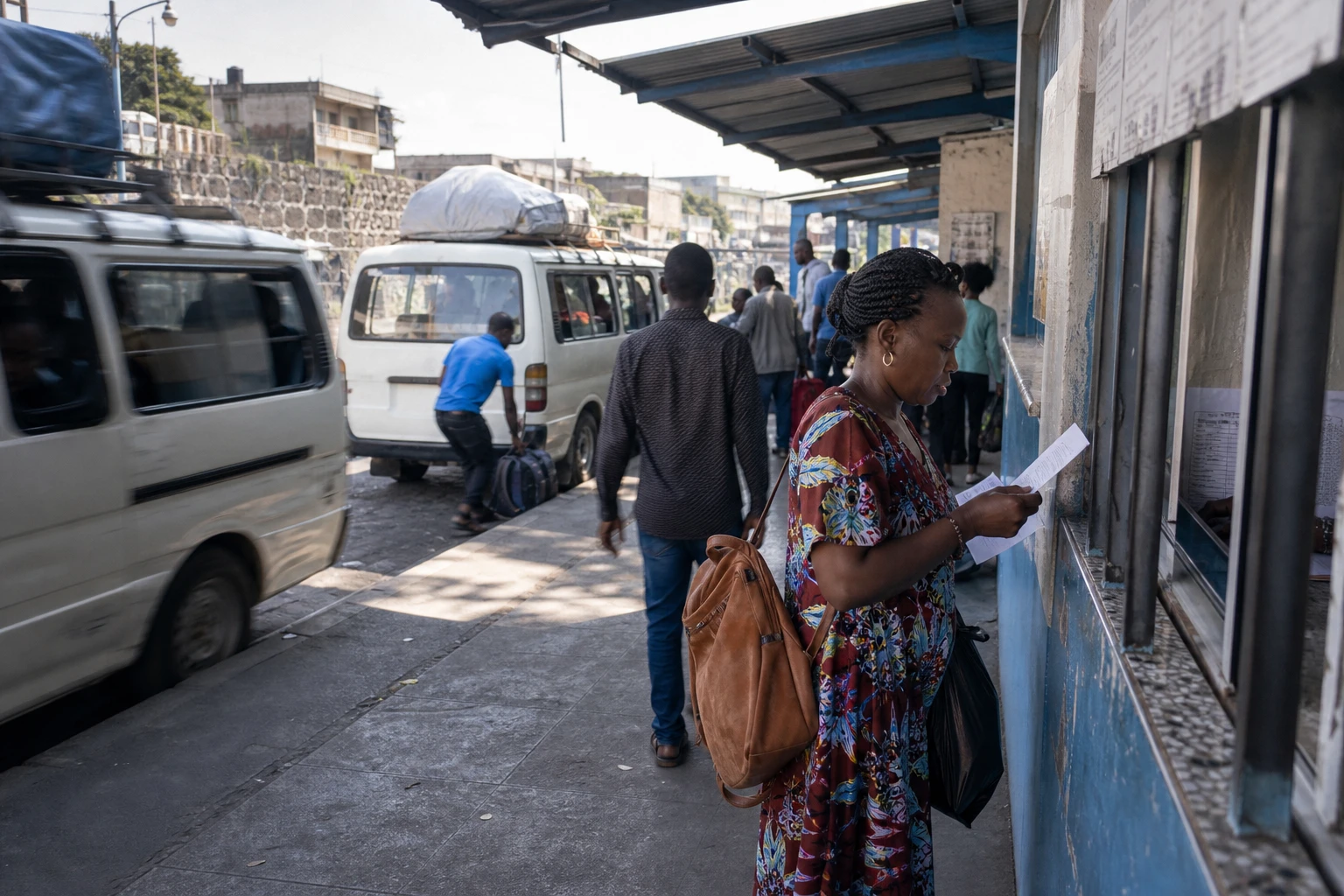
In New York, the Democratic Republic of the Congo is not merely challenging the presence of Rwandan soldiers in UN missions. It is raising a question of consistency: can a state accused of supporting an armed movement in eastern Congo continue to provide peacekeepers to the international system of collective security?
Kinshasa turns the eastern conflict into a diplomatic battle
On Tuesday 29 September 2026, at a Security Council meeting on the situation in the Democratic Republic of the Congo, the Congolese ambassador to the United Nations, Zénon Mukongo Ngay, called for all new Rwandan participation in peacekeeping operations to be suspended.
The Congolese request covers new deployments as well as personnel rotations. Kinshasa wants the suspension to remain in place until the withdrawal of Rwandan forces from Congolese territory has been verified. It is therefore not a measure limited to the arrival of new contingents. It would also apply to the replacement of soldiers and police officers already serving under a UN mandate.
The position follows on from Resolution 2773, adopted unanimously on 21 February 2025. In it, the Security Council condemned the offensive by the March 23 Movement, or M23, in North Kivu and South Kivu. It also called on Rwanda to end its support for the movement and withdraw its forces from the Democratic Republic of the Congo without preconditions.
The resolution also demanded that M23 cease hostilities, leave the areas under its control and dismantle the parallel administrations set up in the territories it had seized. For Kinshasa, the failure to fully implement these demands warrants a fresh examination of Rwanda’s role in peace operations.
A case directly linked to the AFC-M23
The crisis is concentrated mainly in the east of the Democratic Republic of the Congo. The AFC-M23, a political and military coalition built around M23, has consolidated its influence in several areas of North Kivu and South Kivu. Kinshasa accuses Kigali of providing military support to the movement. Rwanda rejects this account and regularly points to the threat posed, in its view, by the Democratic Forces for the Liberation of Rwanda, or FDLR.
The Security Council nevertheless referred to Rwandan support for M23 in its February 2025 resolution. This reference gives the Congolese initiative a clear diplomatic basis. Kinshasa is not presenting its request as an isolated sanction. It is linking it to a decision already adopted by the body responsible for international peace and security.
At the same time, the Congolese delegation is seeking to address Kigali’s security argument. It says it has begun a process to disarm, demobilise and canton groups linked to the FDLR. The Congolese authorities are asking the UN Organization Stabilization Mission in the Democratic Republic of the Congo, MONUSCO, and the Security Council to support and verify this process.
Such verification is crucial. Without an independent mechanism, each side can continue to put forward its own account of the threat. In the Great Lakes region, however, mutual accusations have for years fuelled a fragmented understanding of regional security.
Rwanda’s particular weight in UN missions
The Congolese request runs up against Rwanda’s prominent role in peacekeeping. According to the United Nations’ official figures as at 31 January 2026, Kigali provided 4,201 uniformed personnel to UN operations: 3,176 soldiers, 880 members of formed police units, 74 individual police officers, 49 staff officers and 22 experts.
These figures place Rwanda among the world’s leading contributors. A suspension of its new commitments would therefore have consequences extending beyond its dispute with Kinshasa. It would affect the make-up of several missions and raise the question of how quickly experienced personnel could be replaced.
Even so, operational considerations do not resolve the question of principle raised by the Democratic Republic of the Congo. Peacekeepers act on behalf of the UN, but remain members of their countries’ national forces. Their presence in a multilateral mission does not erase disputes between their state and the authorities of a neighbouring country.
The debate is therefore about the credibility of the system. Kinshasa believes that a country accused of military intervention in a conflict should not be able to increase its influence at the same time in operations tasked with preventing or containing conflicts.
Rwanda backs agreements but rejects Kinshasa’s framing
At the same meeting, Rwanda’s representative to the UN, Martin Karoli Ngoga, reaffirmed Kigali’s commitment to the diplomatic processes under way to end the crisis. He stressed the need to effectively implement the agreements reached between the Democratic Republic of the Congo and Rwanda.
This response places the dispute within the framework of regional negotiations. Resolution 2773 supports, among other things, the Luanda and Nairobi processes. The former was associated with mediation led by Angola between Kinshasa and Kigali. The latter sought to address the issue of armed groups and political dialogue in the Congo.
The region also has other coordination frameworks. The Democratic Republic of the Congo belongs to the Southern African Development Community, SADC, and the Economic Community of Central African States, ECCAS. Rwanda is a member of the East African Community, EAC. The overlap between these organisations can sometimes complicate coordination, but it also shows that the crisis is not confined to a single bilateral confrontation.
A decision that could extend beyond the Congolese case
The Security Council has not, at this stage, announced any decision in immediate response to the Congolese request. Several questions will need to be considered: the legal basis for a suspension, how it would work, how long it might last and the consequences for missions that rely on Rwandan personnel.
For people in North Kivu and South Kivu, however, the stakes remain more immediate. The diplomatic battle will not replace the protection of civilians, humanitarian access or the restoration of public services in areas affected by fighting. In urban centres, the authorities and humanitarian organisations face particular pressure. In rural areas, the absence of stable administration and population displacement are heightening risks.
Kinshasa’s move thus opens a new front in the Great Lakes crisis. It forces the UN to weigh two imperatives: preserving its peacekeeping capacity and responding to accusations against one of its largest contributors.
What happens next will depend on the Security Council’s ability to verify the facts on the ground, monitor the implementation of Resolution 2773 and coordinate its action with the African Union, SADC, ECCAS and the EAC. For both the Democratic Republic of the Congo and Rwanda, the credibility of diplomatic commitments will now be measured by their tangible effects in the east of the country.



