Algeria
 Egypt
 Libya
 Sudan
 Tunisia
 Benin
 Burkina Faso
 Cabo Verde
 Côte d'Ivoire
 Ghana
 Guinea
 Guinea-Bissau
 Liberia
 Mali
 Mauritania
 Niger
 Nigeria
 Senegal
 Sierra Leone
 The Gambia
 Togo
 Cameroon
 Central African Republic
 Chad
 DR Congo
 Equatorial Guinea
 Gabon
 Republic of the Congo
 São Tomé and Príncipe
 Burundi
 Comoros
 Djibouti
 Eritrea
 Ethiopia
 Kenya
 Madagascar
 Malawi
 Mauritius
 Mozambique
 Rwanda
 Seychelles
 Somalia
 South Sudan
 Tanzania
 Uganda
 Angola
 Botswana
 Eswatini
 Lesotho
 Namibia
 South Africa
 Zambia
 Zimbabwe
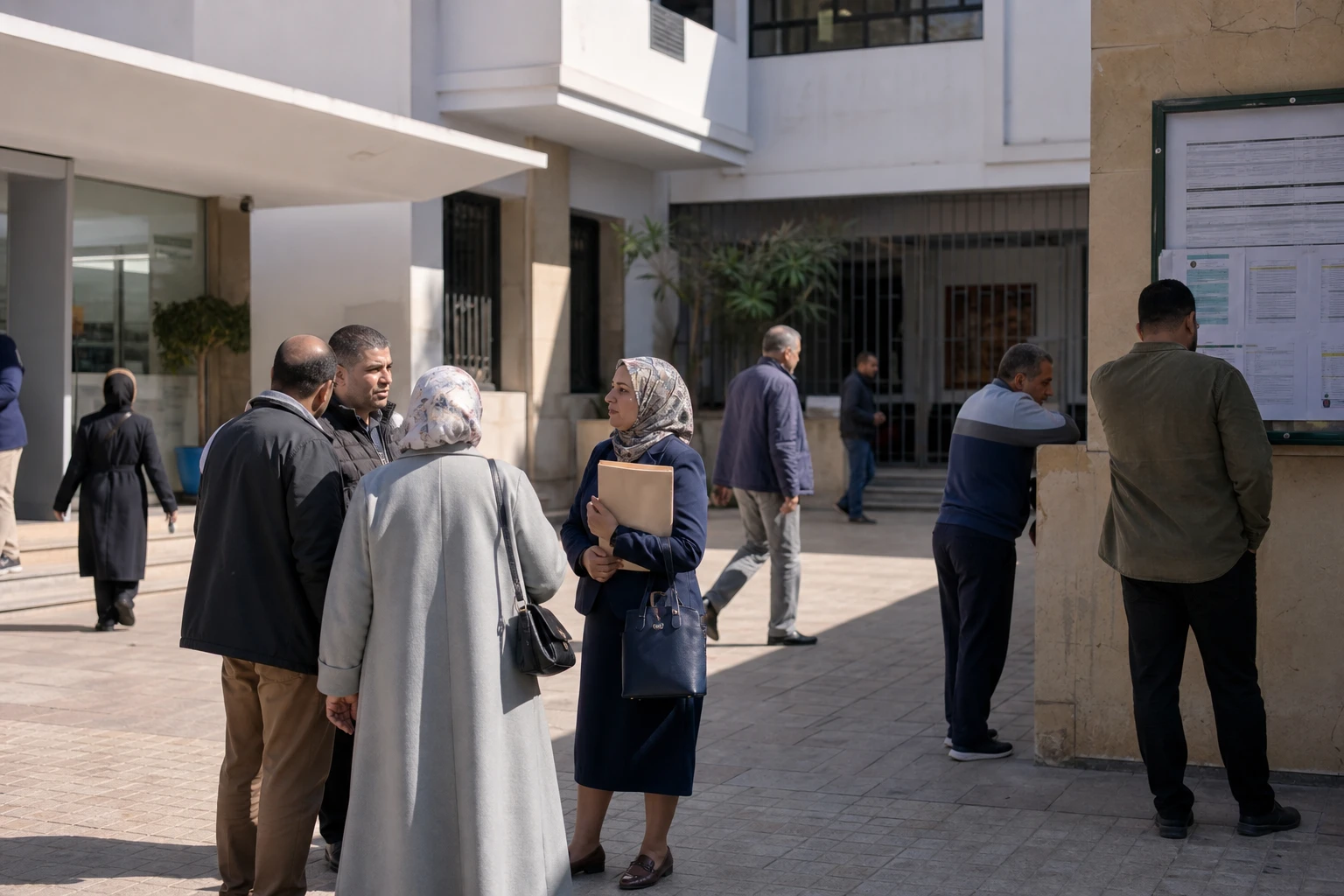
In Rabat, Fatima Ezzahra El Mansouri’s appointment opens an unprecedented political chapter. For the first time since Morocco’s independence, a woman has been tasked with leading the government. But the symbolism will soon have to give way to concrete decisions: forming a majority, containing the cost of living and meeting commitments linked to major sporting and economic events ahead.
A historic appointment within a constrained parliamentary system
King Mohammed VI appointed Fatima Ezzahra El Mansouri head of government on Tuesday 29 September 2026. He also tasked her with forming a new ministerial team. The decision came a few days after the legislative elections on 23 September, won by the Party of Authenticity and Modernity, the PAM.
The royal choice is in keeping with Morocco’s Constitution. The monarch appoints the head of government from the party that comes first in the House of Representatives, the elected chamber of Parliament. The nominee must then secure a majority able to win the confidence of MPs.
The PAM does not, however, have an absolute majority on its own. According to results reported by several media outlets, it won 97 of the 395 seats. The National Rally of Independents, the party of outgoing head of government Aziz Akhannouch, won 66. The Istiqlal Party has 65 seats.
This configuration means a coalition is necessary. Fatima Ezzahra El Mansouri will have to negotiate the composition of the government, the distribution of portfolios and the programme’s priorities. In a statement carried by SNRT, she promised to propose a team that meets the expectations of the king and of Moroccan women and men.
A leader with experience at local and national level
Fatima Ezzahra El Mansouri, 50, is a lawyer by training. She has led the city of Marrakech and held the portfolio for National Land Use Planning, Urban Planning, Housing and Urban Policy in the previous government.
Her career gives her experience at two levels. In Marrakech, she dealt with housing, mobility, public facilities and urban development. In government, she worked on issues related to land-use planning and the rapid growth of Moroccan cities.
This dual experience will be useful as Morocco seeks to narrow the gaps between major metropolitan areas, medium-sized cities and rural areas. Expectations differ in Casablanca, Marrakech, the Atlas provinces and the southern regions. National policy will therefore need to avoid concentrating investment in the already attractive centres alone.
The new head of government will also have to turn her appointment into lasting progress for women’s representation. A woman leading the executive is an important precedent. But it does not, on its own, resolve the question of Moroccan women’s access to decision-making roles in political parties, local authorities and public administrations.
The first challenge: building a stable coalition
Forming the government will be the first political test. The PAM will have to seek partners without giving the impression that the process is simply about dividing up posts. The negotiations will also cover economic priorities, social policy and the management of major projects.
A broad coalition can provide parliamentary stability. It can also slow decision-making if the parties pursue conflicting priorities. The government will therefore need to set out a clear road map quickly, with measurable objectives and a precise timetable.
Relations with opposition parties will be just as important. The Moroccan Parliament remains the place where budget choices and reforms must be debated. The new team will have to respond to criticism over purchasing power, jobs, the quality of public services and regional inequalities.
Purchasing power, jobs and water: everyday priorities
The next government takes office as households await answers on prices, wages and access to essential services. Promises of growth will not be enough unless they translate into more regular incomes and more jobs.
Young graduates are a particularly attentive group. They are looking for opportunities in the private sector, as well as a better match between training and businesses’ needs. Workers in the informal economy, who are widespread in cities and small commercial activities, are meanwhile looking for accessible social protection and appropriate rules.
Water will also weigh heavily on public policy. Morocco is facing growing pressure on its water resources. Agriculture, cities, tourism and industry must share a resource that has become strategic. Decisions on dams, desalination, wastewater reuse and irrigation will have a direct impact on regions.
These issues require coordination across several ministries. They also involve local authorities, public companies and economic stakeholders. The head of government will therefore have to balance long-term investment against the immediate measures households expect.
Major projects: balancing acceleration with regional equity
Morocco is preparing major investments linked to the 2030 FIFA World Cup, which it will host with Spain and Portugal. Sports infrastructure, transport, hotels and urban facilities are expected to benefit from this momentum.
The challenge will be to ensure that this effort does not benefit only major cities or sectors already connected to international markets. Construction work can support employment and enhance the country’s appeal. It can also widen disparities if the benefits remain concentrated in a few metropolitan areas.
For residents, the test will be whether they see tangible benefits: more reliable transport, affordable housing, sustainable facilities and local jobs. For Moroccan businesses, public procurement can create opportunities. It will, however, need to be accompanied by transparent rules and rigorous monitoring of costs.
A signal watched across the Maghreb and the African Union
Fatima Ezzahra El Mansouri’s appointment has significance beyond Morocco. It comes in a region where women remain under-represented at the head of governments and major political institutions. It makes Morocco the second country in the Arab world, after Tunisia, to entrust a woman with leading the government.
In the Maghreb, Morocco operates in a regional environment marked by limited cooperation within the Arab Maghreb Union. Relations between the capitals remain difficult, particularly on security, borders and economic integration. Rabat is meanwhile seeking to strengthen its African partnerships, particularly in investment, infrastructure, agriculture and financial services.
The new team will therefore be watched beyond Rabat. Its economic choices will affect trade with West Africa. Its diplomatic positions will matter to the balance within the African Union. Finally, its ability to combine political representation, administrative effectiveness and regional equity will determine the real significance of this historic appointment.
The next step will be to form the government and present its programme to Parliament. It is then that the change of face at the head of the executive will begin to be judged on its actions.