Algeria
 Egypt
 Libya
 Morocco
 Sudan
 Tunisia
 Benin
 Burkina Faso
 Cabo Verde
 Ghana
 Guinea
 Guinea-Bissau
 Liberia
 Mali
 Mauritania
 Niger
 Nigeria
 Senegal
 Sierra Leone
 The Gambia
 Togo
 Cameroon
 Central African Republic
 Chad
 DR Congo
 Equatorial Guinea
 Gabon
 Republic of the Congo
 São Tomé and Príncipe
 Burundi
 Comoros
 Djibouti
 Eritrea
 Ethiopia
 Kenya
 Madagascar
 Malawi
 Mauritius
 Mozambique
 Rwanda
 Seychelles
 Somalia
 South Sudan
 Tanzania
 Uganda
 Angola
 Botswana
 Eswatini
 Lesotho
 Namibia
 South Africa
 Zambia
 Zimbabwe
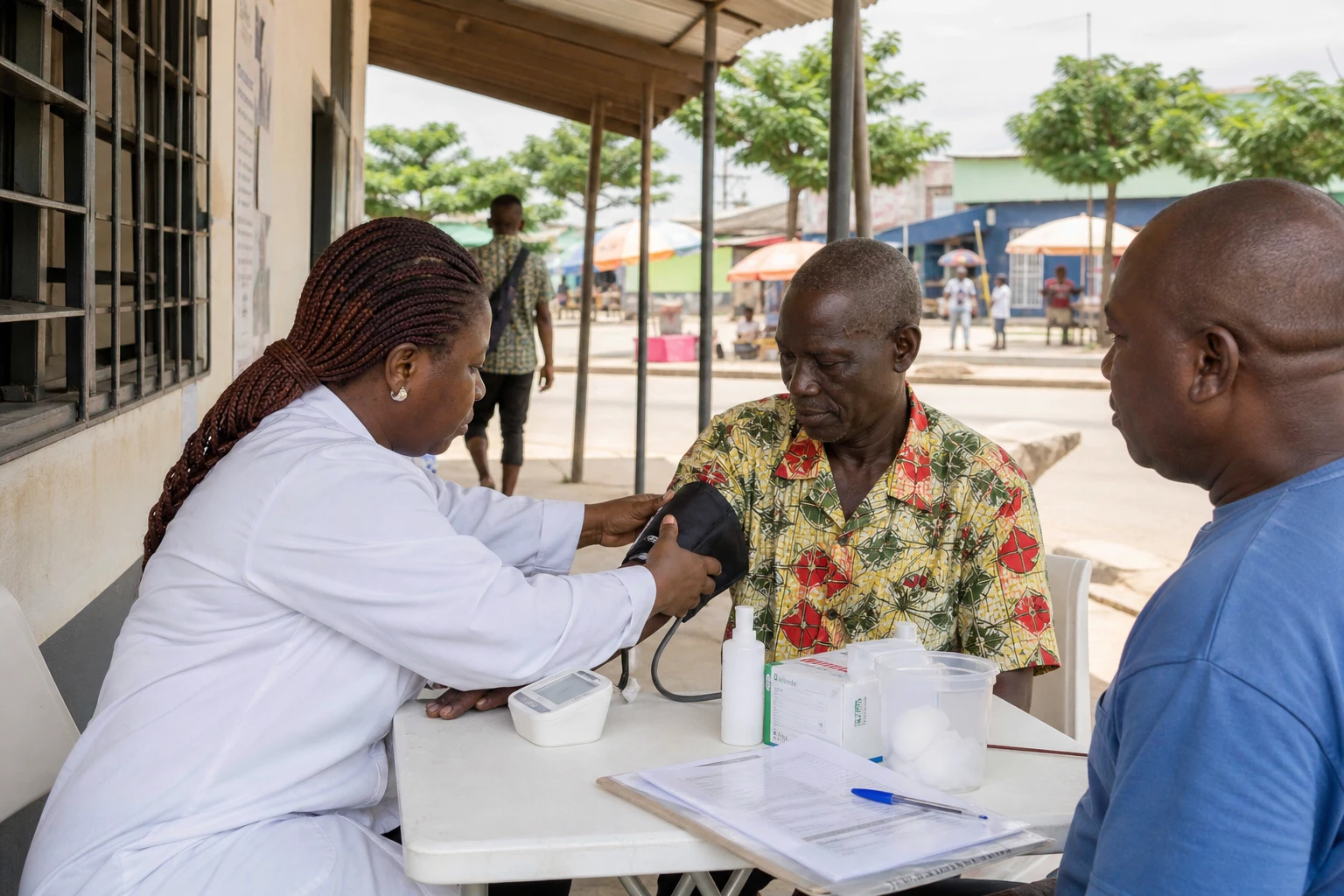
In Abidjan and several other municipalities in Côte d’Ivoire, efforts are under way to take cardiovascular prevention beyond major hospitals. In September 2026, medical teams brought blood pressure and blood glucose checks closer to residents as part of World Heart Day and the 50th anniversary of the Abidjan Heart Institute (ICA).
Screening closer to residents
On 29 September 2026, an awareness and free screening campaign was held in Anyama. It was organised by the Orange Côte d’Ivoire Foundation with the ICA and the National Programme to Combat Metabolic Diseases and Prevent Non-Communicable Diseases. The aim was simple: to identify the main cardiovascular risk factors early.
The initiative is part of a series of activities marking 50 years of the ICA. From 8 to 11 September, another campaign held at the Port-Bouët Pilot Centre screened 1,835 people for high blood pressure and diabetes. Côte d’Ivoire’s Ministry of Health described the initiative as a community-based approach that complements hospital care.
Screening alone does not provide a definitive diagnosis. It can, however, identify abnormally high blood pressure or concerning blood glucose levels. The person screened can then be referred to a health centre for repeated measurements, further tests and, if necessary, treatment.
Hypertension, a frequently silent risk
In Côte d’Ivoire, high blood pressure is a major public health challenge. In May 2024, the Ministry of Health reported an overall prevalence of 39.9% among adults aged 20 to 79. This figure should not be confused with the 35% estimate cited in some communications: results vary according to the year, age group and method used.
Hypertension can develop without visible symptoms. It gradually weakens the arteries and increases the risk of stroke, heart failure, kidney damage or coronary heart disease. Headaches, dizziness or palpitations can be warning signs. However, their absence does not guarantee normal blood pressure.
Regular checks are therefore essential. They are important for older people, but also for younger adults, particularly when several risk factors are present: family history, diabetes, overweight, smoking, excessive salt or alcohol consumption, or low levels of physical activity.
Prevention does not depend solely on individual behaviour. The cost of consultations, the availability of medicines, distance to a health centre and continuity of follow-up directly affect outcomes. These obstacles can weigh more heavily on informal-sector workers, low-income households and people living far from Abidjan.
The strategic role of the Abidjan Heart Institute
For five decades, the ICA has played a central role in Ivorian cardiology. The institution provides specialist consultations, medical and surgical procedures, and training for health professionals. It also takes part in awareness-raising and screening for hypertension, diabetes, high cholesterol and smoking.
The anniversary comes at a time when non-communicable diseases are playing an increasingly prominent role in African health policies. These diseases often develop over the long term. They therefore require regular follow-up, available medicines and a system able to link primary care with specialist facilities.
For the ICA, outreach campaigns are part of this approach. They make it possible to reach people who do not seek consultations on their own. They also offer a first point of contact with the health system to residents who still associate hospitals with established illness or emergencies.
Continuity of care remains crucial, however. High blood pressure detected during a free screening day must be medically confirmed. Patients must then be able to access medicines, understand their treatment and return for a check-up. Without this pathway, screening risks remaining a one-off measure.
A challenge beyond the economic capital
Côte d’Ivoire has two heart institutes, in Abidjan and Bouaké, as well as units providing care for hypertension and diabetes. This network could help reduce the concentration of specialist care in the economic capital. It must, however, be accompanied by stronger teams and better equipment in other regions.
The issue also concerns the Economic Community of West African States (ECOWAS). Mobility is high across the region, and health systems face similar challenges: rapid urbanisation, changing diets, sedentary lifestyles and unequal access to care. Community-based campaigns can therefore foster regional exchanges on screening and the follow-up of chronic diseases.
This development is also a reminder that cardiovascular health is not limited to dramatic emergencies. It is shaped in health centres, neighbourhoods, workplaces and rural areas. It depends on public decisions about medicines, food, prevention and health coverage.
After the activities in September 2026, the main challenge will be to turn the 50th-anniversary momentum into a lasting programme. For Ivorian authorities and health professionals alike, the next measure of success will not simply be the number of people screened. They will also need to track how many have had their results confirmed, been referred and received follow-up care.
The Abidjan Heart Institute provides information on its consultation services, prevention activities and role as a referral centre. National data on hypertension are also available from the Ivorian Ministry of Health.