Algeria
 Egypt
 Libya
 Morocco
 Sudan
 Tunisia
 Benin
 Cabo Verde
 Côte d'Ivoire
 Ghana
 Guinea
 Guinea-Bissau
 Liberia
 Mali
 Mauritania
 Niger
 Nigeria
 Senegal
 Sierra Leone
 The Gambia
 Togo
 Cameroon
 Central African Republic
 Chad
 DR Congo
 Equatorial Guinea
 Gabon
 Republic of the Congo
 São Tomé and Príncipe
 Burundi
 Comoros
 Djibouti
 Eritrea
 Ethiopia
 Kenya
 Madagascar
 Malawi
 Mauritius
 Mozambique
 Rwanda
 Seychelles
 Somalia
 South Sudan
 Tanzania
 Uganda
 Angola
 Botswana
 Eswatini
 Lesotho
 Namibia
 South Africa
 Zambia
 Zimbabwe
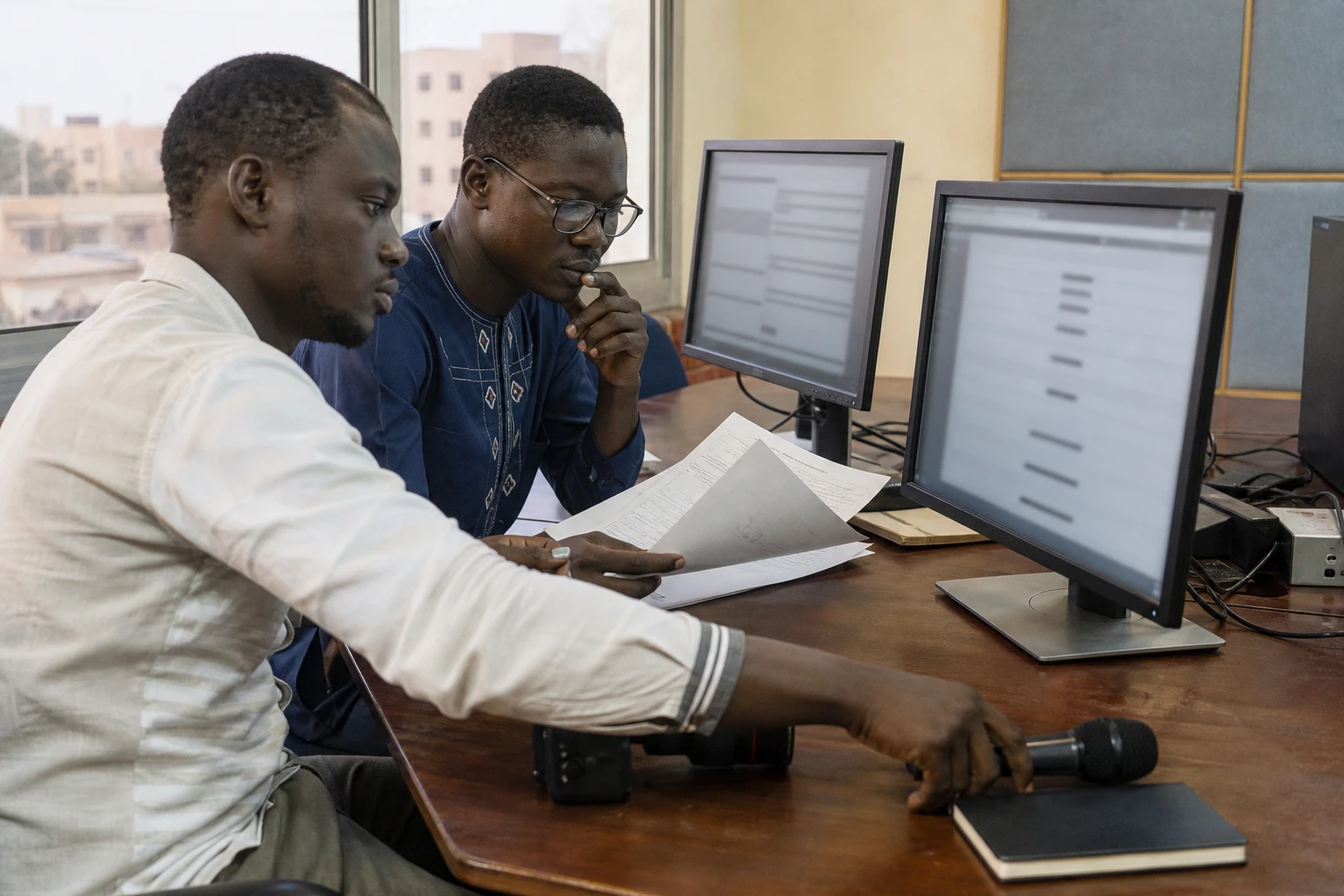
Four years after Captain Ibrahim Traoré took power, Burkina Faso still faces a central question: can the reconquest of security advance without shrinking public space? In Ouagadougou and in regions hit by violence, the record is measured as much by developments on the front as by citizens’ ability to speak, work and express dissent without fear.
A government born of a promise to regain territory
On 30 September 2022, Ibrahim Traoré ousted Lieutenant-Colonel Paul-Henri Sandaogo Damiba in Ouagadougou. He accused his predecessor of failing to halt the advance of armed groups. This second military takeover in eight months came in a country already weakened by attacks, population displacement and the loss of control of several rural routes.
The Economic Community of West African States, ECOWAS, condemned the change of regime at the time. The regional organisation upheld the principle of a return to constitutional order while avoiding direct confrontation with a Burkinabè army already engaged on several fronts. Since then, Ouagadougou has moved away from ECOWAS alongside Bamako and Niamey. The three countries have created the Alliance of Sahel States, presented as a framework for autonomous military and diplomatic cooperation.
This break has altered the regional balance of power. Burkina Faso has strengthened its ties with Russia, reduced military cooperation with France and embraced a diplomacy based on sovereignty. For some of the population, this approach responds to a longstanding desire to regain control over national choices. For other Burkinabè, however, it cannot replace verifiable results on the ground.
Claimed gains, but insecurity persists
The government says it has stepped up military operations, strengthened national units and retaken several towns. In its 2025 review, the Burkinabè Prime Minister’s Office said the state now controlled more than 74% of the territory. This figure comes from official communications and should be treated with caution, as independent access to combat zones remains limited.
The authorities also point to the growing role of the Volunteers for the Defence of the Homeland. These civilian auxiliaries, mobilised alongside the armed forces, play an important part in local intelligence and the protection of some communities. Their involvement, however, places heavy responsibilities on local communities. In several regions, residents must choose whether to join defence structures, stay away or leave their village.
Armed groups, too, retain a significant capacity to operate. Attacks on military positions and communities have continued to be reported in the north, east and centre-east of the country. An analysis by the Africa Center for Strategic Studies notes that violence has spread west and south, towards the borders with Benin, Togo and Côte d’Ivoire. This development directly affects trade, travel and the security of coastal countries.
The official record is therefore not enough to describe the reality people experience. In major cities, the state can point to projects, recruitment and investment. In rural areas, the situation depends more on whether roads are open, markets accessible, teachers have returned and health centres are functioning. The restoration of government administration in a town does not always mean a return to normal life.
Security does not resolve the question of freedoms
Captain Ibrahim Traoré’s tenure has also been marked by tighter controls on information. Foreign media outlets have been suspended or banned from broadcasting. Burkinabè journalists have been summoned, threatened or forcibly mobilised in structures linked to the war effort. Such measures are generally justified by the need to protect military operations and prevent the spread of information that could help armed groups.
The problem lies in the increasingly blurred line between operational secrecy and political control. Withholding the position of a military unit is a security measure. Preventing an investigation into public administration, alleged abuses or the difficulties faced by the population is a different matter. In this space, judicial institutions, the media and human rights organisations must be able to work without being treated as adversaries.
Burkinabè journalist Inoussa Ouédraogo, now in exile, challenges this very logic. He believes that a people cannot be liberated by restricting their freedom of expression. In an interview with France 24 on the political situation in Burkina Faso, he accused the government of engaging in a form of «state terrorism» and denounced the curtailment of civil liberties. These are serious allegations. They should be attributed to their author and considered alongside the authorities’ denials or justifications.
The question is not whether to choose security or freedom, as if the two were incompatible priorities. A state that protects its citizens must also account for its use of force. Displaced people, military families, traders and workers in the informal economy need security. They also need to know who makes decisions, under what rules and with what avenues for redress.
A record that will be judged beyond rhetoric
The Burkinabè government has succeeded in establishing a new national narrative. It highlights sovereignty, popular mobilisation, local production and a break with external dependencies. This vision has real support, particularly among young people who reject what they see as ineffective responses by previous governments and their international partners.
But this support is not an unlimited mandate. It could be weakened by military losses, restrictions imposed on civilians, rising living costs or a lack of clear political prospects. The length of the transition, the future role of political parties and the conditions for a return to constitutional order remain sensitive issues. Burkina Faso’s departure from ECOWAS has also narrowed regional forums for dialogue, without ending its economic interdependence with neighbouring countries.
Across the Sahel, the Burkinabè experience is now a point of reference for military governments advocating a sovereignty-first approach. It shows that a government can win strong popular support by promising a break with the past. It also shows that a communications strategy alone cannot bring lasting stability to territories.
Ibrahim Traoré’s true record will therefore not be judged solely by the number of towns said to have been retaken or the volume of military equipment acquired. It will depend on lasting security for residents, the effective return of public services, the protection of civilians and Burkinabè people’s ability to debate their future without intimidation. It is on this combination of sovereignty, effectiveness and accountability that the government in Ouagadougou will be judged.