
 Algeria
 Egypt
 Libya
 Morocco
 Sudan
 Tunisia
 Benin
 Cabo Verde
 Côte d'Ivoire
 Ghana
 Guinea
 Guinea-Bissau
 Liberia
 Mali
 Mauritania
 Niger
 Nigeria
 Senegal
 Sierra Leone
 The Gambia
 Togo
 Cameroon
 Central African Republic
 Chad
 DR Congo
 Equatorial Guinea
 Gabon
 Republic of the Congo
 São Tomé and Príncipe
 Burundi
 Comoros
 Djibouti
 Eritrea
 Ethiopia
 Kenya
 Madagascar
 Malawi
 Mauritius
 Mozambique
 Rwanda
 Seychelles
 Somalia
 South Sudan
 Tanzania
 Uganda
 Angola
 Botswana
 Eswatini
 Lesotho
 Namibia
 South Africa
 Zambia
 Zimbabwe
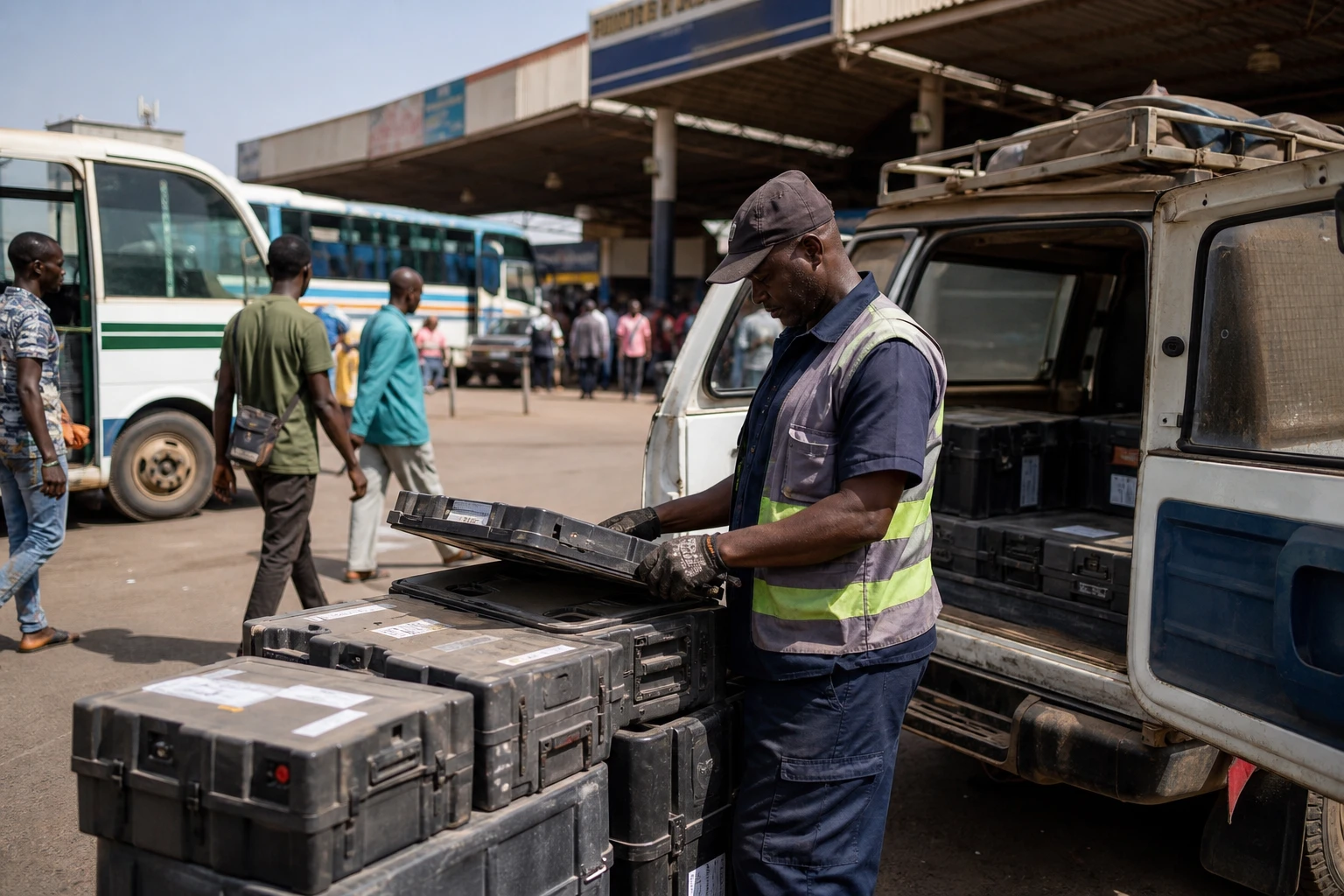
In Ouagadougou, Burkina Faso now wants to have a say in what happens after extraction. The inauguration of RAFFINOR-BF on 28 September 2026 opens a new chapter for a gold industry long organised around exporting the metal in its raw form.
An industrial facility at the heart of mining strategy
Captain Ibrahim Traoré inaugurated Burkina Faso’s first national gold refinery in the capital. The facility is located on a five-hectare site in Ouagadougou’s 12th district.
RAFFINOR-BF brings together several areas dedicated to the processing chain. The site includes a smelter, an analysis laboratory, a storage area, a jewellery workshop and an administrative building. The equipment is designed to turn doré into fine gold bars with a purity of up to 99.99%, according to information provided by the Burkinabè ministry in charge of mines.
The first phase provides for a theoretical refining capacity of 164 tonnes a year. An expansion is then expected to raise this capacity to 515 tonnes. The project has involved more than 11 billion CFA francs. Funding is primarily provided by the Burkinabè state, notably through the National Precious Substances Company, with participation from domestic private investors.
These volumes do not automatically correspond to the country’s annual production. They indicate the plant’s stated maximum capacity. Scaling up will therefore depend on a steady supply of gold, the formalisation of trading channels and the refinery’s ability to operate at its industrial pace.
From extraction to added value
The decision to refine gold locally serves a specific goal: to retain more value in Burkina Faso. Until now, a significant share of the metal left the country after the initial stages of processing. Refining, quality control, certification and some processing activities were then carried out abroad.
At the inauguration, Ibrahim Traoré summed up this approach by saying: “Our ambition is no longer to be just a country that extracts and takes its raw materials abroad. We want to refine all our metals here.” This policy forms part of the economic sovereignty drive pursued by the transitional authorities since they came to power in 2022.
For the state, the issue goes beyond building a plant. It is also about strengthening oversight of flows, improving mining statistics and creating technical jobs. The occupations involved range from metallurgical analysis to industrial maintenance, as well as security, logistics and jewellery manufacturing.
This shift could also make public revenues more visible. Metal refined and certified locally is easier to track in trade declarations. It can also facilitate negotiations with buyers and financial institutions, provided traceability rules are applied consistently.
An industry facing parallel trading channels
The main challenge, however, lies upstream of the refinery. Burkina Faso has a substantial industrial gold-mining sector, as well as a large artisanal and semi-mechanised sector. The latter supports many workers and commercial networks in several regions. It remains difficult, however, to measure accurately.
In February 2024, the authorities suspended the issuing of export permits for gold from artisanal and semi-mechanised mining. The measure was intended to reorganise marketing and strengthen the role of the National Precious Substances Company. It reflects Ouagadougou’s determination to bring more transactions into official channels.
This policy also has practical effects for local stakeholders. Artisanal miners may benefit from clearer access to public buyers and greater recognition of their production. But they may also face delays, administrative requirements or reduced outlets when informal channels are closed without adequate operational alternatives.
The impact will therefore differ between rural areas and the capital. In Ouagadougou, the refinery could create industrial jobs and strengthen specialised services. At mining sites, the central issues will remain the price paid to producers, security, access to equipment and the speed of payment.
An economic and security footprint to monitor
Burkinabè authorities have announced gold production of 94 tonnes in 2025. This figure is cited in the inauguration report published by the Associated Press. The World Gold Council, for its part, publishes comparative annual data on global mine production. Any precise comparison of African rankings must nevertheless take account of calculation methods and the difference between reported production, exported production and volumes that bypass official channels.
The industry is also linked to the security situation. In several regions of Burkina Faso, mining activity is developing amid armed violence and population displacement. The authorities believe gold trafficking can contribute to the financing of armed groups. This claim should be distinguished from data that precisely establish the volumes involved, which remain difficult to document publicly.
Local refining will therefore not, on its own, eliminate smuggling. It can, however, provide an additional checkpoint. To have this effect, RAFFINOR-BF will need to be linked to a reliable system for registering producers, collectors, transporters and exporters.
Significance beyond Burkina Faso’s borders
The project comes amid efforts by several West African states to increase their control over mineral resources. Burkina Faso is a member of the Economic Community of West African States, ECOWAS, but its relations with the regional organisation remain shaped by tensions over military-led transitions and plans for Burkina Faso, Mali and Niger to withdraw.
In this environment, a national refinery could become an instrument of regional negotiation. Ouagadougou could seek to attract gold from legally declared channels in neighbouring countries. It will then need to ensure recognised standards, credible traceability and procedures compatible with the requirements of international markets.
The success of RAFFINOR-BF will ultimately be measured against concrete indicators: the share of national gold actually refined locally, additional public revenue, jobs created, payment times for producers and a reduction in undeclared exports. The inauguration on 28 September 2026 marks an industrial milestone. It is not yet proof that the entire value chain is under control.



