
 Algeria
 Egypt
 Libya
 Morocco
 Sudan
 Tunisia
 Benin
 Burkina Faso
 Cabo Verde
 Côte d'Ivoire
 Ghana
 Guinea
 Guinea-Bissau
 Liberia
 Mali
 Mauritania
 Niger
 Nigeria
 Senegal
 Sierra Leone
 The Gambia
 Togo
 Cameroon
 Central African Republic
 Chad
 Equatorial Guinea
 Gabon
 Republic of the Congo
 São Tomé and Príncipe
 Burundi
 Comoros
 Djibouti
 Eritrea
 Ethiopia
 Kenya
 Madagascar
 Malawi
 Mauritius
 Mozambique
 Rwanda
 Seychelles
 Somalia
 South Sudan
 Tanzania
 Uganda
 Angola
 Botswana
 Eswatini
 Lesotho
 Namibia
 South Africa
 Zambia
 Zimbabwe
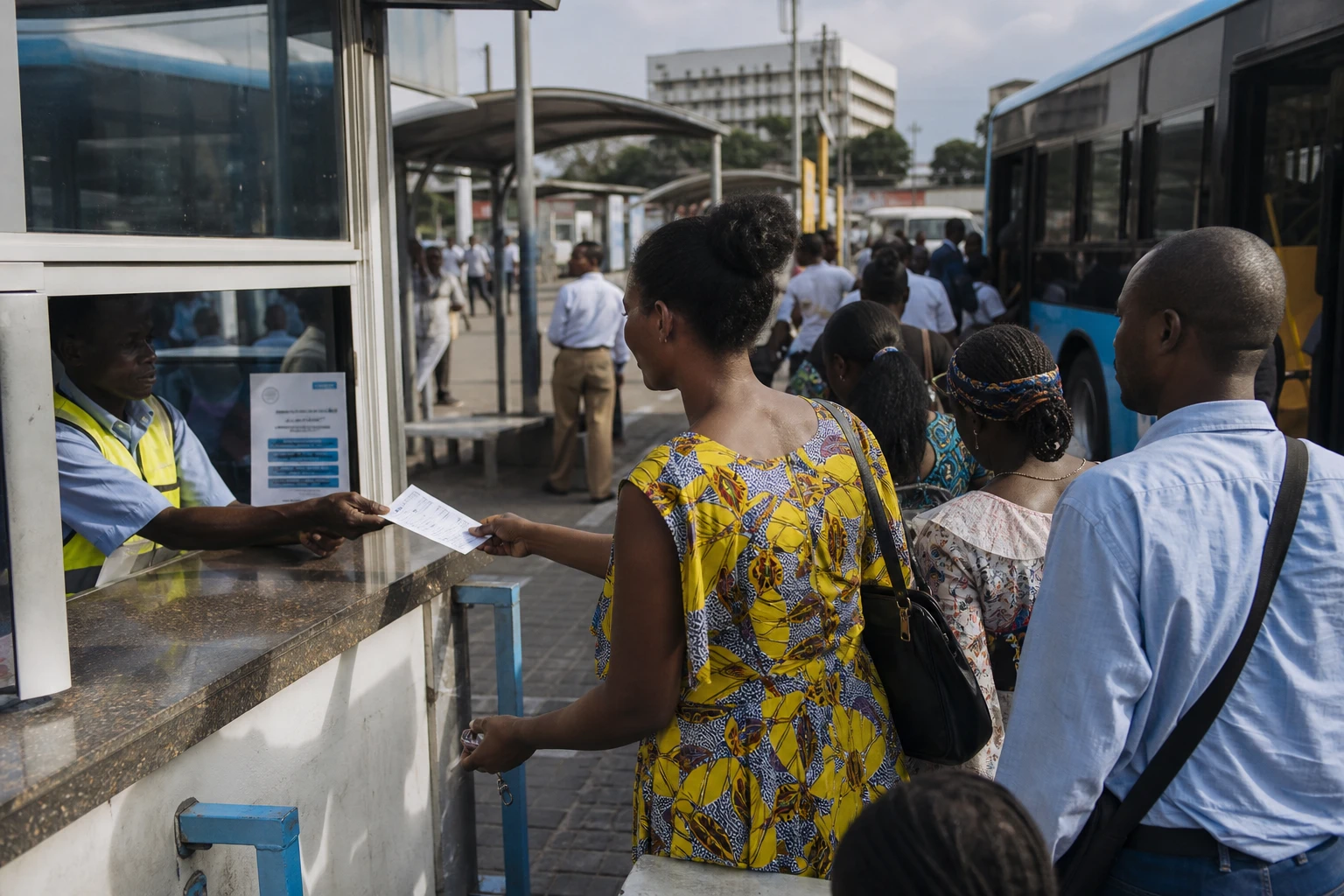
In Kinshasa, the fight against corruption is entering a new legislative phase. The Congolese government wants to treat illicit practices not merely as offences to be punished, but as a system to be prevented, detected and dismantled. The bill submitted to the National Assembly thus seeks to address financial schemes, shell companies and digital flows that complicate investigators’ work.
A 144-article bill before MPs
The Minister of State, Minister of Justice and Keeper of the Seals, Guillaume Ngefa Atondoko Andali, presented the bill to the National Assembly on Monday 28 September 2026. The lower house declared it admissible before referring it to its Political, Administrative and Legal Commission, which is responsible for examining the text and MPs’ observations.
The bill comprises 144 articles divided into ten titles. It covers prevention, transparency, specialised bodies, offences, penalties and investigative procedures. It also includes provisions on the protection of witnesses and whistleblowers, the liability of legal entities, international judicial cooperation and the recovery of assets derived from offences.
The government particularly wants to strengthen the state’s ability to trace assets acquired through corruption. This is a central issue in a country where financial cases can involve several jurisdictions, companies registered abroad or intermediaries who are difficult to identify.
The minister argued that Congolese law needed to evolve. In his view, the legal, economic and financial environment has changed. Concealment mechanisms now rely more heavily on nominees, schemes involving multiple companies and digital tools. This statement, reported by Congolese media, will need to be assessed against the final text and the parliamentary debates to come.
Moving from punishment to prevention
The reform is not aimed solely at increasing penalties. It seeks to organise the entire anti-corruption chain, from prevention through to the enforcement of court decisions. This approach includes institutional transparency, the detection of suspicious flows, protection for those who report wrongdoing and the recovery of misappropriated funds.
MPs nevertheless stressed the practical requirements of the reform. They called for stronger oversight institutions, better traceability of public transactions and more effective recovery mechanisms. Several elected representatives also highlighted the need to protect magistrates and improve their working conditions.
These comments point to an issue that is often decisive in Central Africa: a law may be precise on paper but remain ineffective if investigators lack resources, institutions’ responsibilities overlap or court decisions are not enforced. The credibility of the system will therefore depend as much on its content as on the independence and resources afforded to the bodies responsible for implementing it.
The bill comes as the Democratic Republic of the Congo already has several laws relating to money laundering, terrorist financing and offences set out in the Penal Code. It must therefore clarify responsibilities and prevent powers from being scattered across several administrations.
Persistent pressure on public governance
Corruption affects very different areas of national life. Public procurement, revenue agencies, customs, taxation, administrative services and the extractive sector are among the areas regularly cited in debates on governance in the Congo.
Transparency International’s latest Corruption Perceptions Index, published on 10 February 2026 for the year 2025, gives the DRC a score of 20 out of 100 and ranks it 163rd out of 182 countries. The index measures perceived public-sector corruption using several sources. It is therefore not an exhaustive tally of offences committed, but reflects limited confidence in oversight mechanisms.
Transparency International’s publication on the 2025 index also notes that 122 of 182 countries score below 50. The situation in the Congo is thus part of a broader challenge, even if institutional responses must remain adapted to national realities.
In the DRC, the Agency for the Prevention and Fight against Corruption already forms part of the public architecture devoted to this issue. The new bill is intended to complement this framework. Its effectiveness will depend on coordination between the Agency, the justice system, oversight institutions, financial services and the administrations that produce data useful to investigations.
Putting implementation to the test in the provinces
The effects of an anti-corruption reform will not be measured only in offices in Kinshasa. In the provinces, citizens encounter corruption in administrative procedures, access to public services, local taxation and the management of natural resources. Formal businesses may also face unfair competition from operators who circumvent the rules.
Conditions nevertheless vary between territories. Provincial administrations do not all have the same resources. Mining areas face particular challenges related to contracts, taxes and the movement of revenues. In rural areas, access to justice and reporting mechanisms often remains more difficult than in Kinshasa.
Whistleblower protection will therefore be an important indicator. Without safeguards against professional, legal or physical reprisals, few witnesses will agree to provide sensitive information. Likewise, asset recovery requires reliable registers, cooperation between administrations and swift exchanges with foreign authorities.
A reform under regional scrutiny
The DRC is a member of the Southern African Development Community, SADC, which includes several countries in southern and central Africa. The fight against illicit financial flows therefore extends beyond national borders. Investigations may lead to the pursuit of accounts, assets or companies in neighbouring states.
Regional cooperation will be particularly important in identifying the real beneficiaries of companies. It will also need to facilitate mutual legal assistance and the return of funds. Without these mechanisms, a national reform risks running up against administrative borders and differences between legislation.
The next stage will take place in Parliament. The relevant commission must examine the proposed amendments before the bill returns to a plenary session. Three points will then need to be watched: the independence of oversight bodies, the effective protection of witnesses and the state’s ability to recover misappropriated assets. It is these practical elements, more than the number of articles, that will determine the reach of the Congolese reform.



