
 Algeria
 Egypt
 Libya
 Morocco
 Sudan
 Tunisia
 Benin
 Cabo Verde
 Côte d'Ivoire
 Ghana
 Guinea
 Guinea-Bissau
 Liberia
 Mali
 Mauritania
 Niger
 Nigeria
 Senegal
 Sierra Leone
 The Gambia
 Togo
 Cameroon
 Central African Republic
 Chad
 DR Congo
 Equatorial Guinea
 Gabon
 Republic of the Congo
 São Tomé and Príncipe
 Burundi
 Comoros
 Djibouti
 Eritrea
 Ethiopia
 Kenya
 Madagascar
 Malawi
 Mauritius
 Mozambique
 Rwanda
 Seychelles
 Somalia
 South Sudan
 Tanzania
 Uganda
 Angola
 Botswana
 Eswatini
 Lesotho
 Namibia
 South Africa
 Zambia
 Zimbabwe
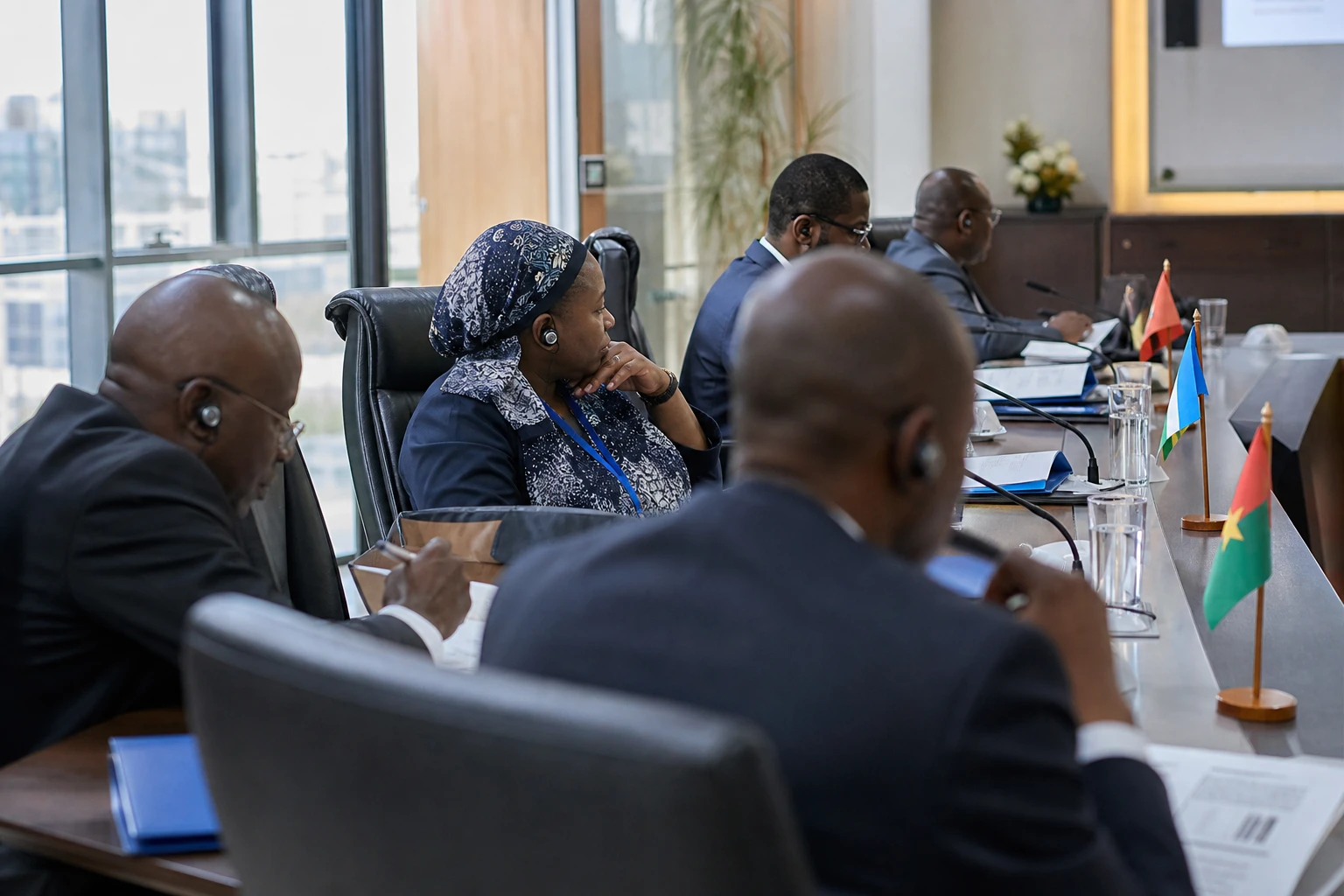
In New York, Burkina Faso has adopted a cautious line on an issue that has long divided the Maghreb: supporting the United Nations political framework without automatically adopting the most hard-line positions of the parties. This stance places Western Sahara within the continuity of Burkina Faso’s current diplomacy, based on sovereignty, dialogue and the diversification of partnerships.
Ouagadougou keeps the issue within the UN framework
On 28 September 2026, Burkina Faso’s foreign minister, Karamoko Jean Marie Traoré, spoke in New York on behalf of the Confederation of Sahel States (AES), which brings together Burkina Faso, Mali and Niger. His address formed part of the work of the 81st session of the United Nations General Assembly.
On Western Sahara, Burkina Faso’s top diplomat reaffirmed his country’s commitment to the political process conducted under the auspices of the UN secretary-general. He also called for efforts to continue towards a negotiated solution between the parties, in accordance with Security Council resolutions.
This wording does not amount to explicit recognition of Moroccan sovereignty over the territory. Nor does it endorse the Polisario Front’s call for self-determination through a referendum. Rather, it refers to the multilateral mechanism tasked with bringing the positions closer together, in a dispute where disagreements concern both the territory’s status and the definition of the settlement process.
Western Sahara has been on the United Nations’ list of Non-Self-Governing Territories since 1963. Morocco controls most of the territory, while the Polisario Front claims its independence and administers refugee camps in Tindouf, Algeria. Rabat, for its part, advocates a plan for autonomy under Moroccan sovereignty.
On 31 October 2025, the Security Council adopted Resolution 2797. The text extended the mandate of the United Nations Mission for the Referendum in Western Sahara, MINURSO, until 31 October 2026. It also called for negotiations to continue on the basis of Morocco’s autonomy proposal, while retaining the goal of a definitive, just, lasting and mutually acceptable political solution.
The resolution did not, however, remove UN references to the self-determination of the people of Western Sahara. This nuance explains the differing interpretations of the text. Morocco sees it as greater support for its initiative. Algeria and the Polisario Front, meanwhile, believe that the decolonisation framework should not be reduced to a single political option.
A position to be viewed in the context of the AES’s trajectory
Karamoko Jean Marie Traoré’s statement comes amid a particular regional context. Since withdrawing from the Economic Community of West African States (ECOWAS), Burkina Faso, Mali and Niger have sought to strengthen their own political coordination within the AES. The break with the West African regional organisation took effect in January 2025, after several months of tensions linked to military transitions and regional sanctions.
In Ouagadougou, diplomacy now emphasises state sovereignty, non-interference and the pursuit of partnerships considered more balanced. Within this framework, backing the United Nations political process allows Burkina Faso to defend the principle of dialogue without publicly aligning itself with a solution imposed from outside.
This approach is also consistent with the closer ties developing between the AES and Morocco. In April 2025, the foreign ministers of the three Sahelian countries were received in Rabat. Their discussions focused in particular on the AES states’ access to the Atlantic and the economic prospects associated with infrastructure, trade and investment.
Morocco therefore has strategic value for the landlocked countries of the Sahel. Its maritime access could facilitate exports and diversify trade routes, provided announced projects lead to tangible infrastructure and measurable benefits for national economies. For Ouagadougou, this cooperation does not necessarily mean abandoning an independent position on sensitive diplomatic issues.
The nuance matters. Burkina Faso can deepen its relations with Rabat while retaining wording compatible with the language of the United Nations. This room for manoeuvre protects its bilateral interests, while also avoiding turning the Sahrawi issue into a new front for regional confrontation.
A diplomatic balance that extends beyond the Maghreb
Burkina Faso’s position forms part of a broader discourse on reforming multilateralism. Addressing the UN, Karamoko Jean Marie Traoré defended a vision based on the sovereign equality of states and the rejection of what AES officials describe as “double standards” in international relations.
This line is aimed primarily at relations between Africa and external powers. It also concerns African balances of power, however. The Western Sahara dispute directly pits Morocco against the Polisario Front, but it also weighs on relations between Rabat and Algiers. That rivalry influences discussions on security, Maghreb integration and cooperation between the north and west of the continent.
For the Sahrawi people, the stakes remain above all political and human. Maintaining the UN process resolves neither the question of the territory’s status nor the living conditions of displaced people. Nor does it, by itself, guarantee the resumption of lasting dialogue between the parties. Negotiations will therefore have to address requirements relating to representation, security and respect for fundamental rights.
Burkina Faso’s position can also be viewed in light of its own priorities. In a country facing intense security pressure and significant development needs, diplomacy is seeking economic partnerships without taking on multiple irreversible commitments. This logic concerns the authorities, but also economic actors, transport operators, producers and people in regions far from the capital.
Next steps to watch
The next diplomatic flashpoint will be the review of MINURSO’s mandate, which expires on 31 October 2026. The Security Council will have to assess the state of discussions and the conditions for continuing the mission.
Burkina Faso will then have to clarify the extent of its support for the political process. The question will be whether it limits itself to defending the UN framework or agrees to back Morocco’s autonomy proposal more explicitly, now that Resolution 2797 has placed it at the centre of negotiations.
For the AES, the issue is a test of consistency. The Confederation wants to assert an independent foreign policy, but it must also preserve partnerships with African countries able to support its trade and infrastructure projects. For now, Ouagadougou’s choice is to keep dialogue open and leave negotiations to determine the outcome of the conflict.



