Algeria
 Egypt
 Libya
 Morocco
 Sudan
 Tunisia
 Benin
 Burkina Faso
 Cabo Verde
 Côte d'Ivoire
 Ghana
 Guinea
 Guinea-Bissau
 Liberia
 Mali
 Mauritania
 Niger
 Nigeria
 Senegal
 Sierra Leone
 The Gambia
 Togo
 Cameroon
 Central African Republic
 Chad
 DR Congo
 Equatorial Guinea
 Gabon
 Republic of the Congo
 São Tomé and Príncipe
 Burundi
 Comoros
 Djibouti
 Eritrea
 Ethiopia
 Kenya
 Madagascar
 Malawi
 Mauritius
 Mozambique
 Rwanda
 Seychelles
 Somalia
 South Sudan
 Tanzania
 Angola
 Botswana
 Eswatini
 Lesotho
 Namibia
 South Africa
 Zambia
 Zimbabwe
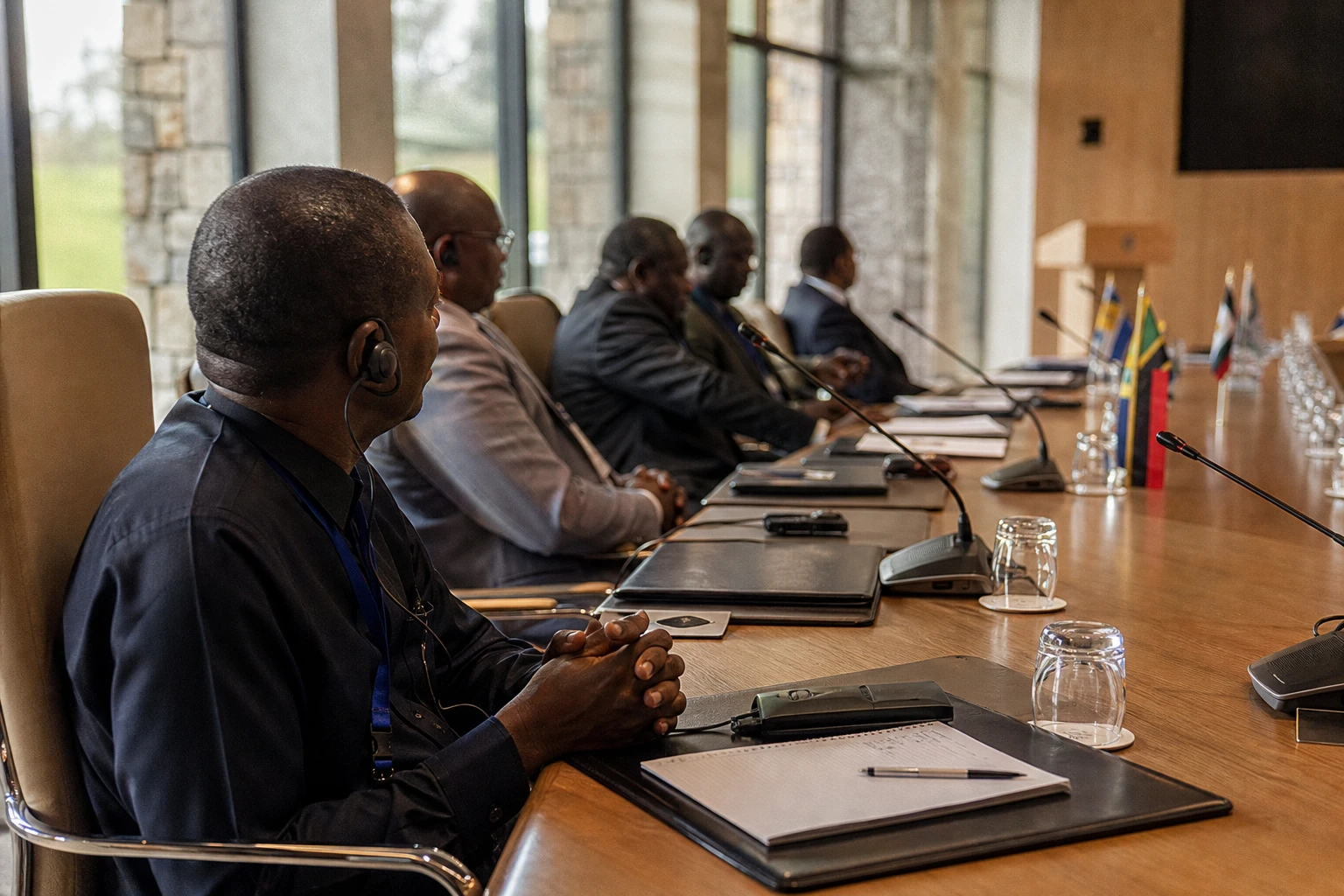
In Fort Portal, western Uganda, a royal ceremony opens a new chapter for the Tooro Kingdom. The enthronement of Edward Rukidi Nyabongo I comes as the succession of the late King Oyo remains contested in court.
A cultural monarchy at the heart of western Uganda
Tooro is one of the traditional kingdoms recognised by the Ugandan state. Its territory extends around Fort Portal, in a region near the border with the Democratic Republic of the Congo. The kingdom plays an important cultural and identity-based role for many communities in the west of the country.
These institutions no longer have executive or legislative powers. Uganda’s Constitution gives them primarily a cultural role. They can, however, mobilise people, defend linguistic heritage and promote social projects. Their influence therefore extends well beyond ceremonial matters.
President Yoweri Museveni attended the ceremony held on the night of Monday 28 to Tuesday 29 September 2026. His presence recalls the special relationship between the presidency and traditional monarchies. The central government restored them in the early 1990s, after several decades of suspension.
The 1995 Constitution subsequently set out their status. The kings retained their customary legitimacy, but did not regain the political prerogatives they had exercised before the major institutional reforms of independent Uganda. Uganda’s constitutional framework for cultural institutions thus distinguishes traditional authority from state power.
Edward Rukidi Nyabongo I appointed after King Oyo’s death
Edward Rukidi Nyabongo I succeeds King Oyo Nyimba Kabamba Iguru Rukidi IV, who died in August 2026 at the age of 34. Oyo ascended the throne in 1995, when he was just three years old. His reign spanned an entire generation of Tooro subjects.
The new sovereign was chosen by elders of the royal Babiito clan. He had not been presented publicly as the first claimant in the line of succession. Customary leaders nevertheless selected him at the end of an internal process.
The ceremony brought thousands of people to Fort Portal. Delegations from other Ugandan kingdoms, including Buganda, took part in the celebrations. Drums and traditional rites played a central role in this transfer of royal authority.
Yoweri Museveni’s participation gave the event a national dimension. The president recalled that the monarchies had been restored to preserve culture, while preventing the return of hereditary power that could rival that of the Republic.
Succession challenged by some members of the royal family
The enthronement has not ended the dispute dividing the royal household. King Oyo’s family says a biological heir may exist. It also argues that written instructions should have been taken into account before Nyabongo I was appointed.
Queen Mother Best Kemigisa and other family members have challenged the process followed by the elders. Two residents and a civil society organisation have also taken the matter to court. The central question concerns the relationship between the Babiito clan’s customary rules and any personal wishes expressed by the late king.
The case raises a delicate institutional problem. Ugandan law recognises cultural institutions, but does not always define precisely how to resolve a contested succession within a monarchy. Courts must therefore contend with written rules, customary practices and decisions made by royal authorities.
The dispute could continue despite the ceremony. Until a court ruling or family agreement clarifies the situation, Edward Rukidi Nyabongo I will have to consolidate his authority among the kingdom’s different constituencies. His first challenge will be less political than symbolic: to unite an institution weakened by Oyo’s sudden death.
The Kasese precedent remains fresh in people’s minds
In western Uganda, monarchies remain tied to sensitive questions of representation, belonging and security. The most significant precedent remains the 2016 Kasese crisis, centred on the Rwenzururu Kingdom.
Security forces attacked the royal palace after several episodes of tension with the authorities. Human rights organisations cited a death toll of more than a hundred, while the government justified the operation by the alleged presence of armed groups.
That crisis was not directly linked to the Tooro succession. It nevertheless shows that cultural institutions can become focal points for mobilisation when people feel their identity or representation is under threat. In a region bordering the DRC, preventing any escalation therefore remains a major concern.
The Ugandan government is likely to seek to avoid an open confrontation. A prolonged crisis would undermine the image of a restoration of monarchy presented as compatible with national unity. It could also rekindle tensions between the central authorities, local elites and rural communities.
An issue extending beyond Uganda’s borders
The Tooro case forms part of the context of the East African Community, or EAC, an organisation that includes Uganda, Kenya, Tanzania, Rwanda, Burundi, South Sudan, the DRC and Somalia, among others. The region is seeking to strengthen trade, political cooperation and security mechanisms.
Fort Portal lies in an area where human, commercial and family movements cross borders. Stability in western Uganda therefore also concerns relations with neighbouring DRC, particularly in areas near the Rwenzori Mountains.
What happens next will depend on several factors: the timetable for court proceedings, the Babiito’s ability to maintain unity, and the position of King Oyo’s family. The role of the national authorities will also be watched. They will have to support stability without giving the impression of taking sides in a succession dispute.
For Tooro, the enthronement on 29 September 2026 is therefore more than a ceremony. It ushers in a transition in which customary legitimacy, national law and collective memory will have to find a new balance.