Algeria
 Libya
 Morocco
 Sudan
 Tunisia
 Benin
 Burkina Faso
 Cabo Verde
 Côte d'Ivoire
 Ghana
 Guinea
 Guinea-Bissau
 Liberia
 Mali
 Mauritania
 Niger
 Nigeria
 Senegal
 Sierra Leone
 The Gambia
 Togo
 Cameroon
 Central African Republic
 Chad
 DR Congo
 Equatorial Guinea
 Gabon
 Republic of the Congo
 São Tomé and Príncipe
 Burundi
 Comoros
 Djibouti
 Eritrea
 Ethiopia
 Kenya
 Madagascar
 Malawi
 Mauritius
 Mozambique
 Rwanda
 Seychelles
 Somalia
 South Sudan
 Tanzania
 Uganda
 Angola
 Botswana
 Eswatini
 Lesotho
 Namibia
 South Africa
 Zambia
 Zimbabwe
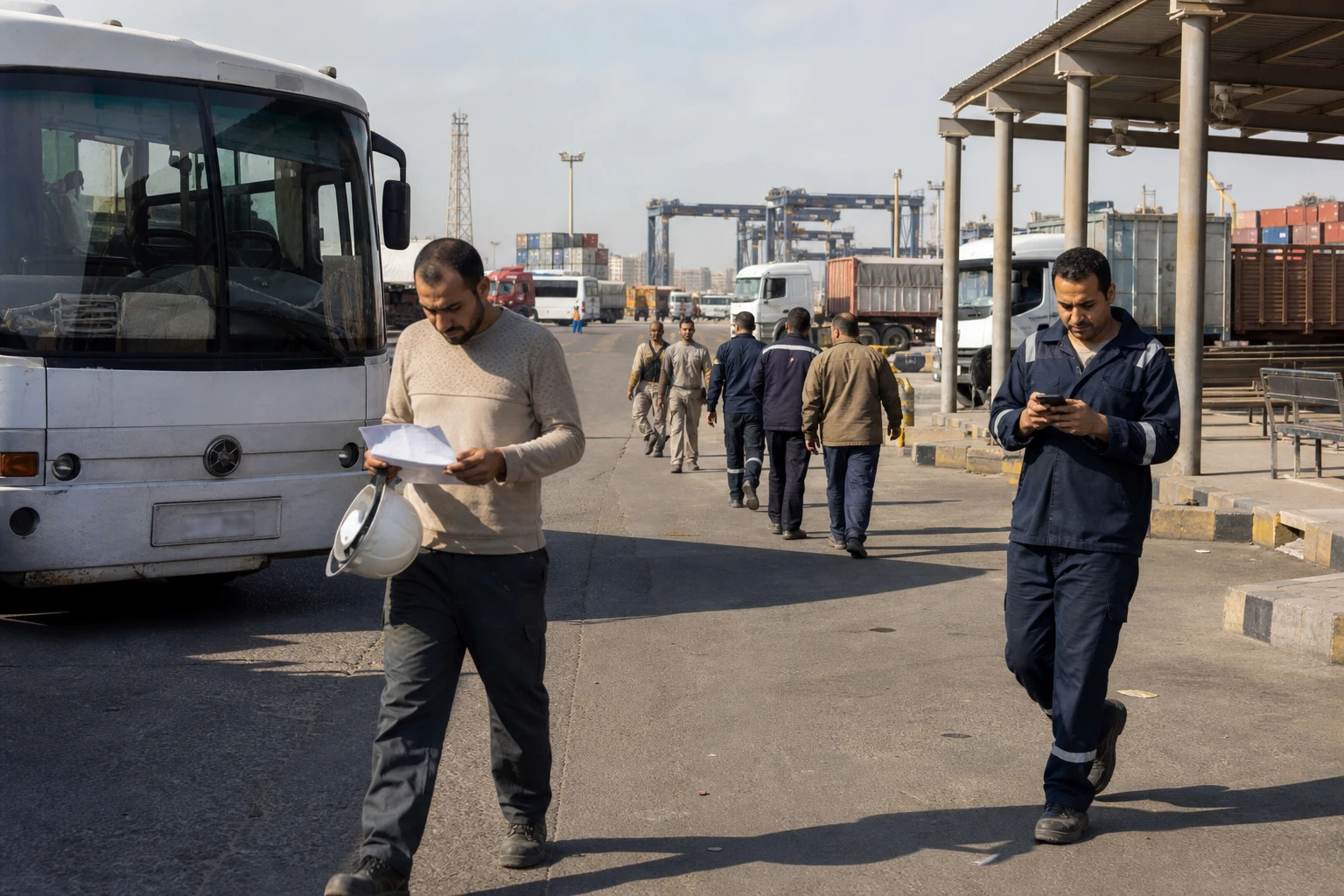
For Egypt, mining is no longer just about extracting rocks from the desert. The country now wants to process more of its phosphate, iron ore and other resources on its own territory. The cooperation announced with Finnish group Metso is part of this industrial shift.
Cairo seeks to move from extraction to processing
Egypt’s Ministry of Industry and Metso signed a memorandum of understanding on Monday 28 September 2026, on the sidelines of the fifth edition of the Egypt Mining Forum. The event took place on 28 and 29 September in the New Administrative Capital, near Cairo.
The agreement covers the processing and extraction of several minerals. Iron ore and phosphate are among the priorities cited. Metso is to provide technical and operational support to Egyptian stakeholders.
The arrangement includes laboratory analyses, feasibility studies, technical assessments and engineering consultancy services. Field experts may also support local teams in preparing and implementing future projects.
The cooperation is also intended to promote the transfer of knowledge to Egyptian companies. However, the memorandum does not yet constitute an investment contract for a specific plant. More detailed agreements will have to set out technical responsibilities and commercial terms for each project.
Egyptian Minister of Industry Khaled Hashem presented the initiative as a way to deepen local manufacturing, reduce certain import gaps and increase exports. He also stressed the need to better integrate mining with other industrial activities.
For his part, Rajnish Mishra, Metso’s vice-president for the Middle East, confirmed the group’s intention to expand its activities in Egypt. The Finnish company supplies technologies and services for crushing, grinding, separation and mineral processing, among other areas.
A strategy already taking shape in phosphate
The signing comes as Egypt steps up its phosphate-processing projects. On 19 August 2026, the authorities laid the foundation stone for a phosphoric acid complex at Abu Tartour, in the New Valley Governorate.
The project represents an announced investment of $658 million. Its first phase is set to produce 250,000 tonnes of commercial phosphoric acid a year. The product is used, among other things, in the manufacture of fertilisers.
The project is being carried out by Chinese groups CSCEC and ECEC. It is due to come on stream within thirty months. Production is expected to be exported through the port of Safaga on the Red Sea. The Egyptian authorities anticipate more than 3,000 direct and indirect jobs.
The Abu Tartour complex illustrates the change of direction sought by Cairo. Rather than exporting only raw ore, Egypt wants to develop intermediate and finished products. This processing can increase the value of exports and support the fertiliser industry.
The government is also working on other integrated projects in the New Valley. They combine phosphate extraction and processing with the production of fertilisers or phosphoric acid. This approach is intended to bring mining sites closer to industrial and logistics activities.
The mining forum showcases Egypt’s reforms
The memorandum with Metso was concluded during a forum that has become central to Egypt’s mining strategy. For the 2026 edition, Minister of Petroleum and Mineral Resources Karim Badawi said the country wanted the sector’s contribution to reach around 6% of gross domestic product in the medium term.
The authorities also announced the first results of a new system for allocating mining areas. Since its launch on 10 June 2026, 119 companies have submitted applications. They have made 403 bids for 118 of the 335 areas on offer, according to figures released by the ministry.
The permits cover gold, phosphate, talc and kaolin, among other minerals. More than 14 foreign companies are among the applicants. They come from Australia, the United Kingdom, Canada, Saudi Arabia, Turkey, South Africa, India and China, among other countries.
The opening-up is intended to attract capital. It also seeks to reduce the risks associated with exploration, a costly phase during which the presence and quality of a deposit remain uncertain. Improving geological data and simplifying procedures will therefore be crucial.
At the same time, Egypt wants to train more geologists, engineers and technicians. Programmes with Murdoch University in Australia, as well as a project for a school specialising in mining technologies and phosphate, have been announced in the New Valley.
Expected benefits, but conditions must be met
For Egyptian leaders, local processing can reduce imports of industrial products and increase export revenues. For businesses, it opens up a market for equipment, maintenance, engineering, transport and laboratory services.
The effects will not, however, be the same across all regions. Large complexes will initially benefit industrial and port areas. In remote mining regions such as the New Valley, the impact will depend on the quality of infrastructure, local training and the ability to create Egyptian suppliers.
The Suez Canal Economic Zone is already another hub of this policy. The integrated Xin Feng complex in Sokhna represents an announced investment of $1.65 billion. It is set to bring together several units linked to metal products and create more than 8,000 direct jobs over its development phases.
These projects show that Egypt’s strategy extends beyond mining alone. It seeks to link underground resources with steelmaking, chemicals, fertilisers, ports and export chains. Success will nevertheless depend on moving from memorandums to enforceable contracts, and then from announcements to actual production.
A reach that extends beyond Egypt
The decision to strengthen processing capacity aligns with a priority championed in several African countries: retaining a larger share of the value created by natural resources. Egypt also intends to play the role of a technical and regulatory hub for the continent.
On the sidelines of the Egypt Mining Forum, the authorities launched the African Forum of Mining Regulatory Authorities. The initiative is intended to facilitate the exchange of expertise between African institutions and help improve the sector’s legal frameworks.
For the African Union, the issue is strategic. Global demand is rising for minerals needed for fertilisers, steel and energy technologies. Producer countries will therefore have to balance attracting investment, protecting national interests and building the capacity of their companies.
In the coming months, attention will focus on implementation agreements stemming from the memorandum with Metso, progress on the Abu Tartour complex and the tangible results of the new permit allocation system. It is at this stage that Egypt’s ambition will truly be measured: in plants built, skills transferred and products exported.
Announcements by Egypt’s Ministry of Petroleum on the Egypt Mining Forum and official details of the Abu Tartour project set out the industrial objectives and announced timelines.