Algeria
 Egypt
 Libya
 Morocco
 Sudan
 Tunisia
 Benin
 Burkina Faso
 Cabo Verde
 Côte d'Ivoire
 Ghana
 Guinea
 Guinea-Bissau
 Liberia
 Mali
 Mauritania
 Niger
 Senegal
 Sierra Leone
 The Gambia
 Togo
 Cameroon
 Central African Republic
 Chad
 DR Congo
 Equatorial Guinea
 Gabon
 Republic of the Congo
 São Tomé and Príncipe
 Burundi
 Comoros
 Djibouti
 Eritrea
 Ethiopia
 Kenya
 Madagascar
 Malawi
 Mauritius
 Mozambique
 Rwanda
 Seychelles
 Somalia
 South Sudan
 Tanzania
 Uganda
 Angola
 Botswana
 Eswatini
 Lesotho
 Namibia
 South Africa
 Zambia
 Zimbabwe
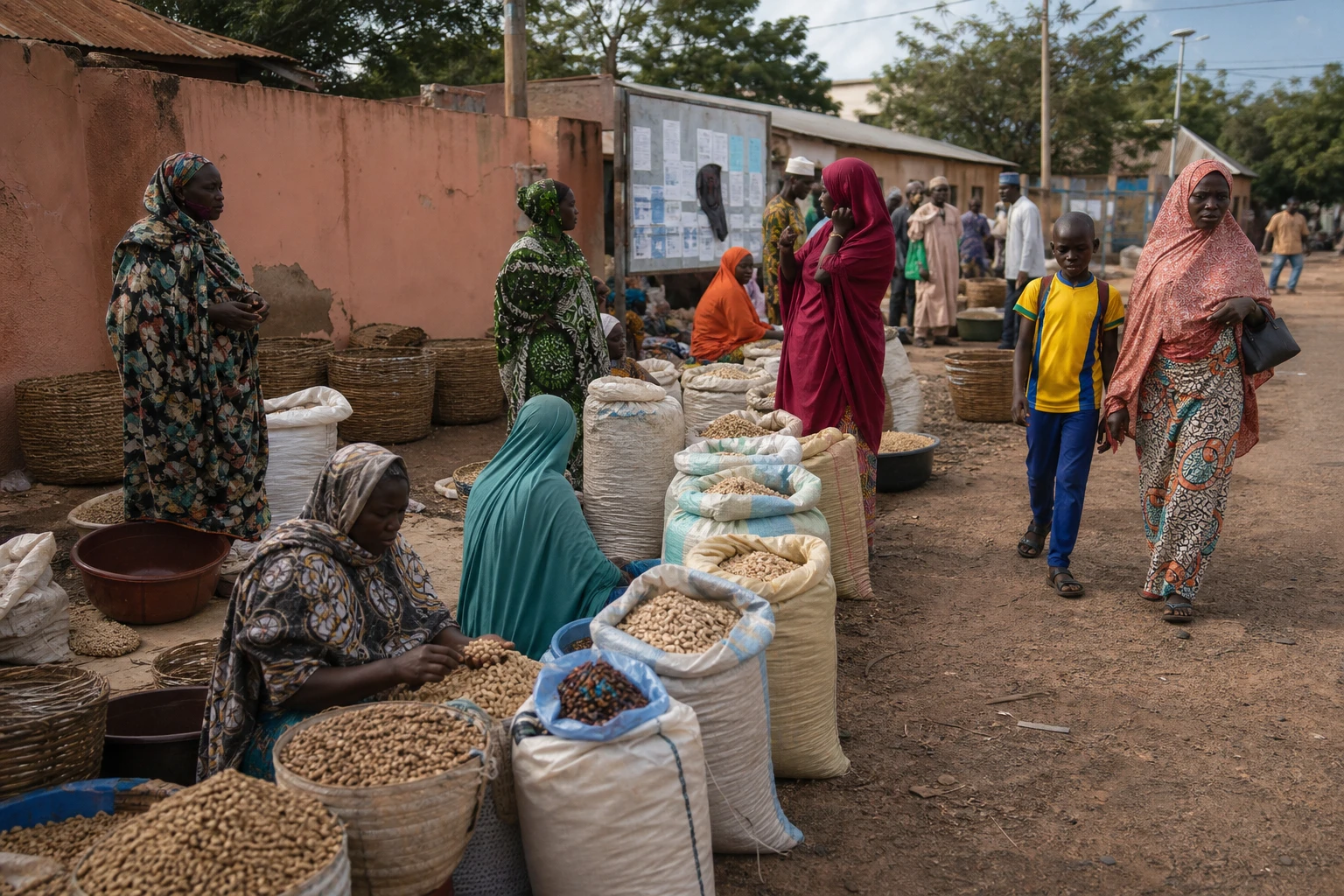
In northern Nigeria, the harvest is now taking place under threat from armed motorcyclists and ransom demands. Attacks on rural villages in Niger State and Zamfara State on Saturday 26 and Sunday 27 September 2026 are a reminder of a reality that has become routine for many families: insecurity is striking directly at places of production, schools and markets.
Two attacks in exposed rural areas
The first assault reportedly took place on Saturday 26 September in the community of Rimi, in Niger State, in the country’s north-central region. According to locally reported security information, several dozen people were taken by armed men who arrived on motorcycles. The victims were in the fields, taking part in the groundnut harvest.
Most of those kidnapped were reportedly women. The attackers are said to have taken them to Ma’undu Forest, an area that is difficult for security forces to access. The exact number of victims has not been confirmed by an official public source. It is therefore more prudent to refer to several dozen people rather than give a definitive figure.
The following day, another attack was reported in Zamfara State, in north-western Nigeria. It reportedly affected Maigama Maraike and several neighbouring villages. Women and children were among those taken. One resident, quoted in local accounts, said a large part of the village’s population had fallen into the hands of armed groups.
This information still needs to be clarified by state authorities and federal agencies. Communications are often difficult in rural areas of north-western Nigeria. Families may also be reluctant to speak publicly for fear of jeopardising negotiations or putting the hostages at greater risk.
The north-west under pressure
Niger and Zamfara states lie at the heart of a broad arc of insecurity stretching towards Kaduna, Katsina, Sokoto and Kebbi. Criminal groups, commonly known as “bandits” in Nigeria, carry out raids, steal livestock and kidnap residents for ransom.
Their operations differ from those of the jihadist organisations active in the north-east, particularly in Borno State. However, the boundaries between armed crime, trafficking and insurgency can become porous. Occasional alliances, arms exchanges and prisoner transfers complicate the work of Nigerian forces.
The situation is part of a broader national pattern. Nigeria must simultaneously contain the jihadist insurgency in the north-east, kidnappings in the north-west and north-central regions, and violence linked to tensions between farmers and herders. This disperses military and police resources across a territory of more than 900,000 square kilometres.
The capital, Abuja, presents a different reality from that of isolated villages. In urban centres, security forces generally have more resources, passable roads and administrative support. In rural areas, residents often depend on local alert networks, self-defence groups and private negotiations.
A ransom economy takes hold
Kidnappings are no longer just a series of opportunistic operations. They are feeding a clandestine economy involving informants, negotiators, couriers and financial intermediaries.
According to a study published in August 2026 by Nigerian consultancy SBM Intelligence, 7,825 people were reportedly kidnapped in Nigeria between July 2025 and June 2026. The report also records at least 1,142 deaths in incidents linked to kidnappings and operations against kidnappers. The data are based on monitoring of 1,411 kidnappings and 302 related operations. They describe a national trend, but do not necessarily capture every unreported case.
The same report estimates that 7.78 billion naira, or about $5.8 million according to the conversions provided, was paid in ransom during this period. Total demands reportedly reached 22.86 billion naira. The difference shows that families do not always pay the sums demanded, but also that confirmed payments represent a considerable resource for armed groups.
A very large share of the amounts recorded is reportedly linked to a limited number of mass kidnappings attributed to a Boko Haram faction. This does not mean that all kidnappings in the north-west are carried out by that organisation. Rather, it shows that several markets of violence coexist in Nigeria, with varying degrees of organisation and links to jihadist groups.
Consequences extend beyond the hostages
In agricultural areas, each kidnapping disrupts more than one family’s life. Fields are abandoned, travel becomes more expensive and traders cut back on their rounds. Women, who are often involved in farming and local markets, can lose their freedom, income and ability to support their households all at once.
Children also pay a heavy price. When a village is attacked, parents may withdraw them from school or send them to live with relatives. This disruption undermines education in states where access to schools is already unequal. It also fuels distrust of the authorities, even when military operations subsequently secure the release of some victims.
Self-defence groups play an ambiguous role in this context. They can provide information and protect some communities. But reprisals against suspected armed groups also risk fuelling a cycle of vengeance. In Zamfara, residents have described an attack carried out in retaliation for the deaths of members of criminal groups. This account remains attributed and cannot, on its own, establish the chain of responsibility.
A test for regional security
The crisis extends beyond Nigeria’s administrative borders. Routes between Nigeria, Niger, Benin and Chad facilitate the movement of weapons, livestock and people. Cooperation through the Economic Community of West African States, ECOWAS, therefore remains important, even though each state retains primary responsibility for its own internal security.
For Abuja, the challenge now is to protect rural communities without abandoning other security fronts. The response cannot rely solely on military operations. It will also have to improve roads, communications, judicial presence and agricultural incomes, while pursuing the networks that organise ransom payments.
The coming weeks will make it possible to verify the actual number of victims of the reported attacks in Niger and Zamfara states. They will also show whether Nigerian forces can prevent armed groups from turning rural areas into places of permanent negotiation.