
 Algeria
 Egypt
 Libya
 Morocco
 Sudan
 Tunisia
 Benin
 Burkina Faso
 Cabo Verde
 Côte d'Ivoire
 Ghana
 Guinea
 Guinea-Bissau
 Liberia
 Mali
 Mauritania
 Niger
 Nigeria
 Senegal
 Sierra Leone
 The Gambia
 Togo
 Cameroon
 Central African Republic
 Chad
 DR Congo
 Equatorial Guinea
 Gabon
 Republic of the Congo
 São Tomé and Príncipe
 Burundi
 Comoros
 Djibouti
 Eritrea
 Kenya
 Madagascar
 Malawi
 Mauritius
 Mozambique
 Rwanda
 Seychelles
 Somalia
 South Sudan
 Tanzania
 Uganda
 Angola
 Botswana
 Eswatini
 Lesotho
 Namibia
 South Africa
 Zambia
 Zimbabwe
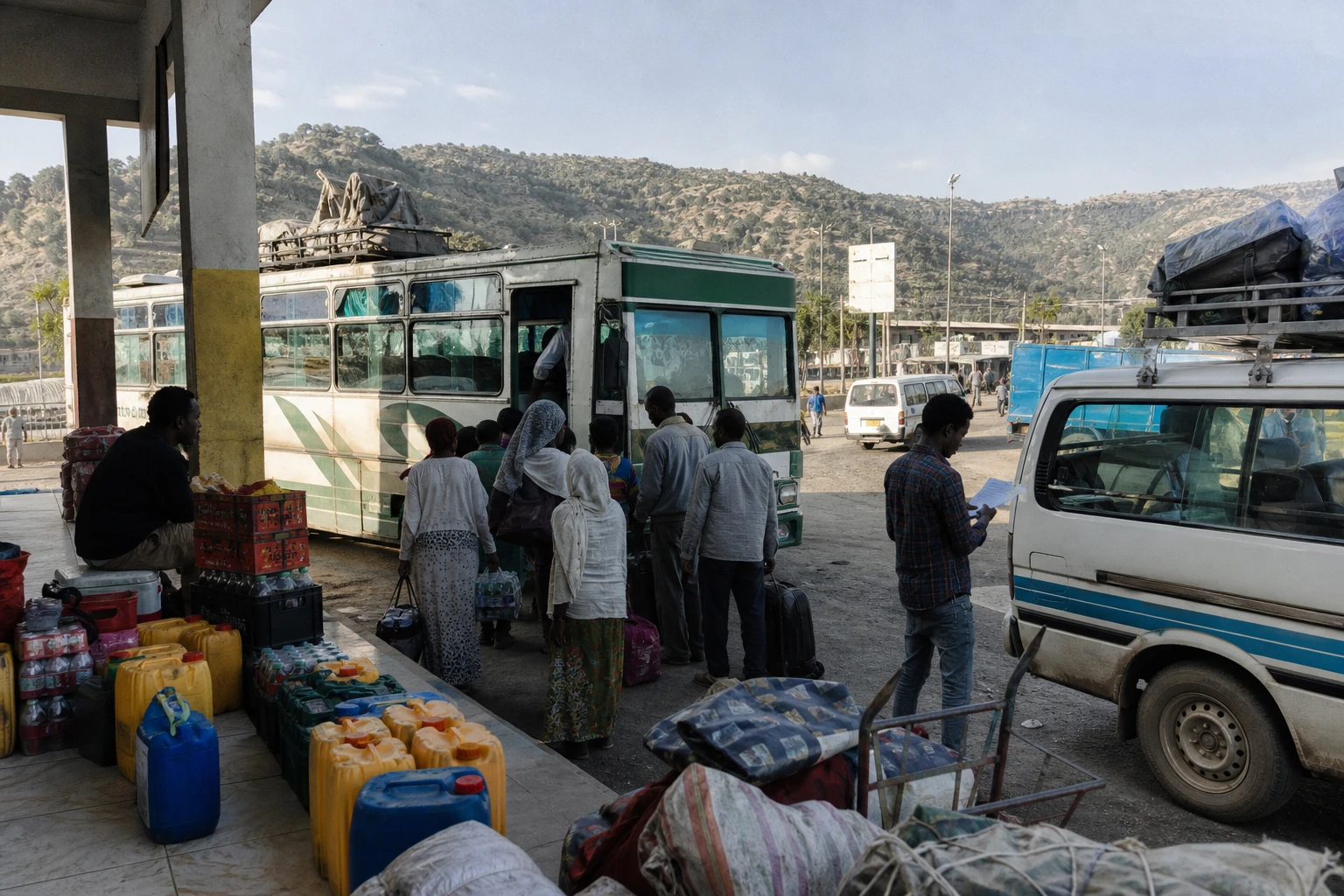
In southern Tigray, the town of Alamata is once again a flashpoint. Control of the town opens a route towards Mekele, the regional capital, but is not enough to gauge the outcome of a crisis that now extends beyond Tigray’s borders.
A strategic town on the southern route
Forces supportive of Ethiopia’s federal government say they retook Alamata on Monday 28 September 2026. The announcement was relayed by the Tigray Peace Forces, a militia aligned with Addis Ababa, and then by local officials. The statements report several days of fighting against forces linked to the Tigray People’s Liberation Front, the TPLF.
The capture of the town has not yet been fully independently verified. In a conflict where communications are severely disrupted, military reports should therefore be treated with caution. Clashes have also been reported in the neighbouring regions of Amhara and Afar.
Alamata lies in southern Tigray, near the administrative border with Amhara. The town commands part of the road linking northern Ethiopia with the country’s central areas. It also serves as a transit point for troops, food and fuel.
Its importance is both military and logistical. A lasting federal presence in Alamata could facilitate movements towards Korem, and then Mekele. It would not, however, guarantee rapid progress. The terrain, distances and organisation of Tigrayan forces make any offensive costly and uncertain.
Alamata changed hands several times during the Tigray war, between 2020 and 2022. That history weighs on residents. It is a reminder that control of a town can remain temporary, especially when front lines shift around major roads.
Fighting resumes after the Pretoria agreement
The latest escalation comes less than four years after the cessation of hostilities agreement was signed in Pretoria, South Africa, on 2 November 2022. The agreement ended two years of war between Ethiopia’s federal government and the TPLF, following mediation led by the African Union.
The agreement provided for an end to the fighting, the gradual disarmament of Tigrayan forces, the restoration of essential services and the reopening of humanitarian access. It did not, however, resolve all the issues dividing Addis Ababa and the Tigrayan authorities.
The status of territories disputed with Amhara remains particularly sensitive. The return of displaced people, the reintegration of fighters and the TPLF’s political role also remain unresolved. On 23 September 2026, the African Union called for restraint and de-escalation in northern Ethiopia.
The Intergovernmental Authority on Development, IGAD, a regional organisation in the Horn of Africa, had also supported implementation of the Pretoria agreement. The resumption of hostilities therefore weakens a peace framework backed by African institutions and designed to prevent a new regional conflagration.
An offensive that extends beyond Tigray
The recent fighting is part of a broader reshaping of Ethiopia’s armed alliances. On 20 September, several groups opposed to the federal government announced the formation of a coalition. It brings together the TPLF, Amhara nationalist Fano forces and the Oromo Liberation Army, among others.
These groups have different histories and objectives. Their rapprochement does not necessarily amount to a unified military command. It does, however, reflect a convergence of grievances against Prime Minister Abiy Ahmed’s government and its handling of regional conflicts.
For Addis Ababa, the priority is to prevent several fronts from opening in coordination. The federal army is already contending with the Oromo Liberation Army insurgency in the west and centre of the country, as well as ongoing clashes in Amhara. A prolonged war in Tigray could stretch its resources.
For the TPLF, mobilisation is intended to preserve its influence in the region and exert pressure on territorial and institutional issues. The movement says it is responding to a federal offensive. The government, for its part, presents the operations as a response to an armed threat to the constitutional order.
These conflicting accounts make it difficult to establish the facts. Internet outages and disruption to telephone networks across much of Tigray limit access to direct accounts. They also encourage the spread of information that cannot be quickly verified.
Civilians face renewed uncertainty
The population is at the centre of this new phase of tension. The movement of fighters can lead to road closures, market shutdowns and interruptions to health services. In rural areas, these disruptions directly affect food supplies and access to healthcare.
Residents of towns such as Alamata face different pressures. They may see administrations change, businesses close and families separated. Displaced people who were trying to return to their homes may also have to leave again.
Humanitarian figures remain difficult to update. In February 2026, around 750,000 people were still displaced within the Tigray region, according to figures reported by Reuters. This figure does not capture new movements caused by the September fighting.
The humanitarian crisis is not limited to Tigray. Border areas in Amhara and Afar may also face displacement, movement restrictions and pressure on resources. The proximity of the corridor linking Ethiopia to the port of Djibouti adds an economic dimension to the crisis.
A risk to stability in the Horn of Africa
The resumption of fighting in Ethiopia comes as the region is already weakened by the war in Sudan and rivalries around the Red Sea. An expansion of the conflict could disrupt trade, increase cross-border displacement and heighten tensions between neighbouring states.
It would also test the African Union and IGAD’s ability to uphold an agreement negotiated on the continent. The Pretoria mediation was a major diplomatic success. Its weakening would demonstrate the limits of a ceasefire when political, territorial and security disputes remain unresolved.
In the short term, developments around Alamata, Korem and the routes towards Mekele will be decisive. The strength of the coalition formed by the armed groups, the position of the Amhara authorities and the stance of neighbouring states will also need to be monitored.
The recapture of Alamata, if it is sustained, represents a tactical advantage for the federal government. It is not yet a strategic victory. The main challenge in Ethiopia is now to prevent a local battle from turning into a new national war.



