
 Algeria
 Egypt
 Libya
 Morocco
 Sudan
 Tunisia
 Benin
 Burkina Faso
 Cabo Verde
 Ghana
 Guinea
 Guinea-Bissau
 Liberia
 Mali
 Mauritania
 Niger
 Nigeria
 Senegal
 Sierra Leone
 The Gambia
 Togo
 Cameroon
 Central African Republic
 Chad
 DR Congo
 Equatorial Guinea
 Gabon
 Republic of the Congo
 São Tomé and Príncipe
 Burundi
 Comoros
 Djibouti
 Eritrea
 Ethiopia
 Kenya
 Madagascar
 Malawi
 Mauritius
 Mozambique
 Rwanda
 Seychelles
 Somalia
 South Sudan
 Tanzania
 Uganda
 Angola
 Botswana
 Eswatini
 Lesotho
 Namibia
 South Africa
 Zambia
 Zimbabwe
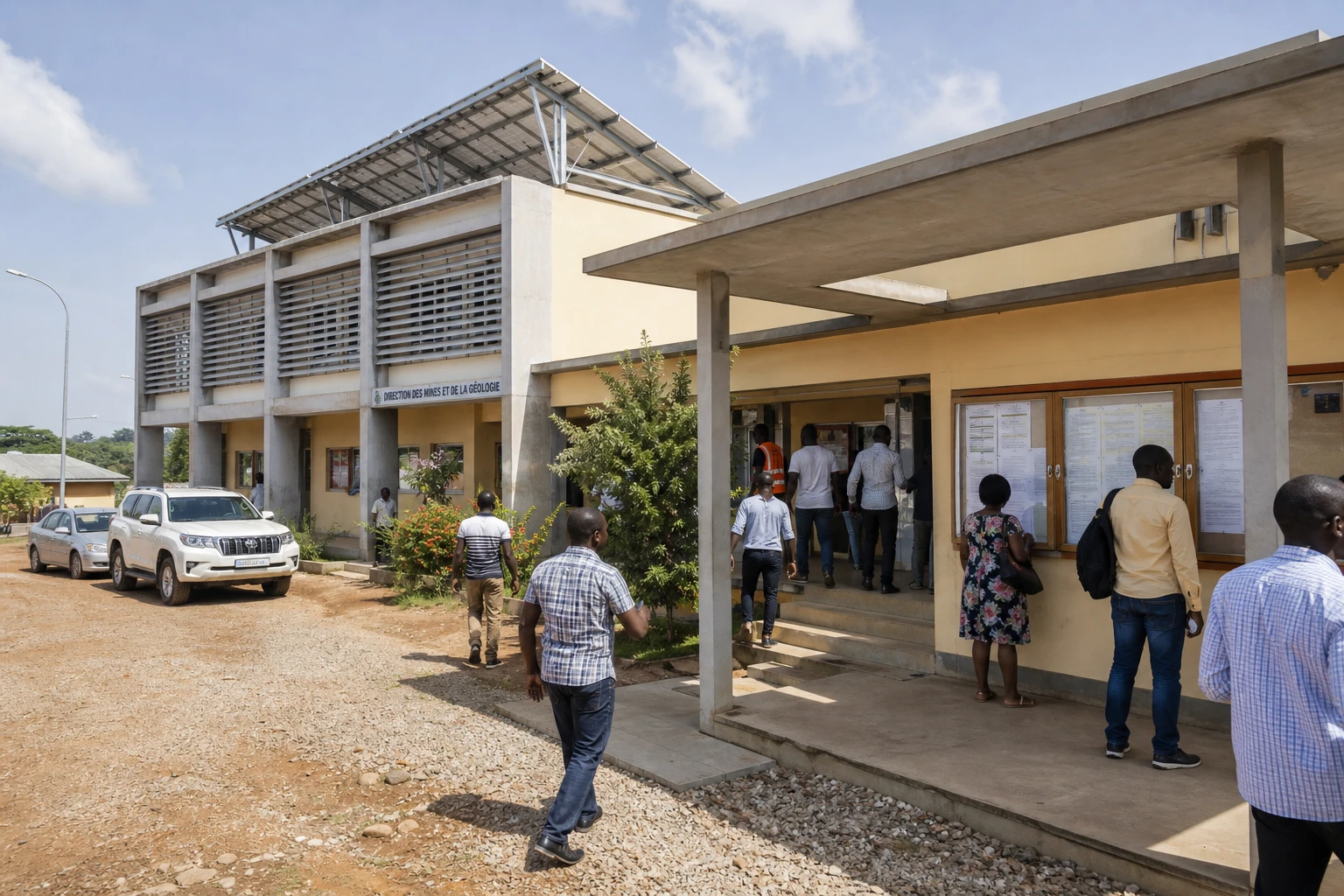
In north-western Côte d’Ivoire, gold is entering a new phase. The Koné mine produced its first ounces on 26 September 2026, before all its facilities had been completed. For the Ivorian state, the start-up confirms the growing importance of the mining sector in an economy still largely driven by agriculture.
A project at the heart of Côte d’Ivoire’s emerging mining map
The Koné deposit is located in the departments of Kani and Dianra, in the Worodougou region. The site is operated by Canadian company Montage Gold through its Ivorian subsidiary. The foundation stone was laid on 18 December 2024, in the presence of Côte d’Ivoire’s Minister of Mines, Petroleum and Energy.
The project forms part of Abidjan’s strategy to diversify national revenues. Ivorian gold production rose from 23.54 tonnes in 2015 to 59.124 tonnes in 2024, according to the official portal promoting the Ivorian economy. The authorities announced production of 59.33 tonnes for 2025 and are now targeting the 100-tonne mark over the next decade.
The Ivorian government also wants the country to become Africa’s leading gold producer by 2035. This ambition puts Côte d’Ivoire in competition with Ghana, the continent’s leading producer in some years, as well as Mali, Burkina Faso and Tanzania, whose gold industries already have a long track record.
First pour achieved before full capacity
Montage Gold announced on 27 September 2026 that it had completed the first gold pour at Koné. About 1,140 ounces, or nearly 35.4 kilograms, were produced from the circuit dedicated to oxide ore. This ore, which lies closer to the surface and is generally easier to process, makes it possible to start operations before the equipment designed for hard rock is fully commissioned.
The company says more than 400,000 tonnes of ore had already been processed since ore was introduced into the oxide circuit on 8 September 2026. Commercial production from this first unit is expected in the fourth quarter of 2026. The hard-rock processing circuit is due to be completed in the second quarter of 2027.
The project represents an investment of about $712 million. Its feasibility study projects a mine life of 16 years and annual production of more than 300,000 ounces during the first eight years. The main Gbongogo deposit is to be brought gradually into the operation, with several satellite deposits announced for 2027.
These figures describe a ramp-up, not yet the mine’s steady-state operation. The first pour is an important industrial milestone. However, it does not on its own provide a measure of actual annual production. That will depend on the stability of the facilities, a regular supply of ore to the plant and the quality of the ore extracted.
Jobs and expectations in local communities
According to Montage Gold, construction generated about 3,600 direct jobs. More than 95% of these positions are said to have been filled by Ivorian nationals. The company also expects about 1,500 permanent jobs during the operating phase.
For people in Kani, Dianra and nearby communities, the issue is not limited to the number of jobs. Expectations also concern contracts awarded to local businesses, technical training, access to infrastructure and the redistribution of mining revenues. In rural areas, these benefits can reshape economic balances, but they also create strong demand for transparency.
Experience from major Ivorian mining projects shows that the arrival of a mine quickly changes needs for housing, transport, water and public services. Pressure on agricultural land and informal activities can also increase. Monitoring compensation, workplace safety and site rehabilitation will therefore be crucial over the long term.
Côte d’Ivoire must also contain illegal gold mining. The government estimates that clandestine networks take very large volumes of gold out of the country each year, causing considerable tax revenue and environmental losses. The expansion of industrial mining will not automatically eliminate this activity. It will need to be accompanied by effective territorial controls and economic solutions for the communities concerned.
A national and West African issue
Koné’s ramp-up comes as West African states seek to capture more value from their resources. Côte d’Ivoire is a member of ECOWAS, the Economic Community of West African States. The organisation promotes regional cooperation, although mining policies remain primarily national.
Across the subregion, investors are closely watching developments in regulatory frameworks, taxation and relations between companies and states. Côte d’Ivoire highlights the stability of its business environment and a strategy open to private capital. In turn, local content and the processing of raw materials are becoming increasingly central issues.
Growth in Ivorian production will therefore not depend on a single mine. It will rely on new projects coming on stream, improvements at existing sites, action against clandestine networks and the state’s ability to secure greater economic benefits. The Koné project could accelerate this trajectory, but it does not guarantee it.
The next milestones are clear: commercial production from the oxide circuit before the end of 2026, completion of the hard-rock circuit in the second quarter of 2027, and then the ramp-up of the Gbongogo and satellite deposits. At that point, Côte d’Ivoire will be able to measure Koné’s actual contribution to its 100-tonne gold target and its ambition to become a major gold power on the continent.



