Algeria
 Egypt
 Libya
 Morocco
 Sudan
 Tunisia
 Benin
 Burkina Faso
 Cabo Verde
 Côte d'Ivoire
 Ghana
 Guinea
 Guinea-Bissau
 Liberia
 Mali
 Mauritania
 Niger
 Nigeria
 Sierra Leone
 The Gambia
 Togo
 Cameroon
 Central African Republic
 Chad
 DR Congo
 Equatorial Guinea
 Gabon
 Republic of the Congo
 São Tomé and Príncipe
 Burundi
 Comoros
 Djibouti
 Eritrea
 Ethiopia
 Kenya
 Madagascar
 Malawi
 Mauritius
 Mozambique
 Rwanda
 Seychelles
 Somalia
 South Sudan
 Tanzania
 Uganda
 Angola
 Botswana
 Eswatini
 Lesotho
 Namibia
 South Africa
 Zambia
 Zimbabwe
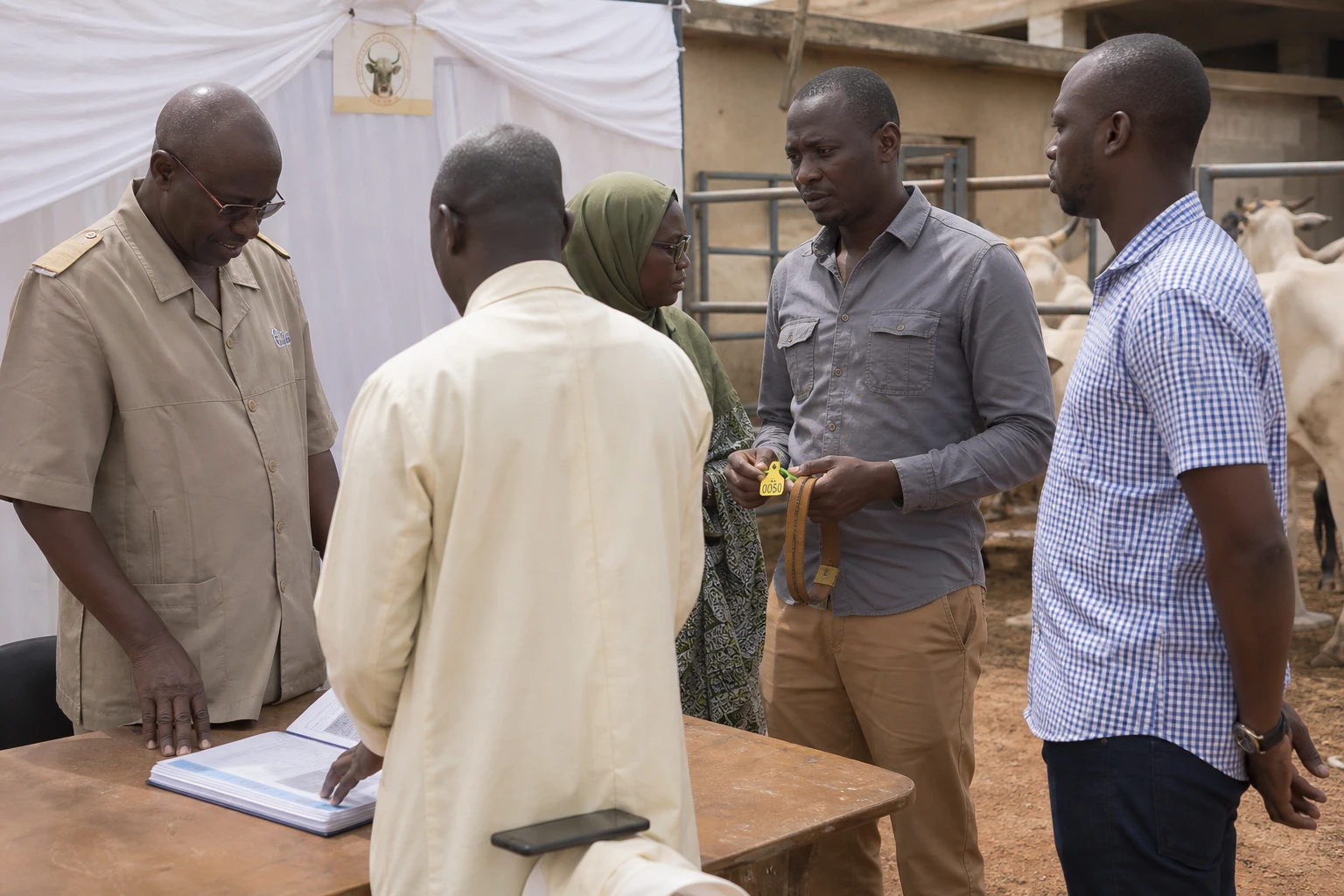
In Senegal’s livestock-rearing areas, a cow or small ruminant represents far more than an economic asset. It can pay for a child’s return to school, support a family business or provide a reserve of income. When it disappears, the consequences therefore go beyond the material loss alone.
In Fatick, Senegalese authorities are preparing a new response based on animal identification and traceability. The aim is to make routes for movement and trade easier to monitor, while giving livestock farmers more ways to report missing animals.
A national programme with a budget of CFA1 billion
The National Programme for Integrated Livestock Development in Senegal (PNDIES) is working on a national strategy to combat cattle theft. Its projected budget is CFA1 billion, or about $1.7 million.
The announcement was made on Thursday 24 September 2026 in Fatick, in west-central Senegal, by the programme’s co-ordinator, Dr Dame Sow. The pilot phase is due to start shortly. The authorities have not yet specified the first areas to be covered or the detailed timetable for the roll-out.
The project envisages several tools. Electronic chips, collars and tags could be used to link each animal to a verifiable identity. This approach is intended to make checks easier during movements, sales and recovery operations.
Technology alone, however, will not be enough. It will need to be linked to reliable registers, veterinary services present in the field and judicial procedures capable of handling complaints quickly.
In Fatick, PNDIES also announced the construction of ten vaccination parks, out of 40 planned for the region. Two veterinary posts are to be built and three others rehabilitated. This infrastructure could indirectly strengthen traceability by providing places where animals can be recorded and monitored.
A response building on several years of effort
Senegal is not starting from scratch. Since the early 2010s, the country has established a specific framework to combat cattle theft. A unit to fight cattle theft was set up in 2013, among other measures. Specialised brigades have also been incorporated into the gendarmerie’s operations in rural areas.
The criminal law framework was then strengthened in 2017. In some cases, people found guilty can face between five and ten years in prison. This change reflects the intention to treat the phenomenon as a serious threat to the rural economy and community security.
In 2025, the Senegalese government continued along this path with a community intelligence system and a national livestock identification system. Local intelligence plays a central role in pastoral areas. Residents know the routes, water points, markets and unusual movements. Their involvement can therefore speed up alerts.
On 23 and 24 December 2025, a national workshop held in Diamniadio, near Dakar, validated studies on the National Livestock Identification and Traceability System (SNITB), with support from the Food and Agriculture Organization of the United Nations (FAO).
Senegalese companies presented digital platforms and connected devices. The technical committee established on that occasion brings together government departments, professional organisations, private-sector players and civil society representatives. This composition is intended to connect innovation with livestock farmers’ needs and the constraints facing public services.
From local registers to monitoring movements
The main challenge will be continuity of monitoring. An animal identified in one commune must remain identifiable when it moves to another department, reaches a market or crosses a border. Without links between services, a digital system risks remaining confined to a handful of areas.
The issue also affects livestock farmers who practise transhumance. Their herds move according to pasture, water resources and weather conditions. Effective traceability will therefore need to avoid treating every pastoral movement as grounds for automatic suspicion.
The system will also need to protect data and remain accessible to family farms. The cost of chips, collars or registration procedures must not fall solely on livestock farmers. Likewise, inspection officers will need resources, training and regular coverage of rural areas.
For markets, transporters and buyers, identification could make transactions more secure. It would make it easier to verify an animal’s origin and harder to resell livestock reported as stolen. It could also provide law-enforcement agencies with useful information for investigations.
A problem that extends beyond Senegal’s borders
Cattle theft takes place along routes that do not stop at national borders. That is why the FAO brought together about 70 participants from 15 West African countries in Dakar from 9 to 12 February 2026. Discussions focused on a co-ordinated response involving government departments, security services, livestock farmers’ organisations and livestock-sector players.
Participants worked on a sub-regional coalition and a joint programme focused on prevention, traceability and judicial co-operation. The issue is of direct concern to the Economic Community of West African States (ECOWAS), which is seeking to facilitate the movement of people and goods while strengthening regional security.
Better co-ordination could help track animals moved from one country to another, share alerts and limit fraudulent resales. It could also ease tensions linked to pastoral movements, particularly when a lack of documents fuels accusations between communities.
For Dakar, the next stage will therefore be decisive. The plan’s success will depend less on the budget announcement than on its implementation in villages, markets and transhumance corridors. Senegal will need to assess the pilot phase’s results, involve livestock farmers’ organisations and ensure its system is compatible with regional initiatives.