Algeria
 Egypt
 Libya
 Morocco
 Sudan
 Tunisia
 Benin
 Burkina Faso
 Cabo Verde
 Côte d'Ivoire
 Ghana
 Guinea
 Guinea-Bissau
 Liberia
 Mali
 Mauritania
 Niger
 Nigeria
 Senegal
 Sierra Leone
 The Gambia
 Togo
 Cameroon
 Central African Republic
 Chad
 DR Congo
 Equatorial Guinea
 Gabon
 Republic of the Congo
 São Tomé and Príncipe
 Burundi
 Comoros
 Djibouti
 Eritrea
 Ethiopia
 Kenya
 Madagascar
 Malawi
 Mauritius
 Mozambique
 Seychelles
 Somalia
 South Sudan
 Tanzania
 Uganda
 Angola
 Botswana
 Eswatini
 Lesotho
 Namibia
 South Africa
 Zambia
 Zimbabwe
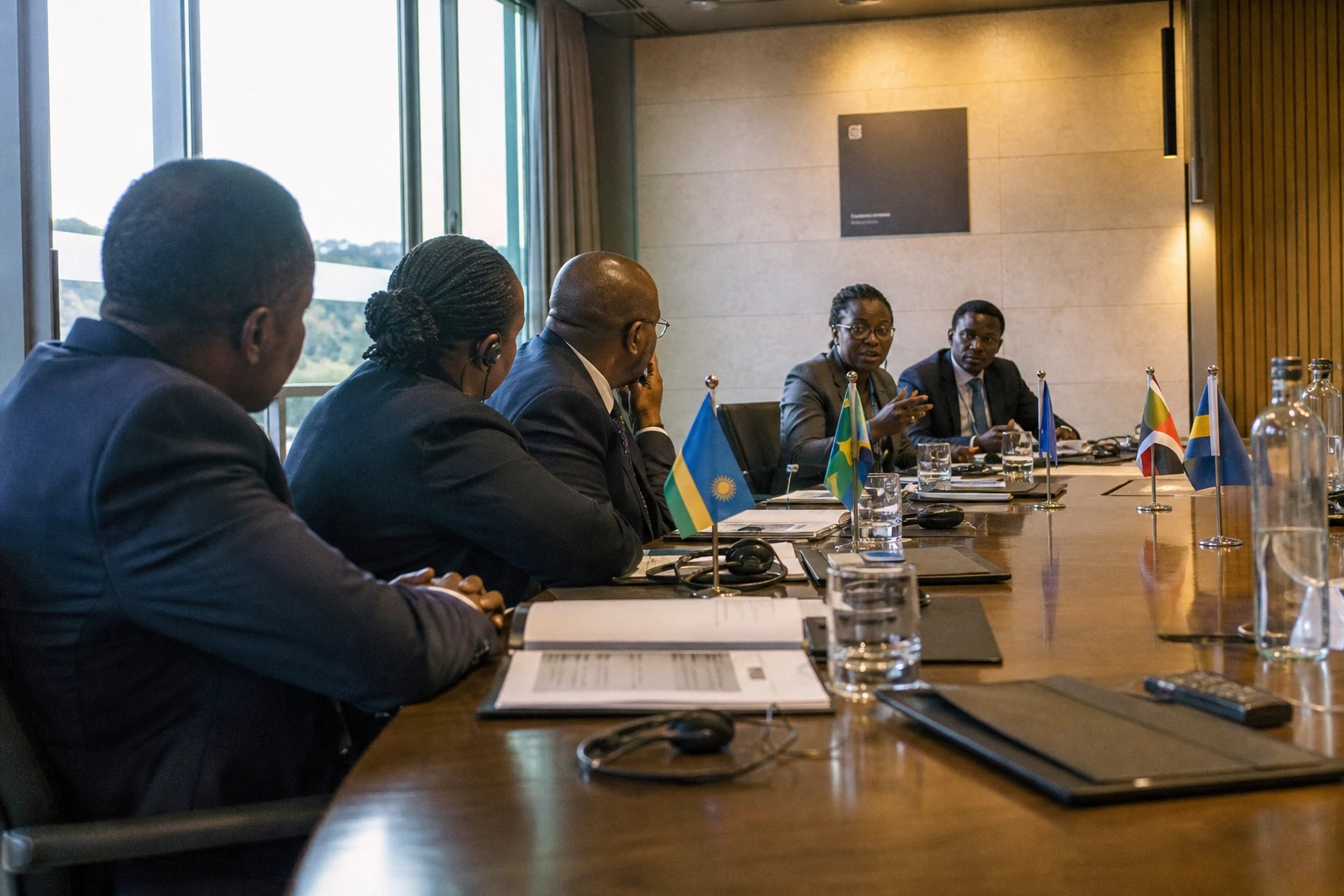
Payments with China could soon take a more direct route from Kigali. For Rwandan importers, the practical aim is to reduce some intermediaries when paying suppliers in renminbi, China’s currency.
Direct access to Chinese infrastructure
On 8 September 2026 in Xiamen, Bank of Kigali signed an agreement to become a direct participant in the Cross-Border Interbank Payment System, or CIPS. The Chinese system processes cross-border renminbi settlements and connects banks across several markets.
The agreement was concluded during the second edition of an event on cooperation between banks and businesses organised by CIPS, on the sidelines of the China International Fair for Investment and Trade. CIPS’s official programme included the integration of new direct participants.
Bank of Kigali is thus the first Rwandan bank to join the network directly. Reports published in East Africa have also described it as the first bank established in East and Central Africa to take this step. That latter comparison should, however, be treated with caution, as payment networks have several categories of participants.
CIPS distinguishes between direct and indirect participants. The former have closer access to the settlement infrastructure. The latter use a direct participant to carry out certain transactions. The system supports payments in renminbi, as well as settlements combining renminbi with other currencies. The participation rules published by CIPS set out this distinction.
A decision linked to growing trade
Bank of Kigali’s decision comes as China’s share of Rwanda’s foreign trade grows. Data from Rwanda’s National Institute of Statistics show that China was the leading country of origin for imports in the first quarter of 2026.
Between January and March, Rwandan imports from China reached $355.53 million. China was the country’s largest source of imports, ahead of India, Tanzania, Kenya and Uganda.
China was also among the leading destinations for Rwanda’s domestic exports. According to data for the same quarter, nearly $95 million worth of Rwandan goods were exported there, accounting for 25.8% of total domestic exports. NISR’s report on foreign trade in the first quarter of 2026 confirms China’s dual role in Rwanda’s trade.
For businesses, the CIPS connection could therefore facilitate some transactions with Chinese partners. An importer could pay an invoice in renminbi using fewer intermediaries. An exporter could also receive the proceeds of sales more easily, depending on the banks involved and the currencies specified in the contract.
The potential benefit is not limited to timing. Each additional intermediary can bring fees, currency conversions and compliance procedures. Cutting these steps could be of particular interest to businesses that regularly transact with China.
Rwanda diversifies its financial channels
This development does not mean Rwanda is abandoning the dollar or existing international financial infrastructure. CIPS is primarily geared towards renminbi settlements. It does not replace all the messaging, clearing and correspondent banking networks used in global trade.
The decision is more akin to adding another route. Kigali is seeking to have several options for its trade, as are other African economies whose commercial ties with China are strengthening. Renminbi can thus become a practical tool for some transactions without automatically becoming Rwanda’s main trade currency.
The strategy forms part of the course of an open economy, but one exposed to transport costs, currency fluctuations and geopolitical tensions. For Rwandan businesses, the value of the new channel will therefore depend on its actual use, the terms offered by banks and the depth of bilateral trade.
An economic choice amid regional tensions
The timing also gives the move diplomatic significance. In 2026, relations between Kigali and Washington have been strained by the war in the eastern Democratic Republic of the Congo. On 2 March, the US Treasury announced sanctions against the Rwanda Defence Force and four senior Rwandan officials, accusing them of supporting M23. Kigali regularly disputes foreign interpretations of the regional crisis and emphasises its own security concerns.
On 25 June, Washington also announced sanctions against Gasabo Gold Refinery, a company based in Kigali, accusing it of taking part in a network linked to trade in gold from areas of the eastern Democratic Republic of the Congo controlled by M23. These allegations are those of the US government and do not, on their own, constitute a universally established judicial finding. The US decision of 2 March and that of 25 June set out Washington’s position.
In this context, closer financial ties with China should not be portrayed as an automatic shift. Rwanda maintains multiple economic relationships with the United States, East African countries, Gulf states and international financial institutions. Bank of Kigali’s decision primarily reflects a strategy of diversification.
Significance beyond Kigali-Beijing relations
The issue also concerns the East African Community, or EAC, the regional bloc that includes Rwanda, Kenya, Uganda, Tanzania, Burundi, South Sudan, the Democratic Republic of the Congo and Somalia, among others. Rwanda has been a member since July 2007. The EAC identifies trade and financial cooperation as central to its regional integration.
Businesses in the region already trade with China at very different levels. If Rwanda’s experience produces measurable gains, other banks may seek to strengthen their renminbi services. But the spread of this model will depend on market size, local regulation, available liquidity and customer demand.
The next indicator will therefore be the actual activity on this new link. The number of payments processed, the costs for businesses and the share of transactions genuinely settled in renminbi will help measure the agreement’s impact. For now, Bank of Kigali has mainly opened another door in Rwanda’s international financial architecture.