Algeria
 Egypt
 Libya
 Morocco
 Sudan
 Tunisia
 Benin
 Burkina Faso
 Cabo Verde
 Côte d'Ivoire
 Ghana
 Guinea-Bissau
 Liberia
 Mali
 Mauritania
 Niger
 Nigeria
 Senegal
 Sierra Leone
 The Gambia
 Togo
 Cameroon
 Central African Republic
 Chad
 DR Congo
 Equatorial Guinea
 Gabon
 Republic of the Congo
 São Tomé and Príncipe
 Burundi
 Comoros
 Djibouti
 Eritrea
 Ethiopia
 Kenya
 Madagascar
 Malawi
 Mauritius
 Mozambique
 Rwanda
 Seychelles
 Somalia
 South Sudan
 Tanzania
 Uganda
 Angola
 Botswana
 Eswatini
 Lesotho
 Namibia
 South Africa
 Zambia
 Zimbabwe
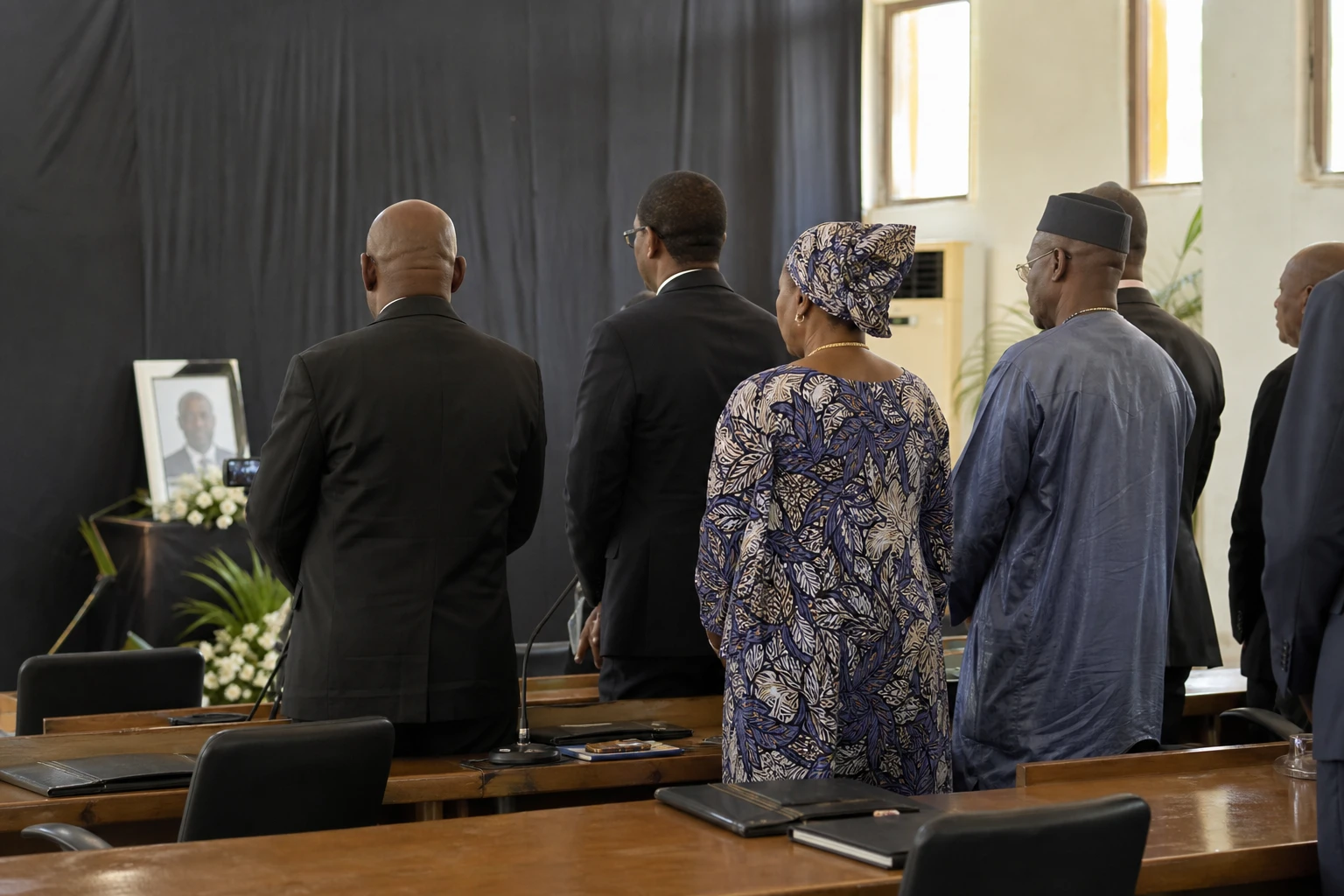
Guinea has lost one of its most enduring political figures. Sidya Touré, former prime minister and president of the Union of Republican Forces (UFR), died in Paris on the evening of Friday 25 September 2026. He was 81. His death was confirmed by several Guinean media outlets, including Guinéenews and VisionGuinee.
For many Guineans, his death closes the chapter on a leader who lived through several major periods in the country’s history: the end of Sékou Touré’s rule, the Lansana Conté years, the political opening of the 2000s, Alpha Condé’s presidency and the military transition that began on 5 September 2021.
A technocrat trained in Guinea and Côte d’Ivoire
Before becoming a prominent figure in Guinea’s opposition, Sidya Touré spent most of his administrative career in Côte d’Ivoire. He held positions in the Treasury and domestic trade. He also served as chief of staff to Alassane Ouattara when he was prime minister to President Félix Houphouët-Boigny.
His career in Côte d’Ivoire left a lasting mark on his public profile. Sidya Touré was often described as a leader committed to economic management, administrative reform and dialogue with financial partners. Côte d’Ivoire was also a personal home for him after several periods away from Guinea.
He returned to the political forefront in Conakry in 1996. President Lansana Conté appointed him prime minister after a series of military mutinies had weakened the government. The country was then experiencing acute economic and social tensions.
As prime minister, Sidya Touré sought to restore relations with donors and introduce economic reforms. In Guinean public debate, his record remains associated with efforts to improve access to water and electricity. He left office in 1999, after about three years at the head of government.
From the premiership to political opposition
After leaving government, Sidya Touré chose to enter electoral politics. In 2000, he took over the UFR, a party that gradually established itself among Guinea’s main opposition groups. Its platform focused on governance, modernising the state and developing agriculture.
His path placed him in an opposition that regularly faced political restrictions and violence. On 28 September 2009, during an opposition rally at Conakry stadium, Sidya Touré was injured in the head. The day, marked by a deadly crackdown, remains one of the gravest episodes in the country’s recent history.
The 2010 presidential election then opened a new chapter. For the first time since independence, the poll pitted several civilian figures against one another in a pluralist contest. Sidya Touré finished behind the two leading candidates and established himself as one of the central players in Guinean politics.
His influence rested in particular on a support base in Lower Guinea, the region where he was born. However, his reach was not confined to that area. Over the years, the UFR sought to present itself as a national party, although its electoral weight remained below that of the two major parties that have dominated Guinean political life since 2010.
An alliance with Alpha Condé, then a return to opposition
In 2016, Sidya Touré agreed to become a high representative of President Alpha Condé. The appointment caused a split with some of his supporters and opposition allies. The partnership lasted only three years. He then distanced himself from the government and joined the movement against Alpha Condé’s bid for a third term.
The overthrow of Alpha Condé by the National Committee for Reconciliation and Development on 5 September 2021 did not allow Sidya Touré to regain a lasting institutional role. Like other Guinean political leaders, he faced the new rules imposed by the transitional authorities.
According to several Guinean sources, he left Guinea after tensions surrounding his home in the Minière district of Conakry and settled again in Côte d’Ivoire. Proceedings involving some of his assets, as well as the situation of his party, contributed to his withdrawal from national public life. The UFR was later suspended by the transitional authorities before being dissolved as part of a reorganisation of the political landscape.
A death amid political reshaping
Sidya Touré’s death comes as Guinea remains under a military transition whose political contours continue to evolve. The country is seeking to organise a return to constitutional rule, while several civilian leaders live outside its borders or can no longer participate fully in public debate.
The situation extends beyond Guinea’s borders. Guinea is a member of the Economic Community of West African States, or ECOWAS, an organisation tasked with promoting regional integration and defending constitutional principles in its member states. Guinea’s transition is unfolding in a West African environment already shaped by changes of power in Mali, Burkina Faso and Niger.
For opposition leaders, Sidya Touré’s death represents the loss of an experienced interlocutor, able to engage with different political currents. For the authorities, it also raises the question of the place to be given to the memory of former leaders and opposition figures at a time when institutions are still being rebuilt.
His legacy remains contested. His supporters point to his economic expertise, his record in government and his enduring presence in political life. His critics challenge some of his choices, notably his temporary rapprochement with Alpha Condé. But one point is widely accepted: Sidya Touré played an important role in the development of political pluralism in Guinea from the 1990s onwards.
What happens next will depend on the response of the authorities, his family and the UFR on tributes and funeral arrangements. It will also show what place Guinea wishes to give this former prime minister in its national account of recent decades.