Algeria
 Egypt
 Libya
 Morocco
 Sudan
 Tunisia
 Benin
 Burkina Faso
 Cabo Verde
 Ghana
 Guinea
 Guinea-Bissau
 Liberia
 Mali
 Mauritania
 Niger
 Nigeria
 Senegal
 Sierra Leone
 The Gambia
 Togo
 Cameroon
 Central African Republic
 Chad
 DR Congo
 Equatorial Guinea
 Gabon
 Republic of the Congo
 São Tomé and Príncipe
 Burundi
 Comoros
 Djibouti
 Eritrea
 Ethiopia
 Kenya
 Madagascar
 Malawi
 Mauritius
 Mozambique
 Rwanda
 Seychelles
 Somalia
 South Sudan
 Tanzania
 Uganda
 Angola
 Botswana
 Eswatini
 Lesotho
 Namibia
 South Africa
 Zambia
 Zimbabwe
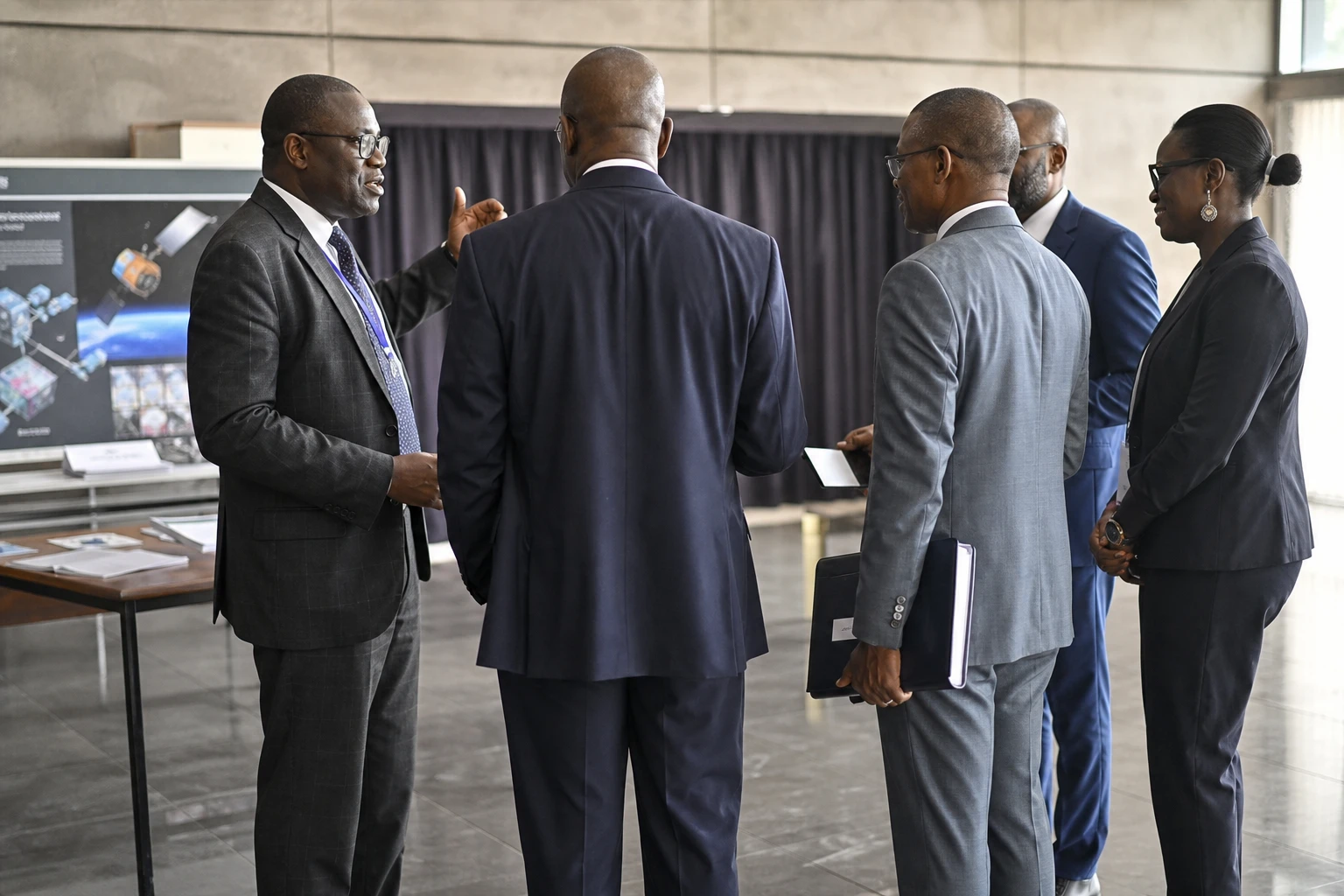
For Ivory Coast, space is becoming a field for cooperation before it becomes a destination. On 24 September 2026, the country joined an international framework that could influence future rules for lunar exploration and access to space technologies.
Abidjan positions itself in the new space economy
The signing took place in Abidjan during Africa Space Expo 2026. Ivory Coast’s Minister of Higher Education and Scientific Research, Adama Diawara, signed the accords on behalf of the country. NASA announced the accession on 24 September, while several news outlets reported it on 25 September 2026.
Ivory Coast thus becomes the 75th country to sign the Artemis Accords. Launched in 2020 by NASA, the US Department of State and seven founding countries, the text sets out principles for the peaceful civil exploration of the Moon, Mars and other celestial bodies.
The accords are not a comprehensive space treaty. Rather, they build on existing major texts, including the 1967 Outer Space Treaty, and propose practical rules. Signatories undertake to promote transparency, the exchange of scientific data, operational safety and the preservation of historic sites of space exploration.
The document also provides that activities on the Moon should not interfere with those of other countries. Finally, it encourages assistance to crews in distress. These principles will need to guide a period in which states and private companies are preparing new lunar missions.
Accession without an immediate lunar mission
Ivory Coast’s signature does not mean that a national mission to the Moon is in preparation. The country currently has neither a launch vehicle nor a crewed programme. The stakes lie elsewhere: maintaining a place in discussions that will gradually shape future space activities.
For the Ivorian authorities, the move opens up opportunities for scientific and technological cooperation. It could facilitate exchanges with NASA and other signatories. It also gives Ivorian researchers and institutions potential access to international networks focused on Earth observation, satellite navigation and space science.
The strategy forms part of a national trajectory that has been under way for several years. On 4 June 2025, the Ivorian government adopted a decree establishing the Côte d’Ivoire Space Agency, or ASCI. The public institution is tasked with coordinating national efforts in Earth observation, space weather, astronomy, navigation, telecommunications and exploration.
The creation of the agency is not simply a matter of prestige. Satellite data are already used to track changes in crops, map resources, monitor coastal areas and anticipate certain natural hazards. They can also support urban planning, border management and responses to the effects of climate change.
The central question will therefore be one of expertise. International accession will have lasting effects only if it is accompanied by training, laboratories, funding and a national capacity to use the data. For Ivory Coast, developing a space industry will probably depend more on services and engineering than on the immediate construction of rockets.
A choice that goes beyond relations with Washington
The Artemis Accords are backed by the United States. Their significance, however, extends beyond the bilateral relationship between Washington and Abidjan. They are part of a wider competition over standards, data and space resources.
The Moon is once again attracting attention because of the possible presence of water ice in some regions. This resource could support future activities, but its exploitation raises legal and political questions. Who will be able to use these resources? Under what conditions? How can an area of activity be prevented from becoming an area of tension?
The Artemis Accords offer one interpretation of these issues. In particular, they endorse the idea of temporary safety zones around certain operations to prevent interference. Several countries support this approach, but it is also the subject of debate over how it fits with international space law.
By joining the accords, Ivory Coast is not resolving these controversies. It is, however, choosing to take part in a forum where they will be discussed. For a country seeking to strengthen its scientific capacity, this presence could matter in the long term.
An African space effort still to be organised
Ivory Coast’s decision comes as several African states develop their own space policies. Egypt, South Africa, Nigeria, Rwanda, Angola and Senegal have already invested in satellites, Earth observation or engineering training. The continent therefore has a range of experience, but it remains fragmented.
The African Union is seeking to strengthen coordination through the African Space Agency. The body is intended to help bring national programmes closer together and establish shared priorities. Agriculture, environmental monitoring, disaster prevention and connectivity are among the applications with the most direct benefits for populations.
Ivory Coast now wants to place its space policy within this continental movement. In May 2025, Abidjan hosted the first edition of the African Space Solutions Market. The event brought together public-sector actors, companies and researchers to discuss applications related to economic development and territorial management.
This direction could also strengthen cooperation within ECOWAS, the regional organisation bringing together West African countries. Although ECOWAS does not yet have an integrated space policy comparable to its economic mechanisms, regional needs are shared: border monitoring, weather forecasting, food security and the management of displacement linked to climate crises.
The next test will be domestic
The real significance of the signing will be measured less by the number of signatory countries than by the concrete projects that follow. Ivory Coast will need to clarify the priorities of its space agency, establish university partnerships and strengthen career prospects for engineers trained in the country.
Funding will also be a challenge. Space technologies require sustained investment. They nevertheless generate benefits beyond the scientific sector, provided that the data are accessible to Ivorian government departments, businesses and researchers.
In Yamoussoukro, where the central institutions are located, as in Abidjan, the main economic and scientific hub, the policy will need to avoid remaining concentrated in a handful of organisations. Its impact will depend on its ability to serve agricultural regions, coastal areas and territories exposed to climate risks.
With this accession, Ivory Coast is not yet a lunar power. Rather, it is positioning itself at the start of a trajectory. The country is seeking to move from being a user of technologies developed elsewhere to becoming a partner capable of producing, interpreting and negotiating the uses of space.