Algeria
 Egypt
 Libya
 Morocco
 Sudan
 Tunisia
 Benin
 Burkina Faso
 Cabo Verde
 Côte d'Ivoire
 Ghana
 Guinea
 Guinea-Bissau
 Liberia
 Mali
 Mauritania
 Niger
 Nigeria
 Senegal
 Sierra Leone
 The Gambia
 Togo
 Cameroon
 Central African Republic
 Chad
 DR Congo
 Equatorial Guinea
 Gabon
 Republic of the Congo
 São Tomé and Príncipe
 Burundi
 Comoros
 Djibouti
 Eritrea
 Ethiopia
 Kenya
 Malawi
 Mauritius
 Mozambique
 Rwanda
 Seychelles
 Somalia
 South Sudan
 Tanzania
 Uganda
 Angola
 Botswana
 Eswatini
 Lesotho
 Namibia
 South Africa
 Zambia
 Zimbabwe
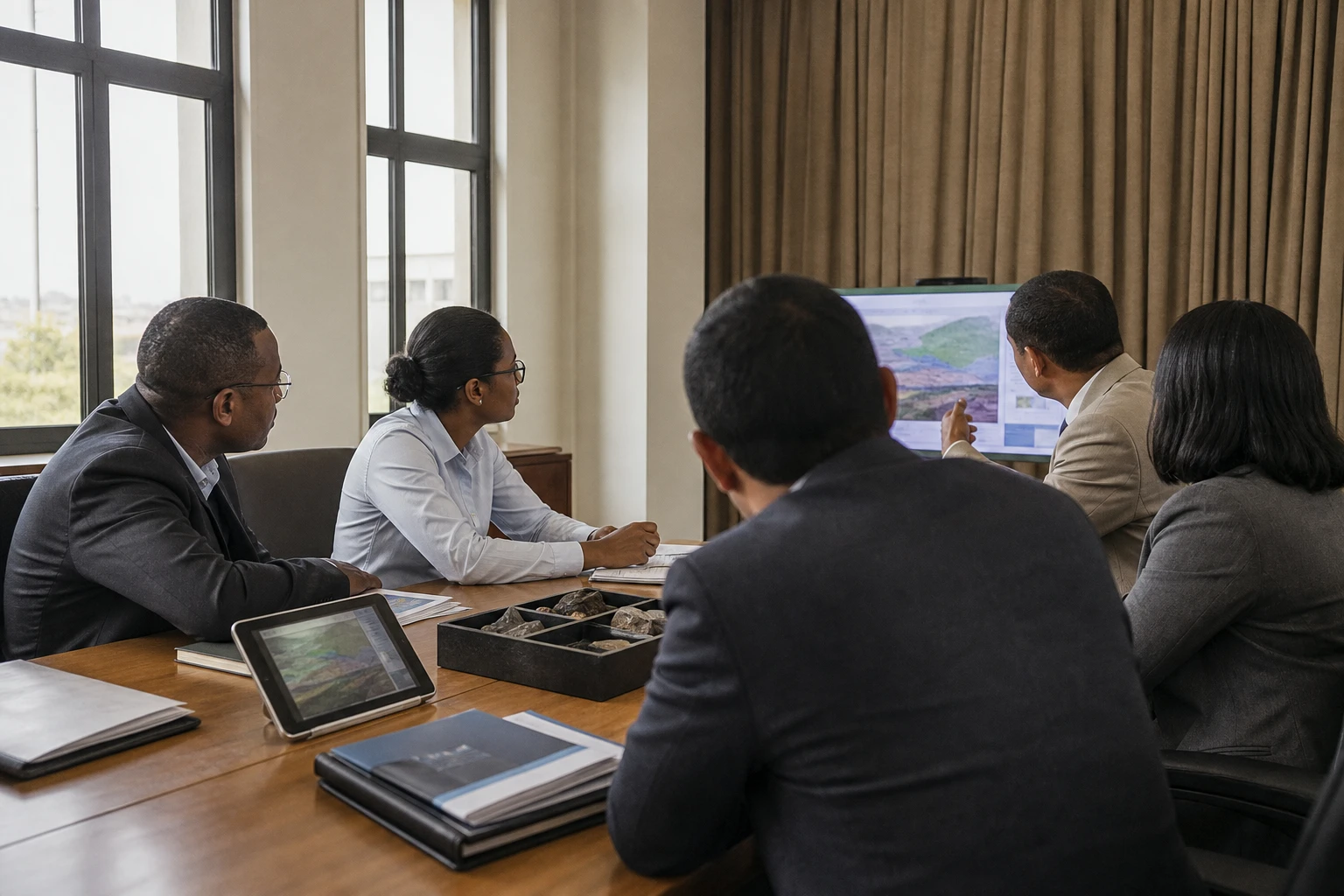
In Madagascar, the Ampasindava project is moving up a gear. Harena Rare Earths now has US financial backing to take the next steps towards potential rare earths production in the island’s north-west. The funding does not yet mark the start of a mine. Its first purpose is to reduce technical, environmental and regulatory risks.
Washington is interested in the project for a specific reason: rare earths are essential to the permanent magnets used in electric vehicles, wind turbines, advanced electronics and some defence equipment. China still dominates global extraction, processing and refining. The United States is therefore seeking to secure alternative supplies, including from African partners.
US funding to prepare the next steps
On 7 August 2026, the US International Development Finance Corporation, or DFC — the US institution tasked with supporting private investment deemed strategic — announced up to $4.84 million for the development of Ampasindava. It is the DFC’s first mining investment in Madagascar.
The funding is intended for work that must be completed before a full industrial decision. It is expected to finance environmental and social studies, permitting procedures, engineering work and a pilot plant. The latter will test, on a smaller scale, the project’s capacity to extract minerals contained in clay.
The DFC says its support could pave the way for subsequent financing in the form of a loan or equity investment. That possibility is not automatic, however. It will depend on the technical results, Madagascar’s regulatory framework, the project’s actual cost and Harena’s ability to raise the necessary capital.
The project is located on the Ampasindava peninsula, in Antsiranana Province in north-west Madagascar. Harena is working on an ionic clay deposit. This type of ore can be mined using surface methods and heap leaching, but its development requires strict monitoring of water, soil, waste and inhabited areas.
Encouraging figures, but still subject to testing
The pre-feasibility study published on 26 January 2026 estimates the capital required before production at $142 million. It projects a 20-year mine life and annual production of about 4,000 tonnes of rare earth oxides.
The project would target, in particular, 1,700 tonnes a year of neodymium and praseodymium oxides, as well as dysprosium and terbium. These four elements are in particularly high demand for permanent magnets. Neodymium and praseodymium enhance their performance. Dysprosium and terbium improve their heat resistance.
These figures are from a pre-feasibility study. They provide an initial technical and economic estimate, but do not replace a definitive feasibility study. The pilot plant tests will therefore be critical. They will need to confirm recovery rates, water consumption, process stability and the quality of the resulting product.
Harena plans to produce a mixed rare earth carbonate, an intermediate product that will still need to be processed elsewhere to separate the different elements. This step is essential. Extracting the ore is not enough to create a complete value chain. Refining and processing it into usable materials remain concentrated in a limited number of countries.
The company is targeting a final investment decision in the fourth quarter of 2027. First concentrate production is scheduled for mid-2028. These dates form a roadmap. They may change depending on permits, financing, test results and discussions with prospective buyers.
For Madagascar, the stakes go beyond the mine
For the Malagasy authorities, Ampasindava could attract capital to a mining sector still dominated by a handful of large projects. The country already has experience in nickel, cobalt, graphite and industrial minerals. However, every project brings its own logistical and social constraints.
The main challenge will be to show that local benefits extend beyond tax revenue and direct jobs. People living near the site will expect accessible information about land use, water, compensation, employment and site rehabilitation. Malagasy subcontractors will also need to be able to access contracts linked to the project.
The impact will not be the same in every area. Skilled jobs could be concentrated around technical bases and mining facilities. In rural areas, the effects will depend more on infrastructure, local procurement and protection for farming and fishing activities. Transparent dialogue with communities will therefore matter as much as financial indicators.
The project will also have to comply with Malagasy mining law and national environmental regulations. An announcement of foreign funding does not exempt Harena from obtaining the required permits. Nor does it replace local consultations or the independent assessments expected before construction.
A project under scrutiny across the SADC region
Madagascar belongs to the Southern African Development Community, or SADC, which brings together countries engaged in economic and political cooperation in southern Africa. Ampasindava is thus part of a region where several states are seeking to add more value to their strategic minerals.
International competition is no longer only about access to deposits. It also concerns infrastructure, electricity, ports, processing and supply contracts. For Madagascar, the question will be how to negotiate a meaningful place in this new chain, rather than remain a mere supplier of raw ore.
US support gives the project a clear geopolitical dimension. It could help secure access to other investors and attract industrial partners. But it also exposes Ampasindava to shifting priorities among the major powers and fluctuations in the rare earths market.
The next step will therefore be very concrete: to verify whether the studies funded by the DFC confirm the viability of the process and whether Harena can raise the roughly $142 million needed for development. For Malagasy people and investors alike, the real test will begin when promises of diversification meet the demands of the ground.