
 Algeria
 Egypt
 Libya
 Morocco
 Sudan
 Tunisia
 Benin
 Burkina Faso
 Cabo Verde
 Côte d'Ivoire
 Ghana
 Guinea
 Guinea-Bissau
 Liberia
 Mali
 Mauritania
 Niger
 Nigeria
 Senegal
 Sierra Leone
 The Gambia
 Togo
 Cameroon
 Central African Republic
 Chad
 DR Congo
 Equatorial Guinea
 Gabon
 Republic of the Congo
 São Tomé and Príncipe
 Burundi
 Comoros
 Djibouti
 Eritrea
 Ethiopia
 Kenya
 Madagascar
 Malawi
 Mauritius
 Mozambique
 Rwanda
 Seychelles
 Somalia
 South Sudan
 Tanzania
 Uganda
 Angola
 Botswana
 Eswatini
 Lesotho
 Namibia
 Zambia
 Zimbabwe
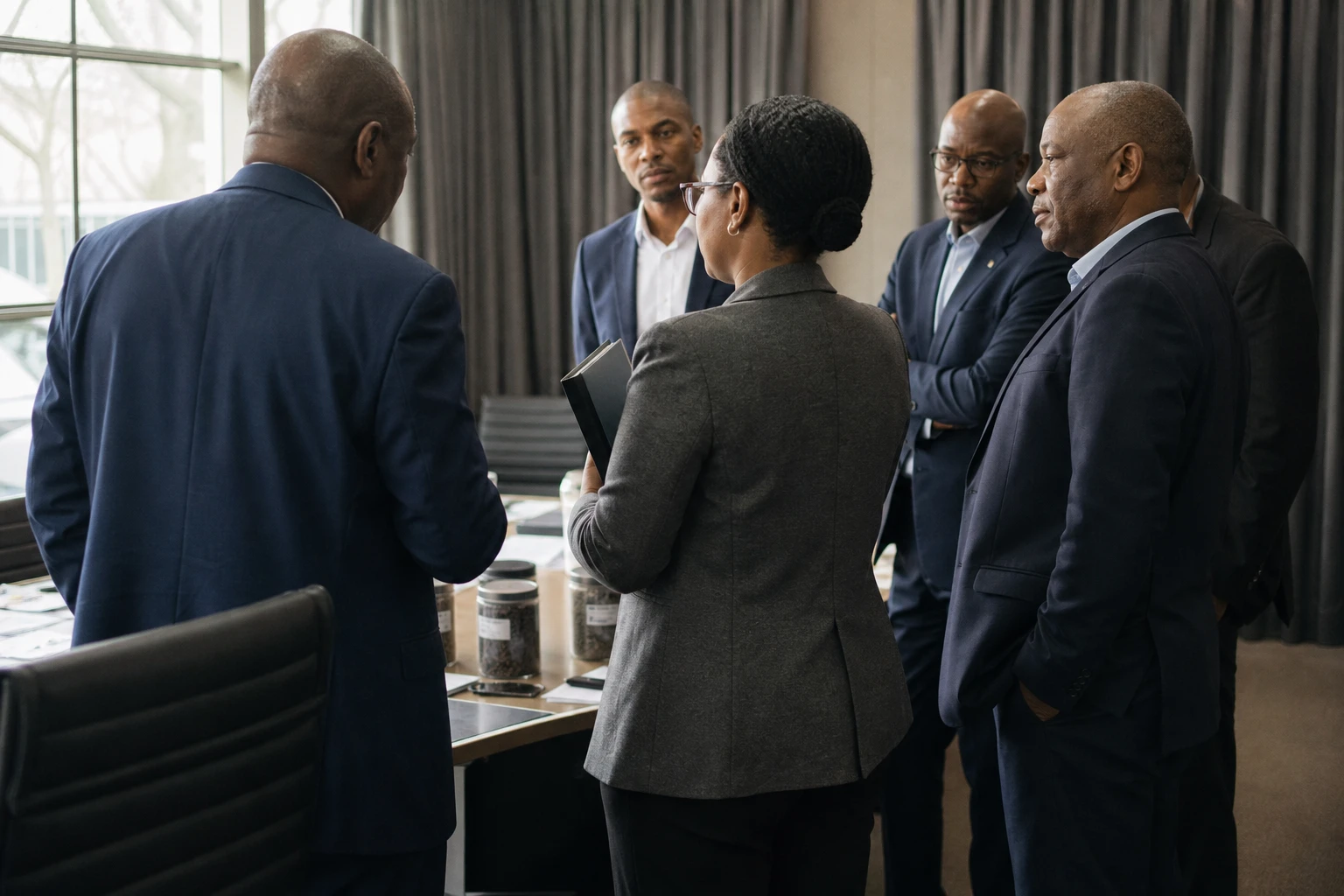
For South Africa, critical minerals are no longer just a mining issue. They have become an industrial, commercial and diplomatic lever. Pretoria wants to attract US capital, but also to advance a central idea: Africa’s resources should be processed more extensively on the continent.
A South African offer at the heart of mining competition
On 24 September 2026, in New York, South Africa’s Minister of Trade, Industry and Competition, Parks Tau, set out the contours of possible cooperation with Washington in the critical minerals sector. He spoke on the sidelines of the United Nations General Assembly, at a round table bringing together entrepreneurs with links to South Africa who are based in the United States.
The minister proposed moving from general dialogue to a list of specific projects. The aim is to identify supply needs, investors able to mobilise capital and suitable financing solutions. This approach still needs to be turned into an official agreement between the two governments.
According to details presented by Pretoria, an investment platform could bring together South African institutions and US partners, including the U.S. International Development Finance Corporation and the US Exim Bank. It would be responsible for selecting projects, arranging their financing and facilitating long-term offtake contracts.
South Africa also wants to establish a bilateral working group. It could monitor mining, industrial and financial matters. At this stage, however, no public announcement indicates that a formal timetable for negotiations has been set.
Processing more rather than exporting ore alone
Pretoria’s choice reflects a longstanding priority of its industrial policy: increasing the value created locally. The aim is no longer just to extract platinum, manganese, chromium or vanadium. It is also to refine them, produce components and develop the skills needed for these activities.
This strategy aligns with the continent-wide debate on processing raw materials. In several African countries, exports of unprocessed minerals limit industrial revenues, skilled employment and the ability to develop supplier chains. For Pretoria, cooperation with Washington should therefore not be confined to securing volumes for the US market.
The South African government is also emphasising its industrial capacity, financial infrastructure and mining expertise. Pretoria is thus seeking to present itself as a regional base for projects extending beyond its own borders.
Copper and cobalt from the Democratic Republic of the Congo, lithium from Zambia and Zimbabwe, and South African resources could be incorporated into regional value chains. This approach would, however, require investment in railways, ports, electricity and cross-border logistics.
It falls within the remit of the Southern African Development Community, or SADC, which brings the countries of the region together around economic integration projects. The establishment of a regional mining platform will therefore also depend on neighbouring states’ ability to harmonise their rules, secure transport corridors and share the industrial benefits.
Cooperation proposed amid diplomatic tensions
South Africa’s proposal comes as relations between Pretoria and Washington remain fragile. Since Donald Trump’s return to the White House, several disputes have affected political and trade ties between the two countries.
In 2025, Washington announced the suspension of its aid to South Africa. US authorities also accused Pretoria of pursuing discriminatory policies towards white farmers. The South African government rejected this interpretation and defended its national legal framework.
On trade, the United States imposed a 30% tariff on some South African products from August 2025. The US measures did, however, provide for exemptions, including for certain critical minerals, copper and several energy products. The South African government said trade discussions with Washington were continuing.
This situation creates a paradox. The United States is seeking to diversify its supplies of strategic minerals, but the political relationship with South Africa complicates the building of a stable partnership. Pretoria’s challenge is therefore to defend its industrial interests without depending on a single external market.
Minister Parks Tau had previously linked trade discussions to the possibility of joint investment in critical minerals. This position reflects a desire to keep the economic channel open despite diplomatic disagreements.
Very different effects for businesses and workers
Major mining companies could benefit from greater access to US finance, processing technologies and supply contracts. Mid-sized businesses could also find new opportunities in maintenance, engineering, chemicals and digital services related to mining.
For South African workers, the value of the strategy will depend on where activities actually take place. An increase in exports of unprocessed ore would have a limited effect on industrial employment. By contrast, the construction of refining and processing plants could create more skilled jobs in mining regions.
The benefits would vary between regions. Provinces already connected to ports, electricity grids and industrial centres could attract the first investments. Rural mineral-producing areas, meanwhile, risk being confined to extraction if contracts do not provide for local benefits, training and subcontracting.
The authorities will also have to address environmental concerns. Refining consumes water and energy. It can also produce waste that is difficult to manage. A credible local processing policy will therefore need to include site rehabilitation, contract transparency and dialogue with the communities concerned.
A test of Southern Africa’s industrial autonomy
South Africa’s initiative goes beyond its relationship with the United States. It raises a broader question: can African countries use global competition to finance their own industrial capacity, rather than remain mere suppliers of raw materials ?
The issue resonates with the objectives of the African Continental Free Trade Area, which seeks to develop trade between African countries and support regional value chains. It also aligns with the African Union’s priorities on industrialisation, infrastructure and collective bargaining over strategic resources.
In the coming months, several indicators will show the extent of South Africa’s initiative: the effective launch of a working group with Washington, the selection of initial projects, commitments from public and private banks, and the role given to SADC partners.
For Pretoria, success will therefore not be measured solely by the amount of US capital mobilised. It will also depend on the share of value added retained in South Africa and the region, the jobs created and neighbouring states’ ability to build a genuinely integrated mining value chain.



