Algeria
 Egypt
 Libya
 Morocco
 Sudan
 Tunisia
 Benin
 Burkina Faso
 Cabo Verde
 Côte d'Ivoire
 Ghana
 Guinea-Bissau
 Liberia
 Mali
 Mauritania
 Niger
 Nigeria
 Senegal
 Sierra Leone
 The Gambia
 Togo
 Cameroon
 Central African Republic
 Chad
 DR Congo
 Equatorial Guinea
 Gabon
 Republic of the Congo
 São Tomé and Príncipe
 Burundi
 Comoros
 Djibouti
 Eritrea
 Ethiopia
 Kenya
 Madagascar
 Malawi
 Mauritius
 Mozambique
 Rwanda
 Seychelles
 Somalia
 South Sudan
 Tanzania
 Uganda
 Angola
 Botswana
 Eswatini
 Lesotho
 Namibia
 South Africa
 Zambia
 Zimbabwe
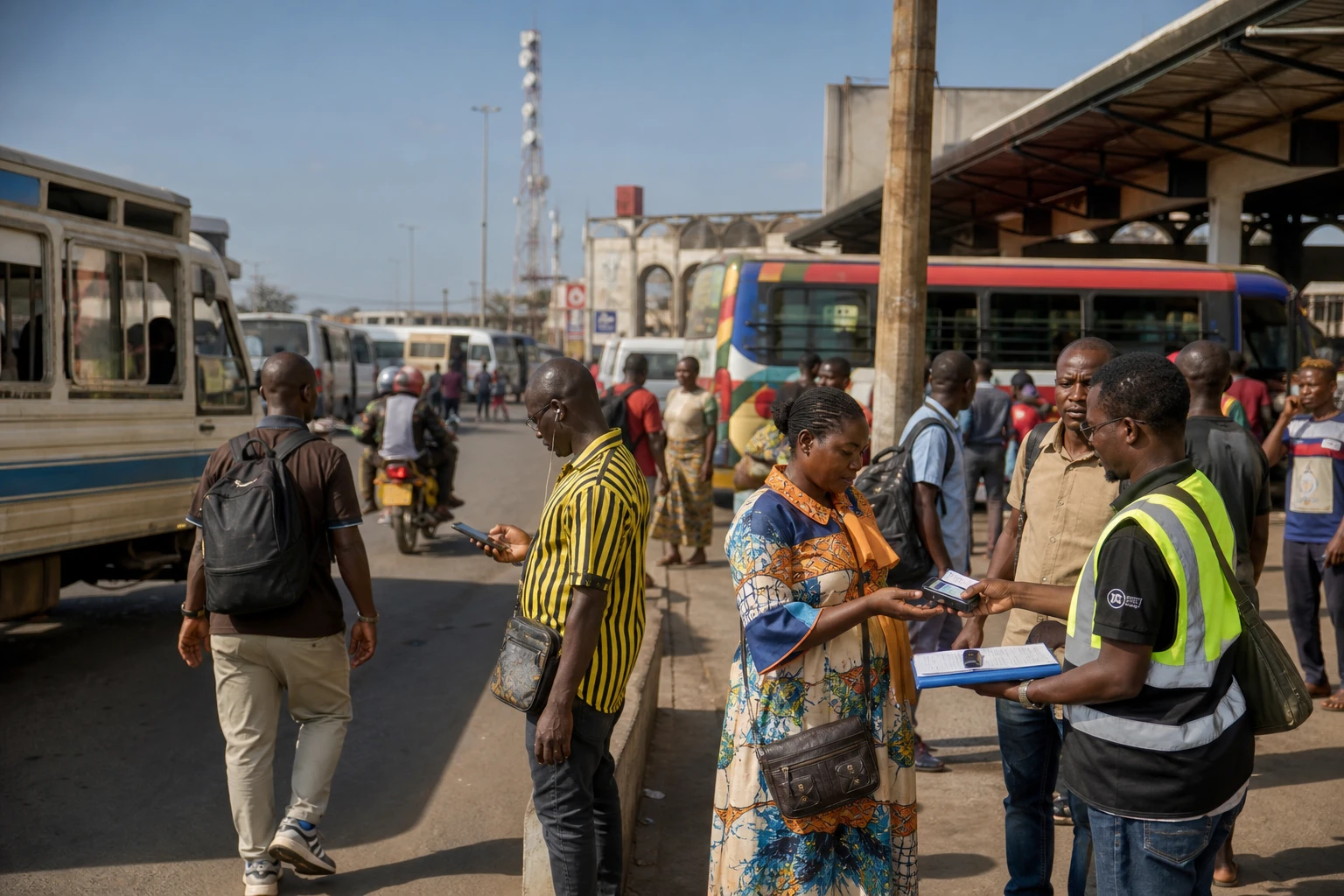
In Conakry and across Guinea’s other regions, an unstable connection can now block a payment, interrupt work or make it harder to access a public service. As these uses become part of everyday life, the Guinean authorities want to shift the debate: the issue is no longer simply whether the territory is covered, but whether subscribers are actually receiving a good-quality service.
Tighter oversight of the telecoms sector
The Regulatory Authority for Posts and Telecommunications (ARPT), which oversees the market and protects users, has begun reorganising its services. Its stated aim is to improve oversight of mobile operators and internet service providers (ISPs).
The regulator has announced the creation of a Digital Services and Users Department. The new unit is to centralise exchanges with sector players, monitor their commitments and check compliance with the obligations set out in their specifications.
The change follows a meeting with ISPs. Further discussions are planned with telecoms companies. The ARPT aims to deal more quickly with problems reported by consumers and to keep better records of the responses provided by operators.
The system also provides for better tracking of cases. Requests, complaints and commitments are expected to be monitored against more specific deadlines. For users, the question will be whether the new organisation leads to faster responses in the event of an outage, slow speeds or inadequate coverage.
The regulator also intends to supplement technical quality-of-service (QoS) measurements with assessments of quality of experience (QoE). The former checks factors such as availability, speed and call completion rates. The latter focuses more on what subscribers experience in their everyday use: waiting times, connection stability and ease of access to services.
The distinction matters. A network can meet some technical indicators yet remain difficult to use in a busy area, at certain times or for data-intensive services. Monitoring user experience should therefore help bring regulatory checks closer to conditions in homes, businesses and public administrations.
From coverage to network reliability
Guinea already has experience of nationwide audits. In 2023, the ARPT assessed mobile and internet coverage and service quality in 49 localities and along 43 road routes. The checks covered calls, SMS and mobile data, and involved several operators and ISPs.
These audits show that telecoms quality is about more than whether a phone has a signal. It also depends on the network’s ability to handle demand, the continuity of electricity supply, the availability of backhaul links and the maintenance of equipment.
The Ministry of Communication, Digital Economy and Innovation reiterated this approach at a meeting with Orange Guinea on 8 July 2026. Discussions focused on improving services, extending coverage, increasing investment and ensuring access to more reliable and affordable connectivity.
Minister Mourana Soumah also stressed the development of the national backbone, the core infrastructure that carries communications between the country’s main regions. Infrastructure resilience and reducing coverage gaps are among the stated priorities.
The government has also identified 635 areas without coverage as part of its work on universal access. These areas, which lack coverage or are poorly served, are a reminder that network improvements are not just a matter for Conakry. They also affect secondary cities, rural areas and major economic corridors.
In the capital, the density of users can cause local congestion. In the rest of the country, the problem is more often the distance between sites, the cost of equipment or an unreliable electricity supply. The solutions cannot therefore be the same everywhere.
A challenge for digital services
Demand is changing rapidly. Guineans use telecommunications for personal communications, commerce, education, remote work, administrative services and money transfers. An outage or a connection that is too slow can therefore have an immediate cost for households and small businesses alike.
Informal-sector businesses are particularly exposed. Many rely on mobile phones to receive orders, confirm deliveries or make transactions. In formal businesses, network reliability also determines whether payments can be made, customers contacted and professional platforms accessed.
Service quality must, however, be distinguished from access to digital technology. A high-performing network is not enough if data packages remain too expensive, devices are unaffordable or digital skills are lacking. Electricity also remains crucial, particularly in localities where people must regularly charge their phones or power connectivity equipment.
This reality calls for a broader policy. It must combine oversight of operators, investment in infrastructure, competition, consumer protection and the expansion of universal service. The regulator will therefore need to publish results that are clear and comparable, rather than relying solely on internal data that are difficult to verify.
An issue beyond Guinea’s borders
Guinea’s trajectory is part of a trend across West Africa. In several member states of the Economic Community of West African States (ECOWAS), authorities are seeking to evolve their regulatory approach. The priority is no longer just the allocation of licences. It also includes transparency around outages, quality measured in the field, and striking a balance between investment and prices for users.
For Guinea, the issue is also a regional one. The country wants to strengthen its digital infrastructure and improve its connections to West Africa’s economic hubs. More stable connectivity can facilitate trade, support digital services and strengthen the integration of Guinean businesses into neighbouring markets.
The next step will be to turn announcements into action. Users will be watching three indicators in particular: fewer poorly served areas, faster handling of complaints and more consistent networks outside Conakry. The credibility of the reform will be judged less by organisational charts than by calls that connect, payments that go through and connections that stay available.