Algeria
 Egypt
 Libya
 Morocco
 Sudan
 Tunisia
 Benin
 Burkina Faso
 Cabo Verde
 Côte d'Ivoire
 Ghana
 Guinea
 Guinea-Bissau
 Liberia
 Mali
 Mauritania
 Niger
 Nigeria
 Senegal
 Sierra Leone
 The Gambia
 Togo
 Cameroon
 Central African Republic
 Chad
 DR Congo
 Equatorial Guinea
 Gabon
 Republic of the Congo
 Burundi
 Comoros
 Djibouti
 Eritrea
 Ethiopia
 Kenya
 Madagascar
 Malawi
 Mauritius
 Mozambique
 Rwanda
 Seychelles
 Somalia
 South Sudan
 Tanzania
 Uganda
 Angola
 Botswana
 Eswatini
 Lesotho
 Namibia
 South Africa
 Zambia
 Zimbabwe
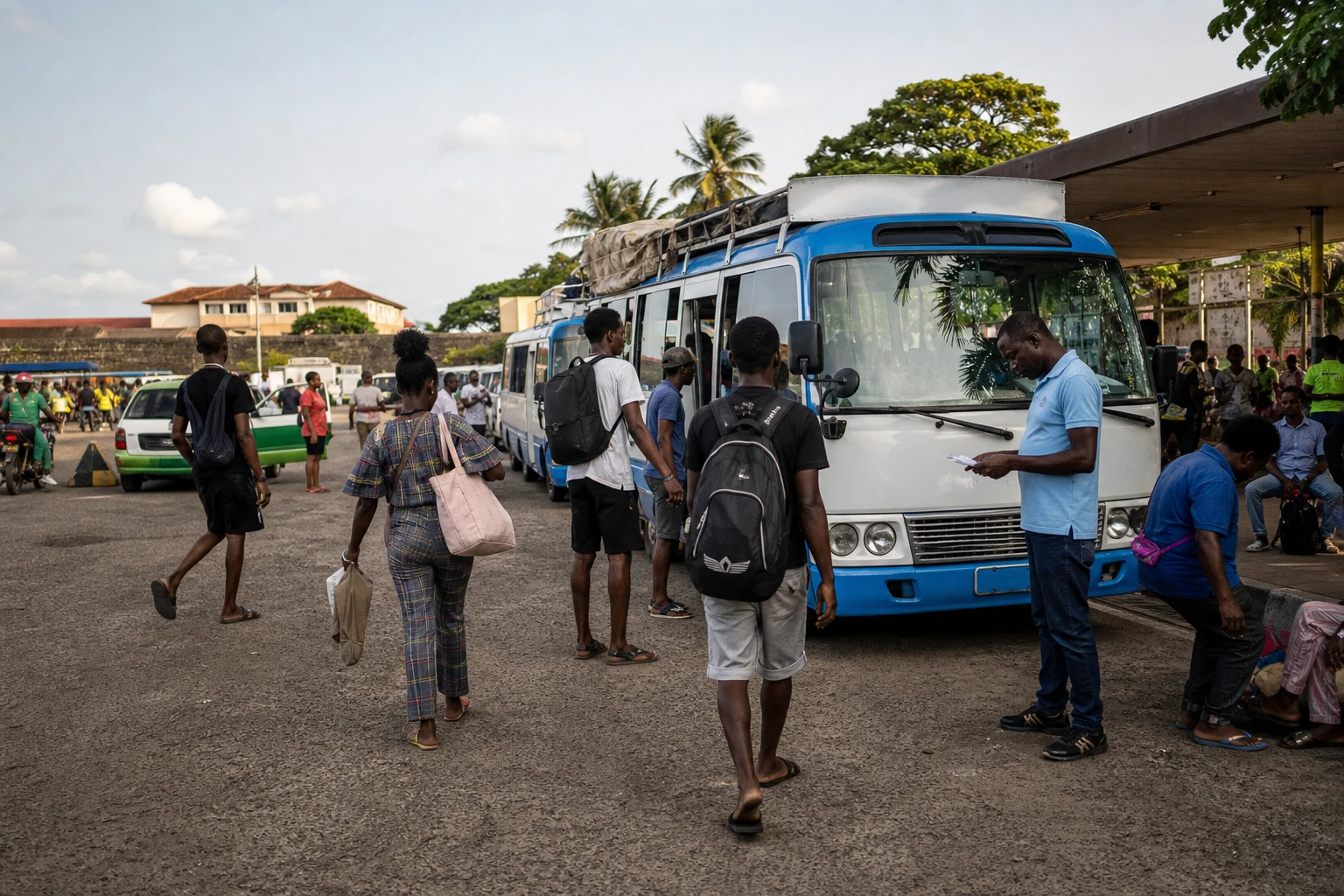
In São Tomé and Príncipe, the vote on Sunday 27 September 2026 is being shaped by more than campaign posters. For some of the country’s young people, the question is direct: stay in the archipelago or seek elsewhere the education, work and independence that the national economy still struggles to offer.
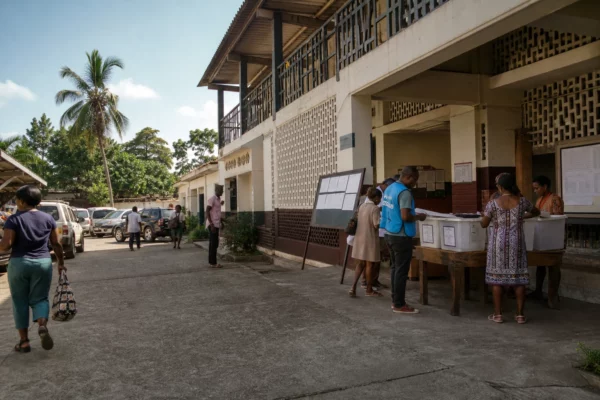
Voters are to renew all 55 seats in the National Assembly. Seven political forces are in the running, according to a decision announced by the Constitutional Court and reported by São Toméan agency STP-Press. The result will determine the parliamentary majority and have a direct bearing on the formation of the next government.
A national vote in an archipelago under pressure
São Tomé and Príncipe is an island parliamentary democracy in the Gulf of Guinea. President Carlos Vila Nova, re-elected in July 2026, shares executive power with a government accountable to parliament. This arrangement makes the legislative election decisive: the party or coalition able to secure a majority will have the greatest room for manoeuvre in shaping public policy.
The country is not a member of the Central African Economic and Monetary Community, CEMAC, which brings together six states using the Central African CFA franc. São Tomé and Príncipe has its own currency, the dobra, but maintains close ties with Central Africa, particularly Angola, Gabon and Equatorial Guinea. It is also a member of the Community of Portuguese Language Countries, a bloc that facilitates some movement to Portugal and Brazil.
The vote comes after the legislative election of 25 September 2022. The Independent Democratic Action party, ADI, won 30 of the 55 seats, ahead of the Movement for the Liberation of São Tomé and Príncipe, MLSTP, which secured 18. The majority enabled ADI to lead the government, but political tensions and economic difficulties continued to weigh on public life.
Jobs are young voters’ stated priority
In the streets of São Tomé, the campaign is reflected less in ideological speeches than in conversations about incomes, transport, electricity and access to essential services. Small shops, taxis and informal activities absorb some of the workforce. They are not, however, enough to create stable jobs for a young population.
A World Bank economic analysis published in 2025 describes a narrow labour market dominated by agriculture, small-scale trade and low-productivity activities. It estimates that nearly half of young people are neither working nor in training. This situation limits their prospects of entering the workforce and makes emigration more attractive.
For graduates, the problem is not confined to the lack of a first job. It also involves the weakness of the private sector, the cost of living and the shortage of opportunities in skilled professions. For workers with fewer qualifications, the main concerns are more regular incomes, access to social protection and the ability to afford housing or support a family.
This pressure is fuelling emigration. According to data compiled by the World Bank, nearly 40,000 São Toméans were living abroad in 2021, about 18% of the population. Another publication by the institution notes that 24,156 citizens left the country in 2023, a particularly high figure for an archipelago of about 240,000 people.
Portugal is home to more than half of the São Toméan diaspora. Angola and Gabon are also among the main destinations. These departures sometimes provide families with income sent from abroad. But they also deprive the country of workers, skills and consumers. The phenomenon therefore affects both households dependent on the diaspora and businesses looking for available workers.
Investing without undermining social balance
The main parties are highlighting investment, tourism and infrastructure modernisation. The challenge is to turn these promises into sustainable activity. New facilities do not automatically create local jobs. Training, reliable access to energy, financing for small businesses and sufficiently predictable rules are also needed to attract São Toméan and foreign investors alike.
Tourism is a significant opportunity. The archipelago has coastlines, forests and biodiversity recognised by UNESCO. But tourism development will have to take account of ecosystem protection, limited infrastructure capacity and the distribution of income between the capital, rural areas and local businesses.
Energy remains a central issue. Power cuts have long disrupted households, businesses and public services. Recent improvements have supported the economic recovery, but the World Bank says growth remains fragile. Its economic assessment puts average gross domestic product growth at just 1.3% between 2019 and 2024, following several domestic and international shocks.
This fragility is felt differently across the country. In São Tomé, residents benefit from a greater concentration of services, government offices and business opportunities. In remote districts, transport costs and access to healthcare or training deepen the sense of distance from public decision-making.
Turnout, another test for the parties
The election will also test confidence in the institutions. Turnout in the July 2026 presidential election had already drawn attention, following a decline in previous votes. High abstention would not necessarily signal a complete lack of interest in politics. It could reflect disappointment with unkept promises, material hardship or a sense that changes of government do little to improve daily life.
For parties, winning over young people therefore requires more than an investment programme. They will have to show how jobs will be created, in which sectors, with what funding and according to what timetable. Credibility will also depend on the next government’s ability to work with local authorities, businesses, trade unions, associations and the diaspora.
Regionally, the election will be watched as another test of institutional stability in Central Africa and the Gulf of Guinea. São Tomé and Príncipe does not face the same balance of power as its larger neighbours, but its difficulties are a reminder of a reality shared by many African states: a young population, poorly diversified economies and growing mobility abroad.
After 27 September 2026, the first indicator will be the composition of the National Assembly. The second will be how quickly a government is formed. For voters, however, the most important thing will be the tangible outcome of the vote: jobs, more reliable public services and the possibility of building a future in São Tomé without seeing departure as the only option.