
 Algeria
 Egypt
 Libya
 Sudan
 Tunisia
 Benin
 Burkina Faso
 Cabo Verde
 Côte d'Ivoire
 Ghana
 Guinea
 Guinea-Bissau
 Liberia
 Mali
 Mauritania
 Niger
 Nigeria
 Senegal
 Sierra Leone
 The Gambia
 Togo
 Cameroon
 Central African Republic
 Chad
 DR Congo
 Equatorial Guinea
 Gabon
 Republic of the Congo
 São Tomé and Príncipe
 Burundi
 Comoros
 Djibouti
 Eritrea
 Ethiopia
 Kenya
 Madagascar
 Malawi
 Mauritius
 Mozambique
 Rwanda
 Seychelles
 Somalia
 South Sudan
 Tanzania
 Uganda
 Angola
 Botswana
 Eswatini
 Lesotho
 Namibia
 South Africa
 Zambia
 Zimbabwe
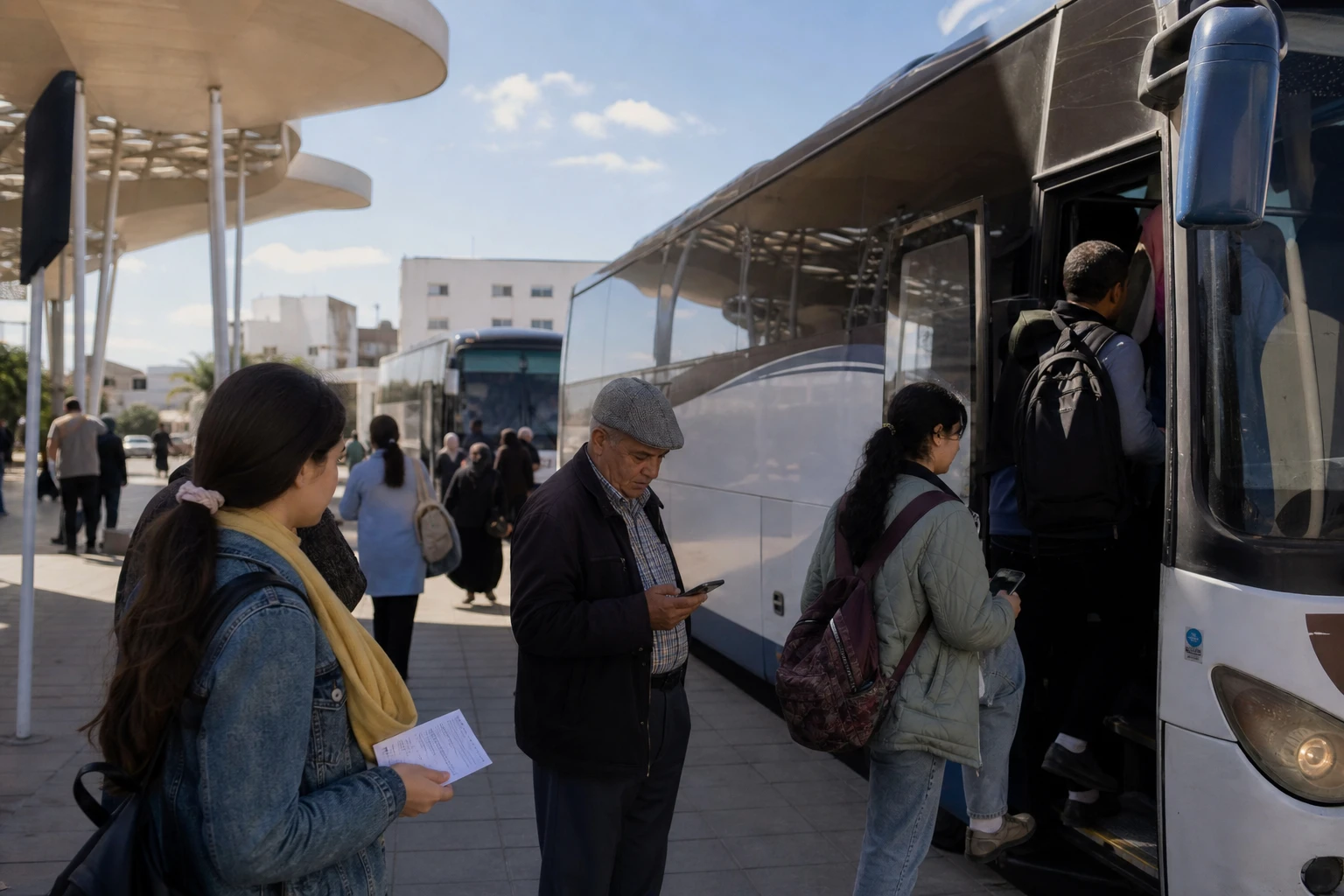
In Morocco, the vote on 23 September 2026 produced a clear result at the ballot box, but a more ambiguous signal from society. The Authenticity and Modernity Party (PAM) came first in the House of Representatives, while low voter turnout underscored the persistent gap between institutions and some citizens.
A new majority will have to be built
Provisional results announced on Thursday 24 September by Morocco’s Interior Minister, Abdelouafi Laftit, put the PAM in first place with 97 seats out of the 395 in the House of Representatives. The National Rally of Independents (RNI) won 66 seats. Istiqlal followed with 65 MPs.
The Justice and Development Party (PJD), the country’s main Islamist party, rose to fourth place with 54 seats. It held 13 after the 2021 parliamentary elections. This rebound marks the return of a political force with a strong foothold in several cities and a long-standing central role in Moroccan parliamentary life.
The remaining seats in the House are divided between the Popular Movement, with 29; the Socialist Union of Popular Forces, with 26; the Party of Progress and Socialism, with 19; and the Constitutional Union, with 17. Several other parties complete the parliamentary representation with smaller numbers of MPs.
The PAM does not, however, have an absolute majority. The next government will therefore have to rest on a coalition. This arrangement extends an established practice in Moroccan political life, where governments are generally formed by several parties.
The head of government is appointed after the election from the party that came first. The appointee will then have to find partners able to support a common programme throughout the next parliamentary term.
Turnout, the election’s main warning
National turnout stood at 38.08%, according to provisional results released by the Interior Ministry. Nearly six million voters took part.
This was markedly lower than in 2021, when turnout reached 50.86%. It was also below the 42.27% recorded in 2016. Comparisons must take account of differences in the electoral context, but the trend remains significant.
The decline does not mean that all Moroccans have lost interest in politics. Rather, it reflects differing attitudes across regions, generations and social groups. In large cities, distrust may take the form of abstention. In rural areas, access to public services, local networks and local concerns have greater influence on voting.
The result thus reveals two realities at once. On the one hand, the parties have secured a new distribution of seats. On the other, a large part of the electorate did not consider the election an effective enough means of addressing its concerns.
Jobs, public services and the cost of major projects
The campaign took place against a backdrop of expectations around jobs, purchasing power and the quality of public services. These issues are particularly important to young people, as well as to households facing rising daily expenses and difficulties accessing healthcare or education.
Morocco is pursuing a sustained modernisation drive. The country is developing its infrastructure, expanding its industrial capacity and preparing to host the 2030 FIFA World Cup with Spain and Portugal. However, these investments do not create the same sense of progress everywhere.
In metropolitan areas, major projects can improve transport, economic activity and attractiveness. In small towns and rural areas, priorities often remain reliable access to water, healthcare, schools and roads, as well as stable jobs.
This difference raises a central question for the next government: how can growth and investment be turned into visible benefits for households, beyond sectors directly linked to major national projects?
The PAM campaigned on ambitious goals, including average annual growth of 5%, inflation held at around 2% and the creation of at least one million jobs. Its delivery on these promises will be closely watched in an economic environment exposed to droughts, price pressures and regional disparities.
The PJD’s return shifts the parliamentary balance
The PJD’s gains are the other major lesson of the election. After its dramatic decline in 2021, the party has regained a significant parliamentary presence. Its message on combating corruption and public accountability has resonated with voters critical of parties in the outgoing majority.
This resurgence does not, however, signal a return to the political landscape of the 2010s. The PJD remains a minority in the House and will have to rebuild lasting parliamentary influence. It will also need to clarify its opposition strategy against a majority dominated by the PAM, the RNI and Istiqlal.
The RNI’s decline is also notable. The party, which led the outgoing government, fell from 102 seats in 2021 to 66, according to the provisional 2026 results. With 65 seats, Istiqlal is almost level with it. This balance of power could strengthen Istiqlal’s hand in coalition negotiations.
A national election amid regional tensions
Morocco does not have a regional economic community as integrated as ECOWAS in West Africa or SADC in southern Africa. Its regional landscape is shaped in particular by relations with Maghreb countries, trade with Europe and its growing role in African partnerships.
The next government’s choices will therefore have an impact beyond national borders. Rabat will have to continue investing in Africa, strengthen its economic ties with the continent and manage its relations with European partners. Migration policy, infrastructure, energy and regional security will remain central to these balances.
The election also comes after a period in which migration issues and opportunities for young people have featured prominently in public debate. These challenges are not limited to relations with Europe. They also reflect regional inequalities, social mobility and the ability of Morocco’s labour market to absorb a young population.
The next government will therefore be judged on two fronts. First, it will have to turn the PAM’s election victory into an effective majority. It will then have to respond to the quieter but broader message sent by abstention: institutions must deliver tangible results in people’s daily lives.
The final results, the composition of the coalition and the government programme will make it possible to assess the real significance of this internal change. For Morocco, the challenge will not simply be to form a new executive. It will also be to rebuild a stronger political bond between voters, parties and national priorities.



