Algeria
 Egypt
 Libya
 Morocco
 Sudan
 Tunisia
 Benin
 Burkina Faso
 Cabo Verde
 Côte d'Ivoire
 Ghana
 Guinea
 Guinea-Bissau
 Liberia
 Mali
 Mauritania
 Niger
 Nigeria
 Senegal
 Sierra Leone
 The Gambia
 Togo
 Cameroon
 Central African Republic
 Chad
 DR Congo
 Equatorial Guinea
 Gabon
 Republic of the Congo
 São Tomé and Príncipe
 Burundi
 Comoros
 Djibouti
 Eritrea
 Ethiopia
 Kenya
 Malawi
 Mauritius
 Mozambique
 Rwanda
 Seychelles
 Somalia
 South Sudan
 Tanzania
 Uganda
 Angola
 Botswana
 Eswatini
 Lesotho
 Namibia
 South Africa
 Zambia
 Zimbabwe
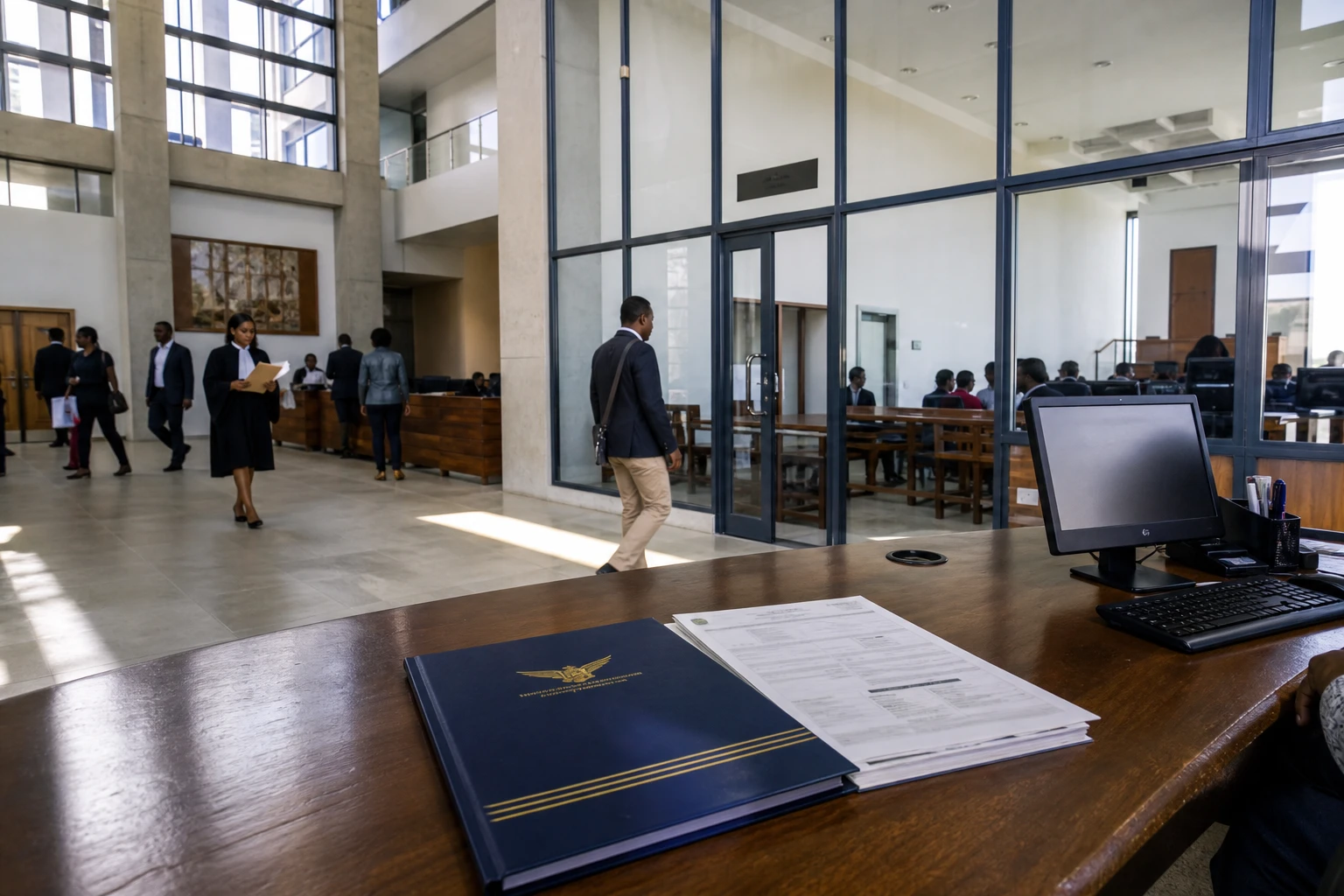
In Antananarivo, an aviation case that has become a diplomatic issue is already bogged down in the judicial timetable. Five Boeing 777 temporarily registered in Madagascar were found in Iran in 2025. Since then, the case has implicated public officials, private intermediaries and oversight of the Malagasy aircraft register.
A Malagasy case with international ramifications
The trial opened on Tuesday 22 September 2026 before Antananarivo’s Anti-Corruption Court. It concerns 33 defendants facing several charges, including forgery and the use of forged documents, corruption, money laundering, impersonation of public officials and undermining state sovereignty.
The court has nevertheless adjourned consideration of the case until 27 October 2027. It is awaiting, among other things, a response from the Civil Aviation Authority of Madagascar, which has joined the case as a civil party, as well as the appearance of Mamy Ravatomanga. A digital investigation must also supplement the case file, according to information reported by the Malagasy press.
The adjournment prolongs families’ wait. It also renews questions about the length of the proceedings. Several people have been in prison since the previous year. One detainee died in prison in January 2026 without having appeared before the judges, according to information presented at the hearing.
Those named include former Malagasy officials, notably former Transport Minister Valéry Ramonjavelo and former Senate president Richard Ravalomanana. Junior officials are also among the defendants. Their lawyers argue that couriers, drivers and security guards may have been used as executors without knowing the full scope of the scheme.
Temporary certificates at the heart of the investigation
The case dates back to January 2025. The Civil Aviation Authority of Madagascar, the body responsible for overseeing air transport, says it issued Udaan Aviation with temporary certificates for five Boeing 777-200ER aircraft.
The documents were intended to allow the aircraft to be transferred from China to Kenya. They were supposed to undergo maintenance there before potentially being taken to Madagascar. The certificates were valid for three months and expired in mid-April 2025.
The aircraft ultimately took a different route. After passing through Cambodia, the five Boeing jets arrived in Iran in July 2025. They were subsequently linked to Mahan Air, an Iranian airline targeted by US sanctions. Their presence in Iran has been documented by aviation specialists and several media outlets, including an investigation into their route.
The Civil Aviation Authority of Madagascar says the documents were allegedly forged after they expired. Their validity date was reportedly extended to facilitate the aircraft’s movement. The authority also says it was alerted by the Cambodian authorities to the suspicious nature of some of the documents.
These claims will have to be established before the judges. At this stage, they remain allegations and statements by investigators. The precise responsibility of each defendant has yet to be determined.
A chain of actors, from the capital to aviation circles
The case concerns more than five aircraft. It raises questions about how a little-known company was able to obtain official documents for wide-body aircraft intended for a complex international operation.
Udaan Aviation was linked to a company registered in Antananarivo. The company had a very broad stated business purpose, including aviation, trade and exports. Its declared capital was very low compared with the resources needed to operate or maintain five Boeing 777s.
The contrast fuelled suspicion. A Boeing 777 requires certifications, qualified crews, insurance and suitable infrastructure. It is not an aircraft that can be moved with a simple administrative formality. The court will therefore have to examine the chain of decisions, the documents submitted and any financial consideration.
The consequences are not the same for all those involved. Former political officials face questions of public accountability. Administrative staff may have to explain their professional actions. Junior executors, meanwhile, may remain in detention for a long time without having access to the same legal resources.
For Madagascar Airlines and the Malagasy aviation sector, the case comes at a delicate time. The national carrier is still seeking to stabilise its fleet and finances. The scandal could therefore undermine partners’ confidence, even though the five Boeing jets never formed part of the national carrier’s operational fleet.
Diplomatic pressure that extends beyond Madagascar
The international dimension is particularly sensitive. Iran is subject to US sanctions that limit its access to aircraft and equipment of US origin. Using intermediary countries and temporary registrations can therefore help obscure the aircraft’s traceability.
Madagascar says it did not intend to facilitate sanctions evasion. The aviation authority says it was deceived and has brought charges of forgery and the use of forged documents. The trial will have to determine whether this was fraud carried out by private actors, an administrative failure or broader involvement.
The case also affects Madagascar’s cooperation with its partners. Antananarivo maintains relations with Iran while engaging with the United States and other economic players. Poorly handled proceedings could expose the country to diplomatic pressure. Transparent proceedings, by contrast, could help restore the credibility of its aircraft register.
At regional level, the case is of interest to the Southern African Development Community (SADC), which includes Madagascar and several neighbouring countries. The organisation does not directly manage the court case, but transport networks, commercial registers and border controls often extend beyond national boundaries.
The next hearing is now scheduled for 27 October 2027. Proceedings will have to clarify the role of the Civil Aviation Authority of Madagascar, the nature of the documents used and the operation’s financial trail. They will also have to answer a central question: how were five aircraft able to leave Asia for Iran under administrative cover linked to Madagascar?