Algeria
 Egypt
 Libya
 Morocco
 Sudan
 Tunisia
 Benin
 Burkina Faso
 Cabo Verde
 Côte d'Ivoire
 Ghana
 Guinea
 Guinea-Bissau
 Liberia
 Mali
 Mauritania
 Niger
 Nigeria
 Senegal
 Sierra Leone
 The Gambia
 Togo
 Cameroon
 Central African Republic
 Chad
 DR Congo
 Equatorial Guinea
 Gabon
 Republic of the Congo
 São Tomé and Príncipe
 Burundi
 Comoros
 Djibouti
 Eritrea
 Ethiopia
 Kenya
 Madagascar
 Malawi
 Mauritius
 Mozambique
 Rwanda
 Seychelles
 Somalia
 South Sudan
 Tanzania
 Angola
 Botswana
 Eswatini
 Lesotho
 Namibia
 South Africa
 Zambia
 Zimbabwe
In Kampala, the budget debate is no longer only about the government’s ability to fund its priorities. It is now also about the cost of that money for businesses, households and private investment. The Bank of Uganda believes the domestic market can still absorb the needs forecast for 2026/27, but warns that borrowing beyond that path could quickly put upward pressure on interest rates.
Financing headroom remains, but with conditions
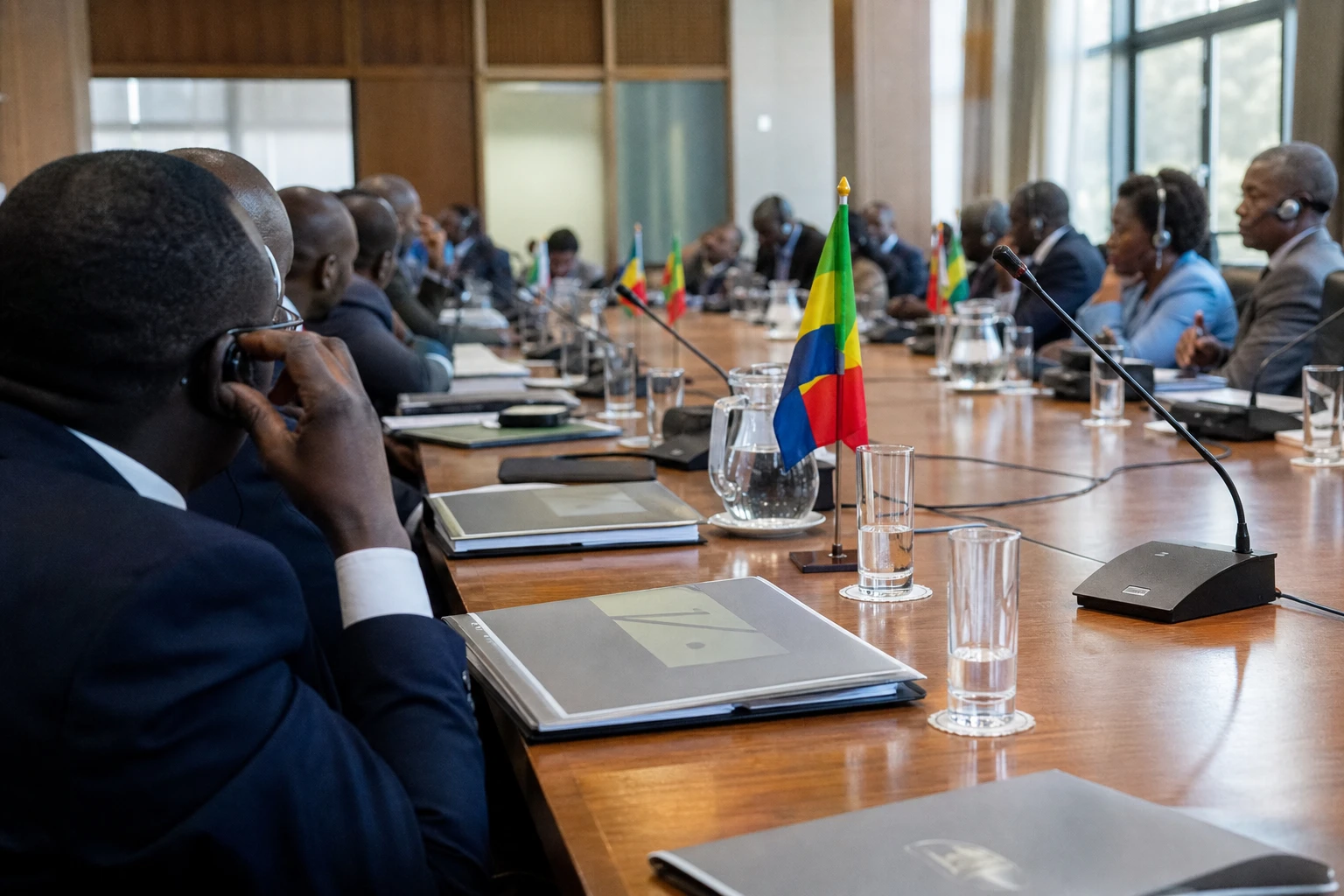
Bank of Uganda Governor Michael Atingi-Ego presented this assessment to Parliament’s Budget Committee on Monday 21 September 2026. His remarks concerned the Charter of Fiscal Responsibility, a document setting out the principles and objectives for managing public finances.
For the 2026/27 financial year, the government expects to raise about 12,700 billion Ugandan shillings in net domestic financing. This amounts to 4.6% of non-oil gross domestic product. It is below the 15,100 billion shillings raised in the previous financial year.
According to the governor, current conditions mean Uganda’s financial market can still absorb this demand. Bank liquidity has improved. Yields on government securities have fallen. Investors also continue to show interest in Treasury bills and bonds.
The Bank of Uganda therefore believes the government can finance the planned level of borrowing without immediately restricting private-sector access to credit. This assessment, however, depends on keeping to the announced amounts and exercising control over budget execution. The Ugandan Parliament’s report says the Charter is considered broadly credible under these conditions.
The risk of crowding out businesses
The feared mechanism is well known. When the government borrows more in the domestic market, it competes with businesses for funds from the same banks and investors. To attract available funds, government securities may then offer higher yields. Banks in turn pass this pressure on through higher interest rates for private-sector customers.
Small and medium-sized enterprises would be particularly exposed in this scenario. They often have limited collateral and negotiate less favourable credit terms than large companies. More expensive loans can delay investment, reduce stocks or slow recruitment.
Michael Atingi-Ego warned that borrowing above forecasts could reverse recent progress. He specifically cited the prospect of rising interest rates and the risk of crowding out the private sector—that is, a situation in which public borrowing reduces the resources available to businesses.
Private-sector credit grew by 16.1% year on year in June 2026, according to data presented to Parliament. The Bank of Uganda, however, forecasts average growth of 13% during the 2026/27 financial year. This outlook assumes that fiscal consolidation continues and the government’s financing needs remain contained.
The central bank also believes interest rates could continue to fall if public revenues and spending evolve in line with forecasts. Conversely, weak revenue or unplanned spending increases could fuel inflation and make it harder to ease credit conditions.
Public debt already above the fiscal benchmark
This caution comes as Uganda’s public debt faces increased scrutiny. The national budget document for 2026/27 says the debt stock stood at about 116,200 billion shillings at the end of June 2025. The corresponding ratio was nearly 51% of GDP, above the 50% ceiling set out in the Charter of Fiscal Responsibility.
Uganda’s Ministry of Finance distinguishes this situation from an immediate solvency crisis. It nevertheless points to the rising cost of debt service. Interest payments accounted for 26.2% of public revenue in 2024/25. They could reach 30.2% in 2026/27, according to budget projections.
Parliament has approved a budget of about 84,300 billion shillings for the new financial year. Nearly 12,000 billion is to be financed through domestic borrowing. Total debt service is expected to approach 33,400 billion shillings. The 2026/27 National Budget Framework sets out these figures and the government’s spending priorities.
These amounts do not affect all Ugandans in the same way. Formal businesses rely directly on bank loans to invest. Informal-sector operators may be affected more indirectly, through falling demand or higher prices for goods. In rural areas, access to agricultural finance also depends on banks’ ability to lend on affordable terms.
Oil adds a liquidity concern
Managing future oil revenues is another point of concern. The Bank of Uganda notes that resources held in the investment reserve will remain state assets. Their effect on liquidity will then depend on when and how they are transferred to the Consolidated Fund, the central account that receives public revenue.
A rapid inflow of funds into the economy could increase liquidity, support some spending and alter monetary conditions. A gradual release, by contrast, would help limit sudden fluctuations. Much will therefore depend on the timing of disbursements, the quality of funded projects and coordination between the Ministry of Finance and the central bank.
This issue comes at an important time for Uganda, which is preparing to develop its oil resources and seeking to finance infrastructure, industrialisation and agricultural transformation. Expected revenues could strengthen the government’s investment capacity. They do not, however, remove the need for discipline over borrowing and recurrent spending.
An issue beyond Uganda’s borders
Kampala’s trajectory will be watched across the East African Community, or EAC, which brings together several economies pursuing gradual trade and financial integration. Within this bloc, the financing conditions of a large country such as Uganda can influence capital flows, investment costs and competition between public- and private-sector borrowers.
The Bank of Uganda’s message is therefore twofold. The domestic market still has resources to support the 2026/27 budget. But its capacity is not unlimited. Adherence to the announced borrowing ceiling, revenue trends and the management of oil income will be the main indicators to watch in the coming months.
For Kampala, the challenge is not simply to find money. It is also to preserve sufficiently affordable access to credit so that businesses invest, employment grows and economic growth does not rely primarily on public spending.