
 Algeria
 Egypt
 Libya
 Sudan
 Tunisia
 Benin
 Burkina Faso
 Cabo Verde
 Côte d'Ivoire
 Ghana
 Guinea
 Guinea-Bissau
 Liberia
 Mali
 Mauritania
 Niger
 Nigeria
 Senegal
 Sierra Leone
 The Gambia
 Togo
 Cameroon
 Central African Republic
 Chad
 DR Congo
 Equatorial Guinea
 Gabon
 Republic of the Congo
 São Tomé and Príncipe
 Burundi
 Comoros
 Djibouti
 Eritrea
 Ethiopia
 Kenya
 Madagascar
 Malawi
 Mauritius
 Mozambique
 Rwanda
 Seychelles
 Somalia
 South Sudan
 Tanzania
 Uganda
 Angola
 Botswana
 Eswatini
 Lesotho
 Namibia
 South Africa
 Zambia
 Zimbabwe
An election that first tests trust
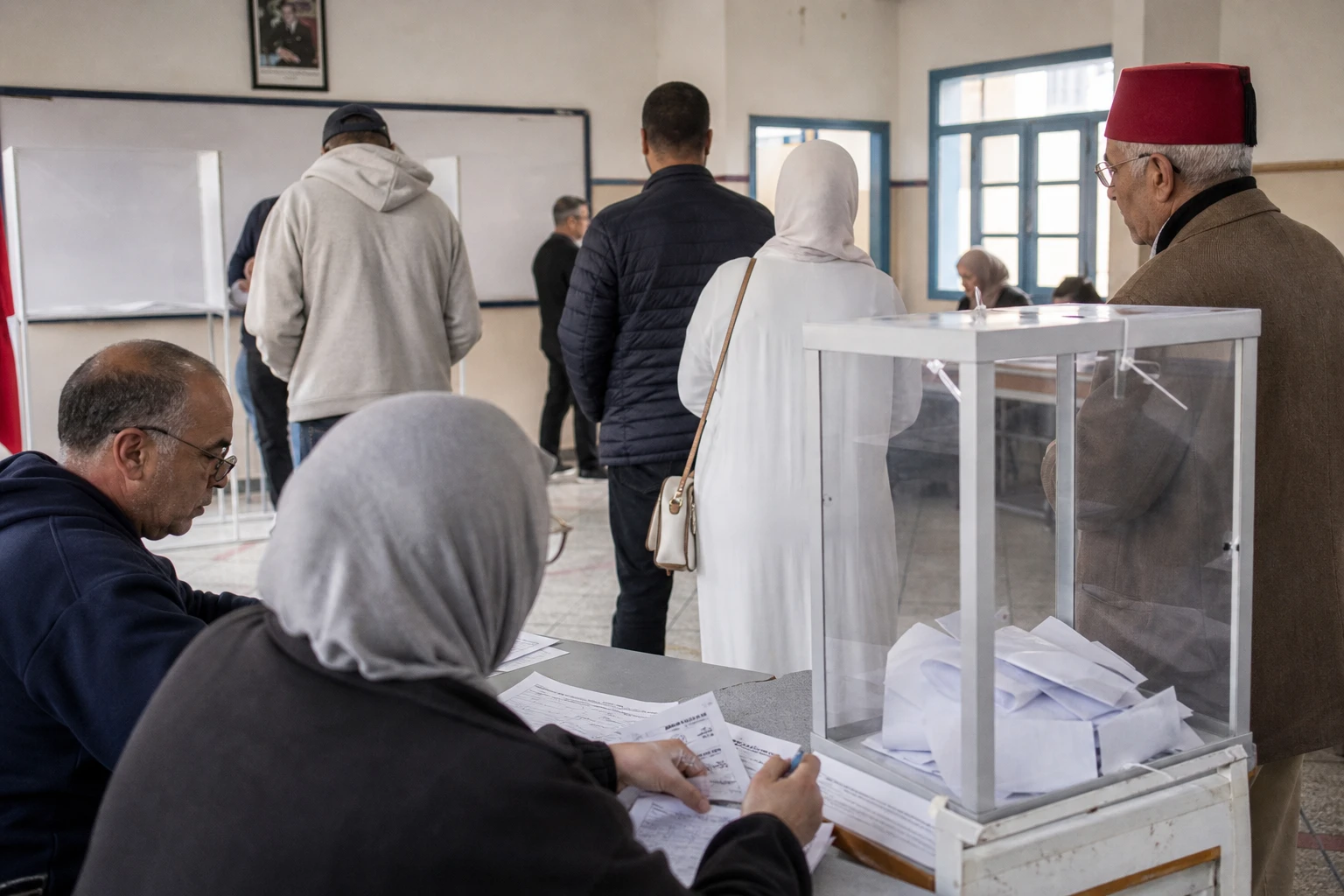
In Morocco, the vote is no longer just about promises. It comes down to a simpler and more weighty question: who can still convince voters weary of announcements, delays and the gap between rhetoric and everyday life? In Rabat, the campaign for the legislative elections on 23 September 2026 has taken this shape: less partisan fervour, more suspicion, in a country where political representation must respond to a young, urban, connected society, often impatient for tangible results.
Morocco remains at an important institutional juncture. The House of Representatives has 395 seats, and 27 political parties are taking part in the vote, according to the official elections portal. The framework has been adjusted to better include women, young people and Moroccans living abroad, with the stated aim of making the contest more inclusive. But the issue is not merely procedural. It is political. It concerns how the Kingdom, in North Africa, turns electoral participation into genuine support, in a regional environment where citizens are demanding more results and fewer slogans.
A short campaign, a longer social climate
The heart of the debate is social. Unemployment comes first. In the second quarter of 2026, the national unemployment rate stood at 13.3%, according to the High Commission for Planning. Among young people aged 15 to 24, it remains high, at 22.9% in this latest survey, down from 35.8% in the second quarter of 2025. The decline is real, but the political signal remains stark: young Moroccans continue to face a labour market that is too narrow and too unequal across regions.
The imbalance is also visible in voter registration. Those aged 18 to 24 account for only 4% of registered voters, although they make up a much larger share of society. By contrast, voters aged 60 and over represent more than 29% of the electorate, according to official figures published before the vote. This composition shapes the campaigns. It encourages parties to address generations who are more likely to vote, while claiming to speak for those who feel less heard.
In this context, the parties contesting the election have sought to focus on familiar ground: jobs, education, health, agriculture, rural areas and the cost of living. But a long list of issues is no longer enough. What is most often missing is a bridge between diagnosis and delivery. How will it be funded? Who will implement it? At what pace? With what oversight? This is where distrust takes hold. Voters are not just asking for pledges. They expect evidence of a plan.
The weight of recent crises at the ballot box
The campaign has also been shaped by memories of the major vulnerabilities of recent years. The Al-Haouz earthquake, in September 2023, left deep social and political scars. Beyond the toll, debate continues over the speed and fairness of reconstruction. Victims’ groups say that thousands of affected families have yet to receive all the assistance they expected. These demands have fuelled a broader suspicion: that the state is capable of acting, but not always quickly enough for people in the most exposed areas.
In autumn 2025, the country also saw youth protests focused on health, education, employment and the fight against corruption. The movement sent a clear signal: some young Moroccans no longer want to comment on politics only from social media. They want to influence public choices. Even when this protest does not translate directly into electoral lists, it changes the language of the parties and forces candidates to talk about public services, social dignity and concrete inequalities.
The earthquake and the youth protests have therefore had a common effect: they have shifted the campaign away from partisan identities and towards government credibility. In a system where the executive is drawn from the parliamentary majority, the question is not just who wins on election night. It is whether the next Parliament can turn social expectations into budget decisions, enforceable laws and effective oversight.
A large youth population, still under-represented at the ballot box
Morocco has millions of young people, but they remain under-represented on electoral rolls and in party politics. The official elections portal says that those aged 18 to 24 account for only 4% of registered voters. That is little for a country where youth employment, training and first access to public services are central to the social debate. Low registration is not merely a matter of abstention. It also reflects a lasting distance between institutions and an entire generation’s first experience of politics.
The electoral system has nonetheless evolved to address some of this imbalance. The new rules strengthen the role of women, young people and Moroccans abroad. They also provide financial incentives to encourage young candidates to stand. The idea is clear: open the door, but also press parties to renew their candidates and practices. The real question remains: is changing the rules enough to rebuild trust in parties often seen as distant from everyday life?
In 2021, turnout reached 50.18%, higher than in the 2016 election, but still far from mass participation. This time, the social climate suggests that a protest vote could once again become a powerful reflex. The Justice and Development Party, sharply weakened in 2021, hopes to regain visibility by capitalising on social discontent. Opposite it, the parties in the outgoing majority are seeking to defend their record while differentiating themselves from one another.
What the election will say beyond Rabat
The result on 23 September will matter not only for the formation of the next government in Rabat. It will also say something broader about the ability of North African institutions to absorb social pressure without losing legitimacy. In a region marked by high expectations for public services, social justice and jobs, Morocco will be watched as a test of political stability—not only in how its majority is formed, but also in the quality of its internal renewal.
The continental significance is clear. Morocco’s election comes at a time when youth participation in elections, the role of women and the credibility of political parties have become central issues across Africa. If the parties contesting the election can turn distrust into participation, they will send a signal that resonates well beyond the Kingdom. If, by contrast, abstention prevails, the message will be just as clear: institutions will have to go further than technical adjustments to rebuild political ties.
The vote on 23 September 2026 will not resolve social tensions on its own. But it will show whether Moroccan parties can still speak to the country with enough precision, closeness and purpose to be heard. And in Morocco today, that answer is already a programme.



