
 Algeria
 Egypt
 Libya
 Morocco
 Sudan
 Tunisia
 Benin
 Burkina Faso
 Cabo Verde
 Côte d'Ivoire
 Ghana
 Guinea
 Guinea-Bissau
 Liberia
 Mauritania
 Niger
 Nigeria
 Senegal
 Sierra Leone
 The Gambia
 Togo
 Cameroon
 Central African Republic
 Chad
 DR Congo
 Equatorial Guinea
 Gabon
 Republic of the Congo
 São Tomé and Príncipe
 Burundi
 Comoros
 Djibouti
 Eritrea
 Ethiopia
 Kenya
 Madagascar
 Malawi
 Mauritius
 Mozambique
 Rwanda
 Seychelles
 Somalia
 South Sudan
 Tanzania
 Uganda
 Angola
 Botswana
 Eswatini
 Lesotho
 Namibia
 South Africa
 Zambia
 Zimbabwe
On the Niger, a theatre that is more than mere folklore
In Mali, some performances do more than entertain. They also carry collective memory, rules for living and a way of inhabiting the land. Sogo bò, literally “the animals come out”, belongs to a rare family of art forms in which art, celebration and education go hand in hand. In the country’s centre-west, this tradition continues to connect villages, generations and the Niger River.
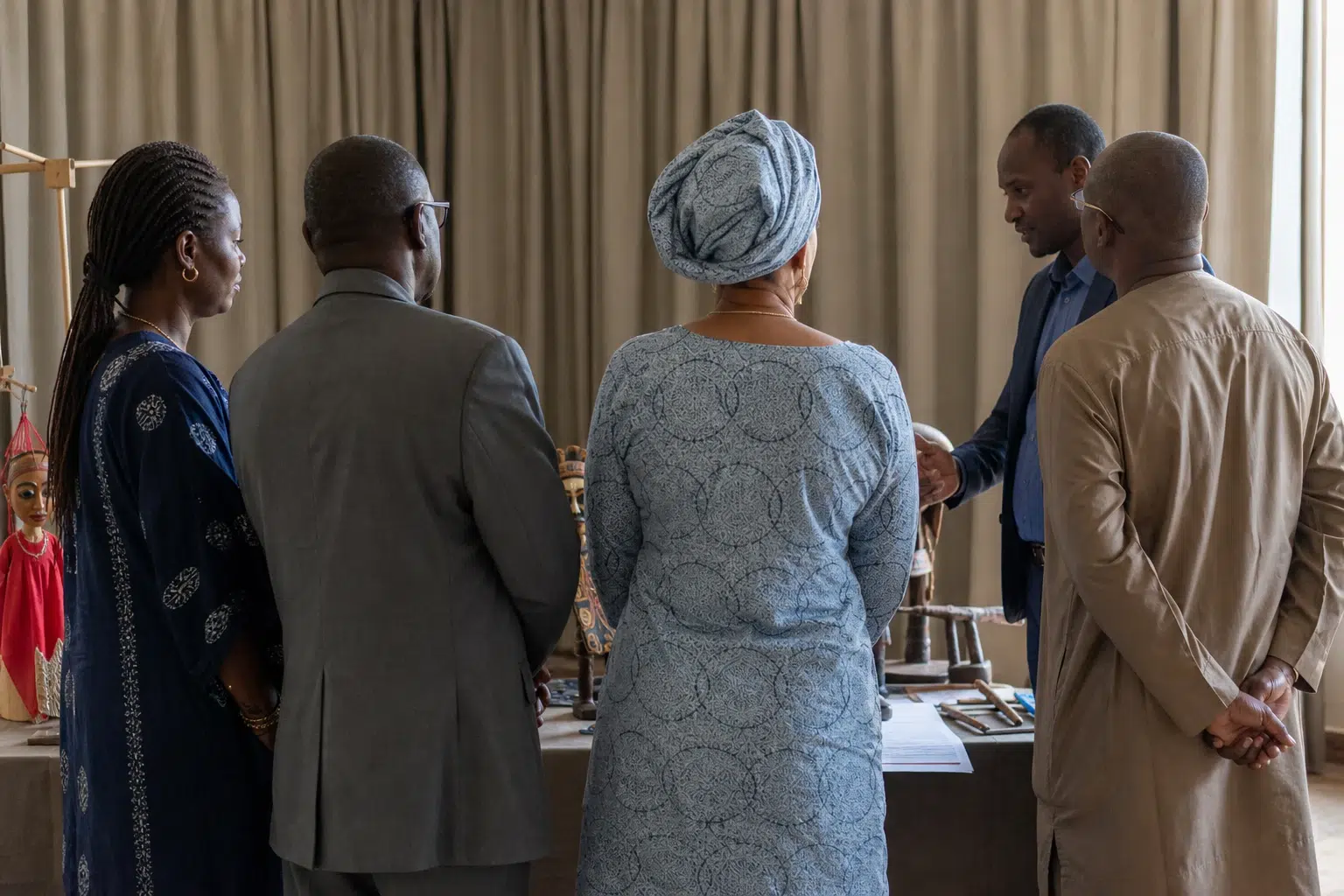
An exhibition at Lyon’s Musée des Confluences is now bringing this practice back into the spotlight. Drawing on the Sonia and Albert Loeb donation, it presents more than 100 objects, masks, puppets and audiovisual materials devoted to this popular Malian art. The exhibition is scheduled to run from 3 April 2026 to 7 February 2027, following the story of an ancestral festival born on the banks of the Niger.
A Malian heritage rooted in communities
Sogo bò is more than a series of animated figures. It combines theatre, dance, music and song. Performances take place in a village square, on the riverbank and sometimes even on pirogues. The masks represent animals, but speak of people. They express the ties between society, nature, work and the seasons.
This community-based approach is essential. The Musée des Confluences exhibition recalls that age associations, known as tònw, organise the celebrations and bring young people together from childhood. Communities living along the Niger, particularly the Bozo and Somono, play a central role. Among the Bamana, an agricultural people, these performances accompany the harvest. Among fishing communities, they follow the rhythm of the river. The cultural calendar thus follows the economic calendar.
The practice is not new. In 2014, UNESCO inscribed the “outings of masks and puppets of Markala” on its Representative List of the Intangible Cultural Heritage of Humanity. The decision file notes that this ritual festival, practised by Bambara, Bozo, Marka and Somono communities, features masked dances, drums and songs, with animals embodying social virtues.
Between transmission and vulnerability, the challenge is now tangible
Although sogo bò still draws audiences, it remains vulnerable. The Musée des Confluences says plainly that this heritage is alive but fragile amid the tensions facing Mali. This fragility is not due to insecurity alone. It also affects artists’ ability to travel, the staging of festivals, the collection of objects, the recording of songs and the passing of knowledge on to younger generations.
This situation is not unique to this tradition. In central Mali, insecurity has already affected other community rituals. In Djenné, for example, the annual maintenance of the Great Mosque, essential to its preservation, takes place under threat, with tourism falling and gatherings becoming more difficult. The comparison shows that when roads become unsafe and villages retreat into themselves, living heritage loses its natural settings for transmission.
Yet Mali is not short of initiatives. In May 2024, Bamako hosted the first edition of the international Sogobô festival, supported by the UNESCO Office in Mali. The event included workshops, performances, an exhibition and conferences on the socialisation of children through masks and puppets. Initiatives of this kind matter because they shift heritage beyond the sphere of preservation and into practice. They give young people direct access to these skills.
There is also an economic dimension. In many localities, these festivals provide work for woodworkers, textile makers, painters, musicians and seamstresses. They support a cultural economy that is often informal but real. They also boost the reputation of local areas, which can matter for both secondary cities and rural communities in central-western Mali. When a performance disappears, it is not only objects that are lost. Entire chains of expertise vanish too.
What this spotlight says about Mali and West Africa
The story of sogo bò extends beyond Mali’s borders. First, it shows that African heritage does not have to be frozen in time to be legitimate. It lives because it circulates, reinvents itself and adapts to present-day constraints. It is precisely this flexibility that interests cultural institutions, researchers and local communities. In Mali, the challenge is therefore not to turn the tradition into a museum piece, but to keep it in circulation.
The issue also resonates across West Africa. In several countries in the sub-region, living heritage is caught between security pressures, restricted mobility and fragile cultural funding. ECOWAS, which continues to structure some regional exchanges despite ongoing political realignments, sees culture as a force for cohesion that crises must not erase. For Mali, this means that safeguarding a popular theatre is no minor heritage matter. It is also a way to hold together communities scattered by tensions.
Its continental significance is clear. In Bamako and Markala alike, the challenge is the same as in other African countries: how can practices passed down orally and sustained by communities be protected without being removed from the living context in which they belong? The Lyon exhibition provides a showcase for this question. But the answer lies in Mali, in the villages, workshops, age associations and along the banks of the Niger. That is where theatre remains a tool of memory, social connection and continuity.



