Algeria
 Egypt
 Libya
 Morocco
 Sudan
 Tunisia
 Benin
 Burkina Faso
 Cabo Verde
 Côte d'Ivoire
 Ghana
 Guinea
 Guinea-Bissau
 Liberia
 Mali
 Niger
 Nigeria
 Senegal
 Sierra Leone
 The Gambia
 Togo
 Cameroon
 Central African Republic
 Chad
 DR Congo
 Equatorial Guinea
 Gabon
 Republic of the Congo
 São Tomé and Príncipe
 Burundi
 Comoros
 Djibouti
 Eritrea
 Ethiopia
 Kenya
 Madagascar
 Malawi
 Mauritius
 Mozambique
 Rwanda
 Seychelles
 Somalia
 South Sudan
 Tanzania
 Uganda
 Angola
 Botswana
 Eswatini
 Lesotho
 Namibia
 South Africa
 Zambia
 Zimbabwe
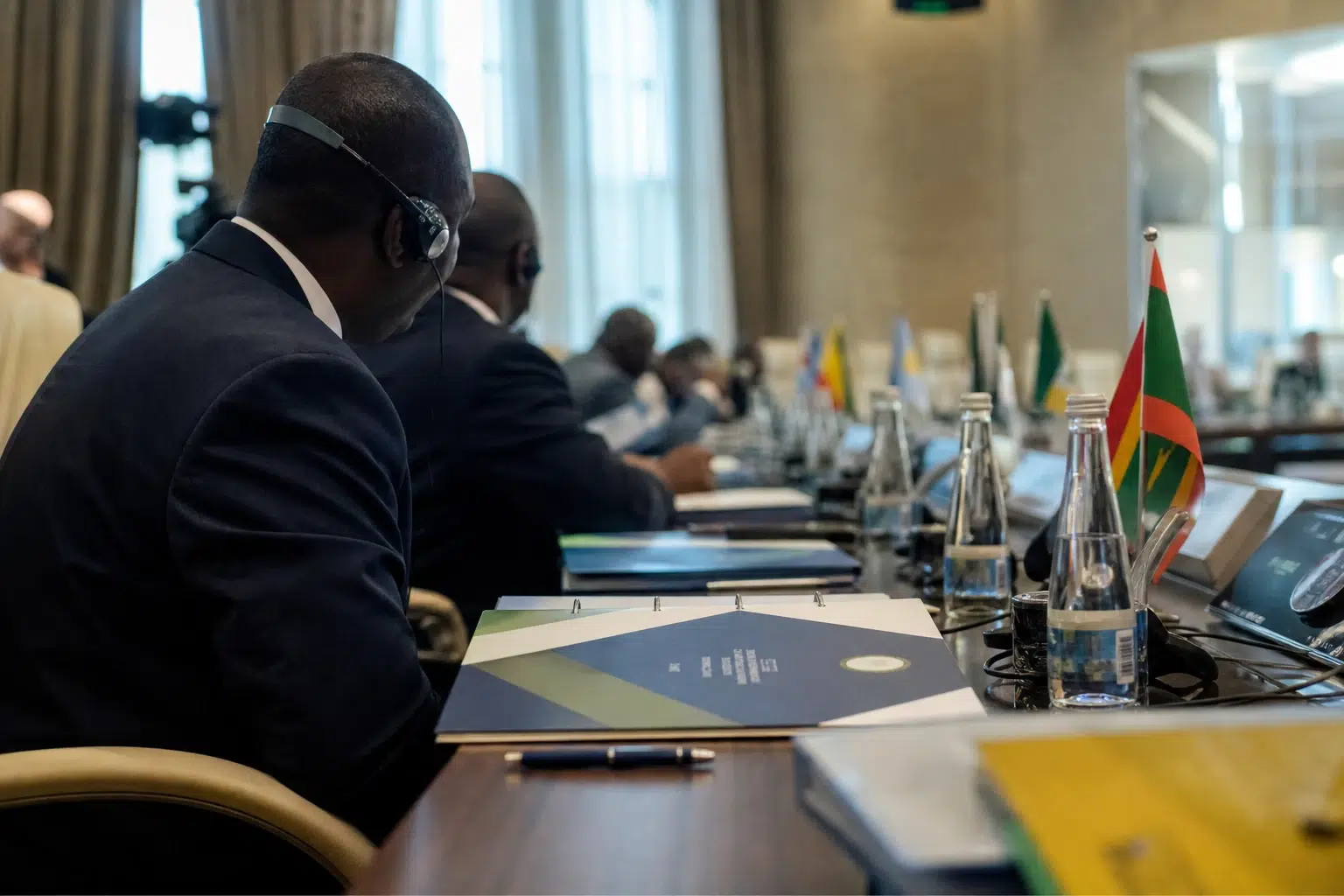
In Dar Naim, the ground damages homes before residents even consider leaving
In Nouakchott, danger does not always arrive in the form of a storm. It can come from the ground itself. In several peripheral districts, particularly Dar Naim, families are seeing their walls crumble, their foundations weaken and their homes become difficult to live in. The phenomenon reflects a broader reality in Mauritania: the pressure of salt water on soils and groundwater, compounded by rapid urbanisation and well-documented coastal vulnerability.
Dar Naim is in Mauritania’s capital, Nouakchott, a city born of accelerated urban expansion and now exposed to several risks at once: a rising water table, saline intrusion, seasonal flooding and fragile building materials. Recent academic research on Nouakchott describes marked salinity in some urban areas, including Dar Naim, and links this deterioration to the proximity of groundwater and the capillary action of soils.
In this context, accounts gathered on the ground describe less a dramatic crisis than the slow erosion of everyday life. Residents say entire sections of houses are cracking, walls are crumbling and some households are leaving the district because they cannot afford to repair their homes or move elsewhere. Such forced departures are no minor matter: they show how an environmental risk ultimately becomes a housing problem, and then a social one.
A capital built on fragile balances
Mauritania is not only facing soil salinisation. The country is also contending with a combination of drought, coastal urbanisation and reliance on vulnerable water resources. The World Bank says Mauritanian aquifers supplying, among other places, Nouakchott and Nouadhibou are threatened by salinisation linked to over-extraction for drinking water. The same assessment appears in UN documents: the city is growing on a low-lying coastline, with groundwater close to the surface and high exposure to saltwater intrusion.
This situation also sheds light on Nouakchott’s social geography. Peripheral districts, often newer and less well served by drainage, bear the initial effects of soil degradation. The poorest households remain there for longer because they have no alternative. By contrast, those with savings or support networks can leave the worst-affected areas. The environmental crisis is therefore creating a very tangible residential hierarchy.
The causes cited by specialists are consistent with this assessment. In Nouakchott, the water table is shallow and capillary rise encourages salts to accumulate in the soil and building materials. When drainage is inadequate, water stagnates, salt migrates, and bricks, plaster and sometimes foundations lose their strength. In low-gradient coastal areas, this process can damage entire homes without warning or immediate collapse.
Urban damage with economic and human costs
The issue extends beyond repairing homes. As a district deteriorates, families become reluctant to invest in maintenance, land loses value and public services become harder to sustain. Local authorities must then weigh up drainage, resettlement, roads and the adaptation of building materials. The academic study consulted on Nouakchott’s context emphasises the need to adapt drainage systems to urban realities and use salt-resistant materials from the design stage of buildings.
The problem also affects health and daily mobility. In weakened homes, salty damp accelerates the deterioration of walls. Families face repeated repairs, rooms rendered unusable and, at times, makeshift moves to even more precarious accommodation. For children, older people and households in the informal sector, housing becomes an immediate safety issue.
In a capital already under demographic pressure, this can fuel a vicious circle: the more a district deteriorates, the fewer resources are available for maintenance; the less maintenance there is, the faster the damage worsens. Nouakchott has long been presented as a city on the rise. It now also appears to be a city that must learn to endure on unstable ground. This perspective matters because it puts urban planning at the heart of the response.
What this warning says about Mauritania and the continent
The case of Dar Naim resonates beyond Mauritania. Across the West African coast, rising coastal risks, rapid urbanisation and pressure on groundwater raise similar questions. Nouakchott, like other Sahelian and Atlantic capitals, brings together issues that feature in African debates on urban adaptation: drainage, access to water, building materials, land management and resettlement.
The continental implications are also institutional. Mauritania is now framing its development policies in a context where climate and urban issues are taking on a growing role, as shown by its recent national reports and support from the United Nations system. At the African level, this aligns with the African Union’s priorities on adaptation, urban resilience and sustainable land management. From this perspective, salinisation is not an isolated neighbourhood problem: it is a warning about how African cities are growing and protecting themselves.
For Mauritania, the challenge is now very practical: better map the most exposed areas, strengthen drainage networks, limit construction in the most vulnerable zones and incorporate salinity risks into urban standards. In Nouakchott, the question is no longer simply how to build faster. It is how to build with due regard for ground that, in some districts, no longer forgives improvisation.