Algeria
 Libya
 Morocco
 Sudan
 Tunisia
 Benin
 Burkina Faso
 Cabo Verde
 Côte d'Ivoire
 Ghana
 Guinea
 Guinea-Bissau
 Liberia
 Mali
 Mauritania
 Niger
 Nigeria
 Senegal
 Sierra Leone
 The Gambia
 Togo
 Cameroon
 Central African Republic
 Chad
 DR Congo
 Equatorial Guinea
 Gabon
 Republic of the Congo
 São Tomé and Príncipe
 Burundi
 Comoros
 Djibouti
 Eritrea
 Ethiopia
 Kenya
 Madagascar
 Malawi
 Mauritius
 Mozambique
 Rwanda
 Seychelles
 Somalia
 South Sudan
 Tanzania
 Uganda
 Angola
 Botswana
 Eswatini
 Lesotho
 Namibia
 South Africa
 Zambia
 Zimbabwe
Diplomacy beyond protocol
In Beijing, an exchange between parliamentary officials may seem low-key. Yet it tells a simple story: relations between Egypt and China are no longer limited to major contracts or presidential visits. They also run through institutions, assemblies and political channels that pave the way for economic decisions.
For Cairo, this approach matters. Egypt is seeking partners able to provide financing, markets and technology while preserving room for manoeuvre in a region under strain. For Beijing, Egypt remains a major foothold: an Arab and African country, demographically central and positioned where the Mediterranean, the Red Sea and the Suez Canal meet.
This latest development comes at a highly symbolic time. In 2026, the two capitals marked the 70th anniversary of their diplomatic relations. Egyptian officials recalled that in 1956 their country was the first Arab and African state to recognise the People’s Republic of China and establish diplomatic relations with it. This reminder is significant. It places the current dialogue within a long political continuity.
What the Beijing meeting confirms
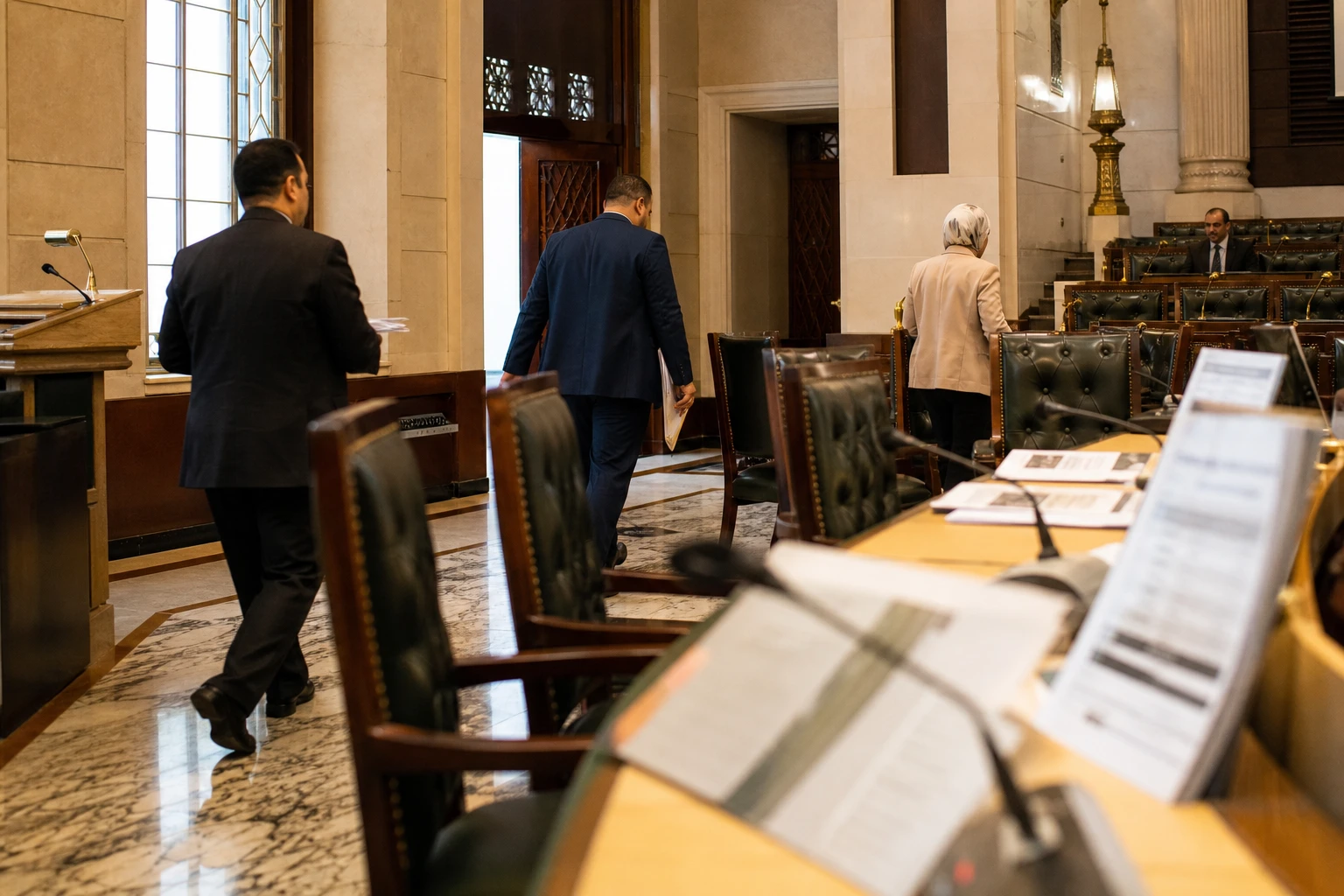
The meeting took place on 18 September 2026 in Beijing between Wang Huning, an influential figure in China’s political establishment, and Essam El Din Ahmed Mohamed Farid, president of Egypt’s Senate. Discussions focused on deepening the partnership between the two countries and the role of legislative institutions in that relationship. The Chinese side emphasised implementing the agreements reached during Xi Jinping’s state visit to Cairo at the beginning of September. The Egyptian side reiterated Cairo’s support for the one-China principle and its wish to strengthen economic, trade, scientific and technological cooperation.
The presidential visit in September 2026 was the defining element of this sequence. The two presidencies issued a joint statement on deepening the comprehensive strategic partnership. They reaffirmed their commitment to expanding joint projects within a framework described as stable and enduring. The parliamentary meeting in Beijing therefore extends that momentum, giving institutional backing to commitments already made at the highest level of government.
In Chinese diplomatic terminology, the Chinese People’s Political Consultative Conference has a role in political consultation and coordination. Egypt’s Senate, meanwhile, takes part in legislative work and institutional oversight in a system where the executive remains dominant. The exchange between the two chambers shows that bilateral cooperation is now seeking to become more established beyond official photo opportunities. It is a slower form of diplomacy, but one with deeper roots.
Why Egypt sees a practical benefit
For Egypt, China is more than a prestigious partner. It is also an economic actor capable of financing, equipping and industrialising. Egyptian authorities have already highlighted cooperation in infrastructure, energy, industrial zones and trade in local currencies or yuan. In March 2026, Egypt’s Ministry of Foreign Affairs said Cairo wanted to expand financial mechanisms with Beijing further, particularly after the issuance of bonds denominated in Chinese currency.
This has a direct bearing on the real economy. Major projects create jobs in construction, logistics and some industrial sectors. But they also raise questions about quality: how much value stays in the country, how much technology is transferred, and what role is there for Egypt’s medium-sized companies? In the short term, the state gains greater financing options. In the medium term, the public is looking above all for visible effects on prices, employment and services.
The Suez Canal remains a central asset in this regard. It connects the Egyptian economy to global flows and gives any cooperation with China a significance beyond the bilateral relationship. Investments linked to the canal zone or the Red Sea coast are part of an industrial and logistics corridor strategy. This explains why Beijing treats Egypt as a platform, not simply as a market.
An African perspective on the issue
The issue goes beyond relations between Cairo and Beijing. Egypt is an African player, as well as a pivotal country between North Africa, the Middle East and the Mediterranean. As it consolidates an economic partnership with China, the entire map of influence on the continent shifts. Other African capitals are watching this closely, especially those also seeking financing for infrastructure, energy or industrialisation.
This continental dimension is reinforced by the China-Africa framework. Since the Forum on China-Africa Cooperation, Beijing has developed an approach combining summits, loans, investment and political exchanges. Egypt has a distinctive place in it: it hosted the FOCAC summit in Sharm el-Sheikh in 2009 and remains one of China’s most prominent African interlocutors. This is therefore not merely a bilateral issue, but a signal to Africa as a whole about the kind of partnerships Beijing wants to continue building.
The decisive question remains: how can this relationship be turned into lasting gains for Egyptians? The authorities speak of strategic complementarity. On the ground, the issue is more practical. It is a matter of whether the projects agreed in Beijing will lead to more skilled jobs, local industrial capacity and genuinely shared scientific cooperation. That is the measure, beyond the statements, of the value of a partnership presented as historic.
In the coming weeks, attention will turn to how the announcements of September 2026 are put into practice. The two countries have established the political framework. They still need to show what it will actually change for the Egyptian economy and China’s presence in Africa in the fields of energy, transport, trade and technology.