Algeria
 Egypt
 Libya
 Morocco
 Sudan
 Tunisia
 Benin
 Burkina Faso
 Cabo Verde
 Ghana
 Guinea
 Guinea-Bissau
 Liberia
 Mali
 Mauritania
 Niger
 Nigeria
 Senegal
 Sierra Leone
 The Gambia
 Togo
 Cameroon
 Central African Republic
 Chad
 DR Congo
 Equatorial Guinea
 Gabon
 Republic of the Congo
 São Tomé and Príncipe
 Burundi
 Comoros
 Djibouti
 Eritrea
 Ethiopia
 Kenya
 Madagascar
 Malawi
 Mauritius
 Mozambique
 Rwanda
 Seychelles
 Somalia
 South Sudan
 Tanzania
 Uganda
 Angola
 Botswana
 Eswatini
 Lesotho
 Namibia
 South Africa
 Zambia
 Zimbabwe
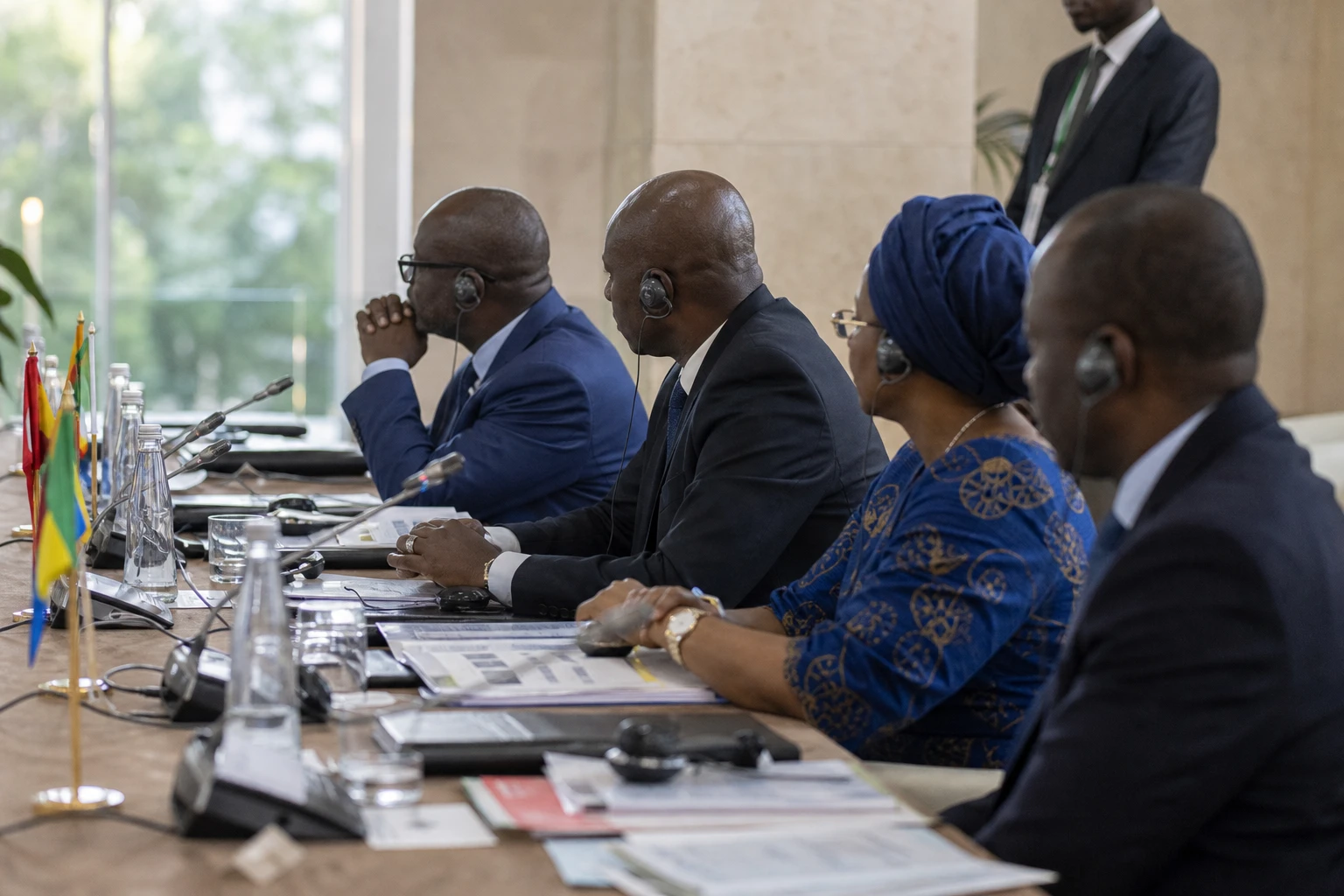
Political memories remain vivid in Abidjan
In Côte d’Ivoire, elections come and go, but some wounds remain open. Those of 2011, in particular, continue to weigh on public debate, trust in institutions and the place of former actors in the crisis. In this landscape, Simone Ehivet’s words carry particular weight because they combine personal history, collective memory and a struggle over the next political chapter.
The country has already put several institutional crises behind it without fully healing the political divide. ECOWAS, the African Union and Ivorian authorities are also closely monitoring the electoral climate in a country that remains a key centre in West Africa, with Yamoussoukro as its political capital and Abidjan as its economic powerhouse.
In this context, the former first lady’s remarks are not merely a matter of personal reflection. They point to a broader question: how can a political arena marked by arrests, electoral exclusions and memories of crisis rebuild a minimum level of trust?
What the facts say about the 2025 presidential election
In the presidential election of 25 October 2025, Alassane Ouattara was declared the winner in the first round with 89.77% of the votes cast, according to the CEI, and this was confirmed by the Constitutional Council on 4 November 2025. Simone Ehivet received 101,238 votes, or 2.42%. Turnout was low in several areas, and ECOWAS and AU observers deemed the election broadly satisfactory, while pointing to logistical shortcomings and some irregularities.
The vote took place amid tension. Before the election, several opposition figures had been excluded, including Laurent Gbagbo and Tidjane Thiam, fuelling criticism over the inclusiveness of the process. In August 2025, protests against a possible fourth term for Alassane Ouattara had already drawn thousands of people in Abidjan.
Tensions did not disappear after the vote. In July and August 2025, several senior figures from the PPA-CI, Laurent Gbagbo’s party, were arrested in cases linked to acts of vandalism in Yopougon and other incidents described by the justice system as serious, while the opposition spoke of arbitrary arrests. Figures cited for the number of political prisoners vary between camps: the PPA-CI referred to “nearly 100” political prisoners, while Simone Ehivet spoke of around 1,500 people arrested in connection with the elections. These figures have not been corroborated by a single independent source and should therefore remain attributed.
Amnesty, justice and electoral reform: the heart of the debate
Ultimately, Simone Ehivet’s intervention signals less a break than a longstanding grievance. When she says she has forgiven Alassane Ouattara and France, she is also seeking to take control of a narrative long dominated by the 2010-2011 post-election crisis and her years in detention. But her remarks go further: they target how the current political system works, the place afforded to opponents and the use of judicial proceedings in the electoral arena.
Her criticism of the Independent Electoral Commission reflects a longstanding debate. The CEI, established by a 2001 law and described by the institution as an independent body provided for by the Constitution, has regularly faced challenges from some opposition groups over its composition and balance. Simone Ehivet is calling for a body with no representatives of political parties or the government. This position echoes a demand already heard from other parts of the Ivorian opposition: to reduce partisan actors’ influence over electoral arbitration in order to limit suspicions of bias.
For the government, the issue is different. It is a matter of preserving institutional stability, upholding the legality of Constitutional Council decisions and showing that the country can hold elections without descending into open confrontation. For the opposition, by contrast, the struggle is about fairness from the outset: electoral rolls, justice, access to the contest, freedom of movement and the treatment of activists. Between the two, the Ivorian population, particularly in Abidjan’s large communes, is watching a political scene where the promise of normalisation remains fragile.
An Ivorian issue, but a West African signal
The significance of the issue extends beyond domestic Ivorian politics. Côte d’Ivoire remains a major ECOWAS player, a country watched for its ability to hold peaceful elections in a region shaken by military transitions, disputed mandates and distrust of electoral institutions. When Abidjan is politically unsettled, all of West Africa watches, because the country weighs on the economic, diplomatic and security balances of its neighbourhood.
There is also a less visible, but real, continental dimension: how a major coastal country in the region treats its opposition, organises its electoral arbitration and manages the memory of a past crisis serves as a guide—or a warning—for other African capitals. ECOWAS and the African Union chose to send a joint mission in 2025, a sign that the Ivorian political chapter is still considered sensitive and consequential.
For now, the next step will be measured less by statements than by actions: possible releases, judicial de-escalation, reform of the electoral framework and preparations for the legislative elections at the end of 2025. That is where the resilience of Côte d’Ivoire’s political climate will be tested. Simone Ehivet’s words above all serve as a reminder that, in Côte d’Ivoire, the post-crisis period remains unfinished business.