Algeria
 Egypt
 Libya
 Morocco
 Sudan
 Tunisia
 Benin
 Burkina Faso
 Cabo Verde
 Côte d'Ivoire
 Ghana
 Guinea
 Guinea-Bissau
 Liberia
 Mali
 Mauritania
 Niger
 Nigeria
 Senegal
 Sierra Leone
 The Gambia
 Cameroon
 Central African Republic
 Chad
 DR Congo
 Equatorial Guinea
 Gabon
 Republic of the Congo
 São Tomé and Príncipe
 Burundi
 Comoros
 Djibouti
 Eritrea
 Ethiopia
 Kenya
 Madagascar
 Malawi
 Mauritius
 Mozambique
 Rwanda
 Seychelles
 Somalia
 South Sudan
 Tanzania
 Uganda
 Angola
 Botswana
 Eswatini
 Lesotho
 Namibia
 South Africa
 Zambia
 Zimbabwe
A paradox weighing on the Togolese economy
In Togo, banks still provide too little financing to the sectors that support the most jobs. Agriculture accounts for about 21% of GDP, but receives only a marginal share of bank lending. The gap points to a simple problem: the wealth produced in fields and small businesses is not being turned quickly enough into useful credit, equipment and broadly shared growth.
This issue goes beyond the statistics. In a country where the private sector accounts for most economic activity and nearly 98% of jobs, access to finance determines families’ ability to invest, producers’ ability to modernise their farms, and whether micro, small and medium-sized enterprises can grow without remaining in the informal sector. The problem is therefore banking-related, productive and social all at once.
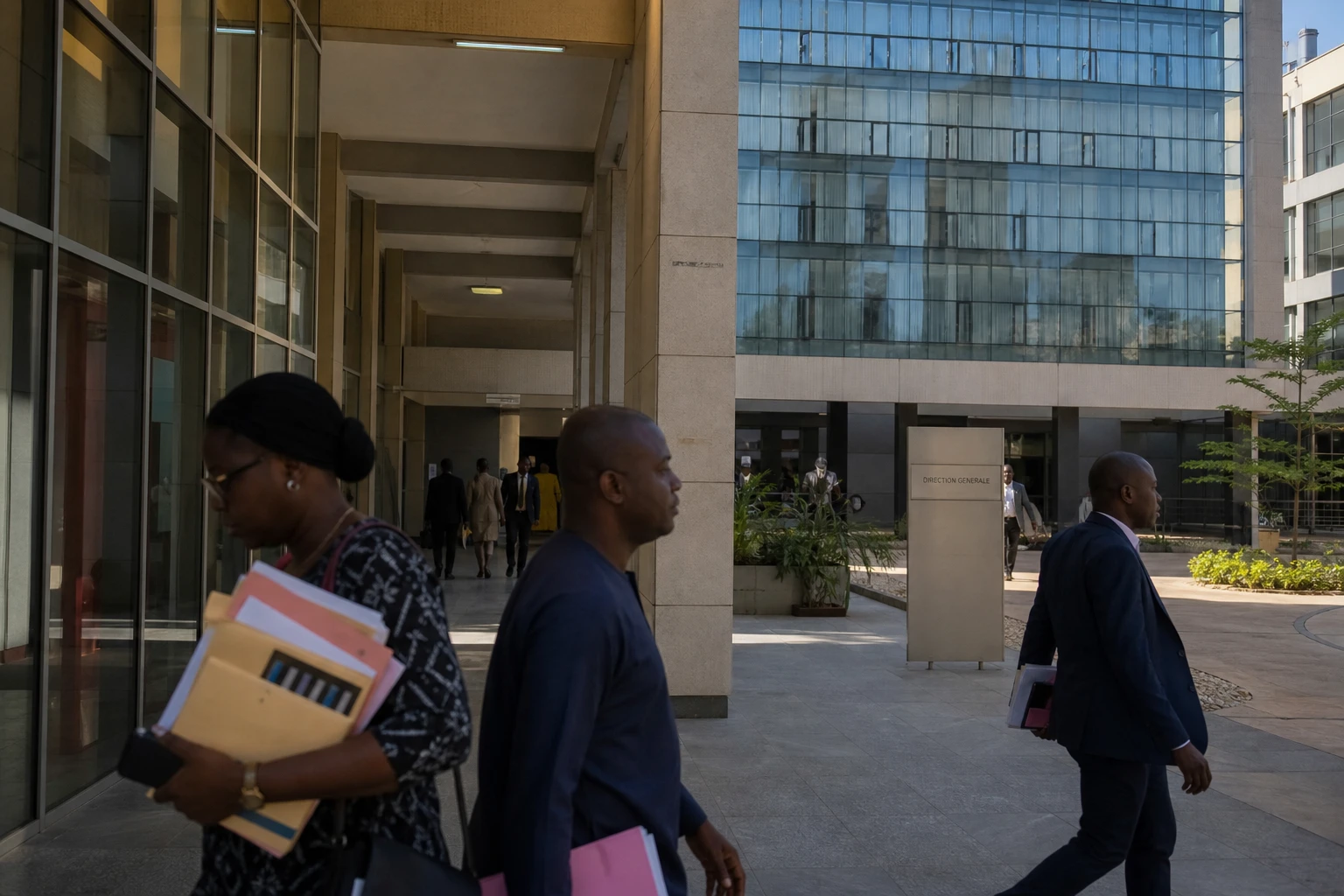
The issue came into sharper focus in Lomé at a session of the National Credit Council held on 17 September 2026. The Minister of Economy and Finance, Essowè Georges Barcola, called on banks to direct more of their lending towards agriculture and MSMEs, two segments considered crucial to the real economy.
Bank lending reflects economic priorities
The National Credit Council highlighted a longstanding imbalance. In the first half of 2026, new loans to agriculture reached CFAF 15.4bn, up from CFAF 8.4bn over the same period in 2025, an increase of 83.3%. But this growth is still driven mainly by seasonal loans linked to cotton. In other words, financing continues to follow the best-organised value chain rather than all crops and value chains.
The problem is not unique to Togo, but it is particularly stark there. Available data show an economy in which agriculture accounts for a large share of national value added, while credit remains concentrated among a few large borrowers. At the CNC’s second session, in June 2026, the authorities said that 70% of new loans went to a limited number of large companies. This structure protects the quality of banks’ portfolios, but leaves a broad productive base underserved.
To address this imbalance, the government is relying on existing programmes. ProMAT, Togo’s agricultural modernisation programme, and ProMIFA, an agricultural financing mechanism based on risk-sharing, are intended to help banks lend more to producers. The principle is clear: share the risk to reduce banks’ reluctance to lend, particularly where farms lack conventional collateral.
This approach forms part of a broader economic transformation agenda. For several months, the government has presented agriculture, digitalisation, special economic zones and the business climate as drivers of growth. A government seminar in Djamdè in June 2026 also stressed the role of the agricultural sector in the country’s new development strategy.
MSMEs, the backbone of activity, but still underserved
The same debate applies to MSMEs. In July 2024, Togo’s Ministry of Trade said they accounted for more than 90% of businesses, 40% of GDP and 60% of jobs. These figures indicate the scale of the problem: when MSMEs lack credit, a large part of the everyday economy slows down, from urban workshops to small rural processing units.
The CNC has therefore called on banks to offer solutions better suited to their actual size: shorter response times, more flexible collateral requirements, better assessment of business cash flows and wider use of the Credit Information Bureau. The Agency for the Development of Micro, Small and Medium-sized Enterprises is expected to play a greater intermediary role, so that a lack of banking history is no longer enough to exclude viable applications.
The central issue remains creditworthiness. Many MSMEs have a market, expertise and customers, but do not always have formal accounts, reliable forecasts or sufficient collateral. The government is therefore calling for a shared effort: banks to broaden their criteria, businesses to prepare better-structured applications, and the administration to continue developing guarantee and support tools. This challenge affects women entrepreneurs in urban markets as much as start-ups in agro-food processing.
Microfinance, financial stability and regional significance
The issue is not limited to commercial banks. Microfinance institutions remain under scrutiny, despite an increase in savings collection. Minister Barcola called for recovery plans to be implemented, particularly at the largest institutions. Here too, the challenge is twofold: protect depositors and preserve a vital source of finance for households, small traders and informal businesses moving towards formalisation.
Togo also operates within the WAEMU and BCEAO framework, where the quality of productive financing is a recurring topic in discussions on financial inclusion and system stability. The use of guarantee mechanisms, risk-sharing and improved access to credit information all form part of this regional approach. The aim is not to distribute credit at any cost, but to direct bank funds towards activities capable of creating value, income and jobs.
Across Africa, the Togolese case reflects a widely shared question: how can producers and small businesses be financed without weakening banks? The answer often involves guarantee funds, public development banks, better-documented applications and clearer tax systems. For Togo, the immediate challenge is to move credit beyond its current concentration. For the region, the message is broader: sustainable growth depends less on the total volume of bank lending than on whether it is directed towards the real economy.