Algeria
 Egypt
 Libya
 Morocco
 Sudan
 Tunisia
 Benin
 Burkina Faso
 Cabo Verde
 Ghana
 Guinea
 Guinea-Bissau
 Liberia
 Mali
 Mauritania
 Niger
 Nigeria
 Senegal
 Sierra Leone
 The Gambia
 Togo
 Cameroon
 Central African Republic
 Chad
 DR Congo
 Equatorial Guinea
 Gabon
 Republic of the Congo
 São Tomé and Príncipe
 Burundi
 Comoros
 Djibouti
 Eritrea
 Ethiopia
 Kenya
 Madagascar
 Malawi
 Mauritius
 Mozambique
 Rwanda
 Seychelles
 Somalia
 South Sudan
 Tanzania
 Uganda
 Angola
 Botswana
 Eswatini
 Lesotho
 Namibia
 South Africa
 Zambia
 Zimbabwe
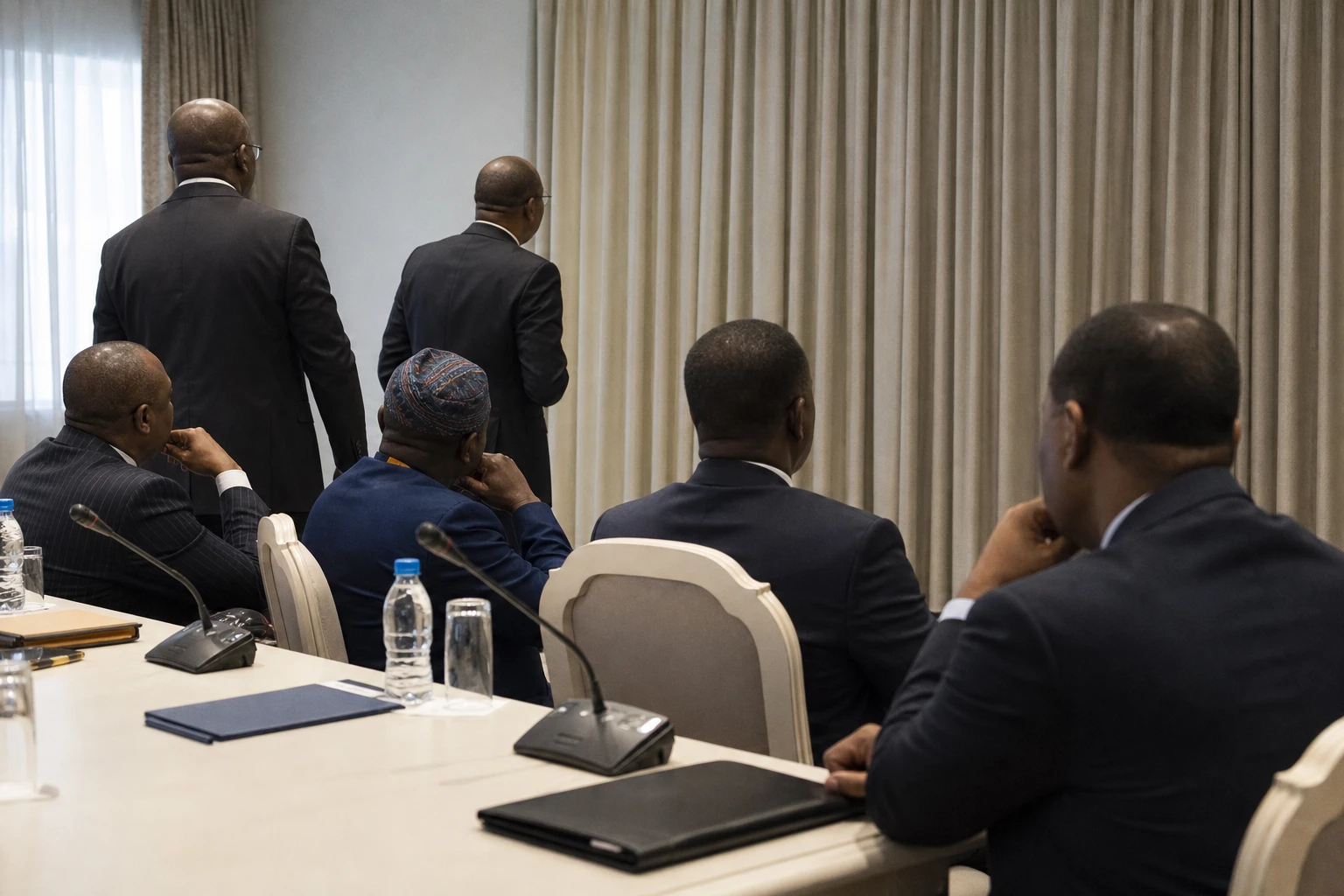
The race for gold is being fought in mines and offices alike
Côte d’Ivoire wants to move up a level, but the real shift will not happen only underground. It will also depend on the state’s ability to trace, refine and sell a metal that is still too often dispersed across formal and informal channels. In Abidjan, the government is now banking on a tighter chain, from deposit to sale.
This ambition is part of a broader national trajectory. The country has already made extractive industries one of the drivers of its economic diversification, alongside agro-industry and infrastructure. It is also part of a West African region where gold remains a matter of sovereignty, public revenue and security, within ECOWAS and WAEMU.
The political capital, Yamoussoukro, provided the setting for this new direction. On 16 September 2026, the Minister of Mines, Petroleum and Energy, Mamadou Sangafowa-Coulibaly, announced plans for a 100-tonne refinery, expected to be completed by the end of the first half of 2027. The facility is also intended to support the Ivorian Precious Metals Company, created to organise artisanal and small-scale mining.
The facts: an expanding but still incomplete industry
The government’s message is clear. Côte d’Ivoire aims to become Africa’s leading gold producer by 2035. The executive has set out a concrete sequence to achieve this: a refinery in Abidjan with a stated capacity of 100 tonnes, and a reorganisation of ASM, or artisanal and small-scale mining, to capture more local production.
This target is not starting from zero. In 2026, several projects were approved or accelerated. In February, the state granted two mining permits, including one project estimated at 451.31 billion CFA francs, for 120 tonnes of gold over 19 years, and another involving 59 tonnes over 14 years. Meanwhile, new projects are moving ahead, notably Koné, described in late 2024 as the country’s largest mining project, with operations due to start in 2027.
The government also says Ivorian gold production has risen sharply. The authorities have noted that it increased from about 13.2 tonnes in 2012 to 59.33 tonnes in 2025, with a target of 62 tonnes for the current year. These figures reflect a sector accelerating on the back of new industrial mines and expansions at existing sites.
But the picture remains incomplete. SWISSAID estimates that undeclared artisanal gold production in Côte d’Ivoire still amounts to between 30 and 40 tonnes a year, highlighting the gap between actual output and recorded volumes. Across Africa, the organisation estimates that 321 to 474 tonnes of artisanal gold are produced each year without being declared.
What this means for the Ivorian economy
Abidjan’s bet is not limited to producing more. It also aims to retain more value within the country. The planned refinery is intended to enable some of the gold to be processed locally, rather than shipped in raw form to foreign refining centres. This is a matter of revenue, but also of economic sovereignty.
The reasoning is simple. The more processing takes place locally, the better the state can secure taxes, traceability and commercial margins. Ivorian suppliers, in turn, could benefit from a stronger industrial base. The government is also linking this project to the expansion of SIMEP, which is tasked with aggregating gold from authorised operations, buying the production and helping to market it.
The challenge, however, is twofold. On the one hand, Côte d’Ivoire must continue to attract investment in exploration and major projects. On the other, it must formalise small-scale mining, which employs many people but still partly evades official channels. In a country where gold already accounts for a significant share of exports, even modest progress on traceability could quickly affect public revenue.
The political geography of gold in West Africa must also be taken into account. Ghana remained the continent’s leading producer in 2025, with about 186 tonnes, according to the Ghana News Agency — a level still far above Côte d’Ivoire’s. Mali, Burkina Faso and Guinea also remain major competitors in the same gold belt. Côte d’Ivoire is therefore advancing in a highly competitive region.
Regional significance beyond Côte d’Ivoire
The issue extends beyond Côte d’Ivoire because it touches on a question that has become central in several African countries: how to make gold a more effectively managed source of revenue, without allowing losses through smuggling or opaque channels. This matters to states, but also to mining communities, which often depend on irregular incomes and are vulnerable to abuse.
In the region, Côte d’Ivoire could become a test case. If Abidjan manages to combine major projects, local processing and the formalisation of artisanal mining, the country could offer a model for moving up the mining value chain in West Africa. The aim is not just to produce more, but to produce better, with greater public oversight and more value retained locally.
In the short term, the next milestones are tangible: the refinery’s expected start-up in the first half of 2027, progress on the Koné, Doropo and Assafou projects, and SIMEP’s ability to organise an artisanal sector that remains too fragmented. This is where the reality of Côte d’Ivoire’s stated direction will be measured, far more than in an announcement.